Read More
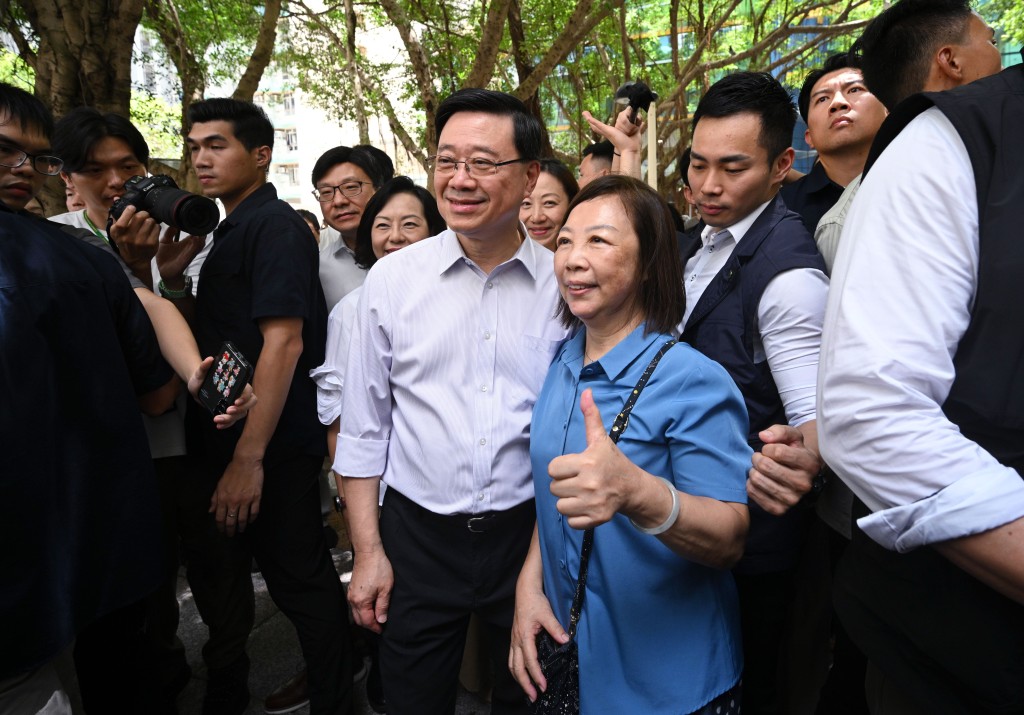
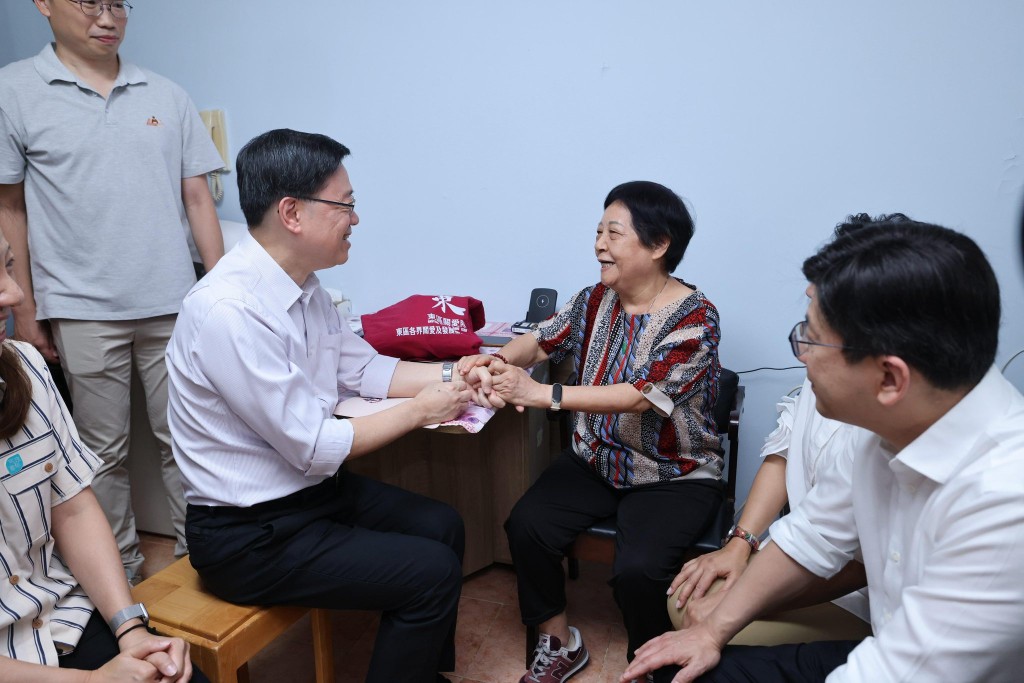
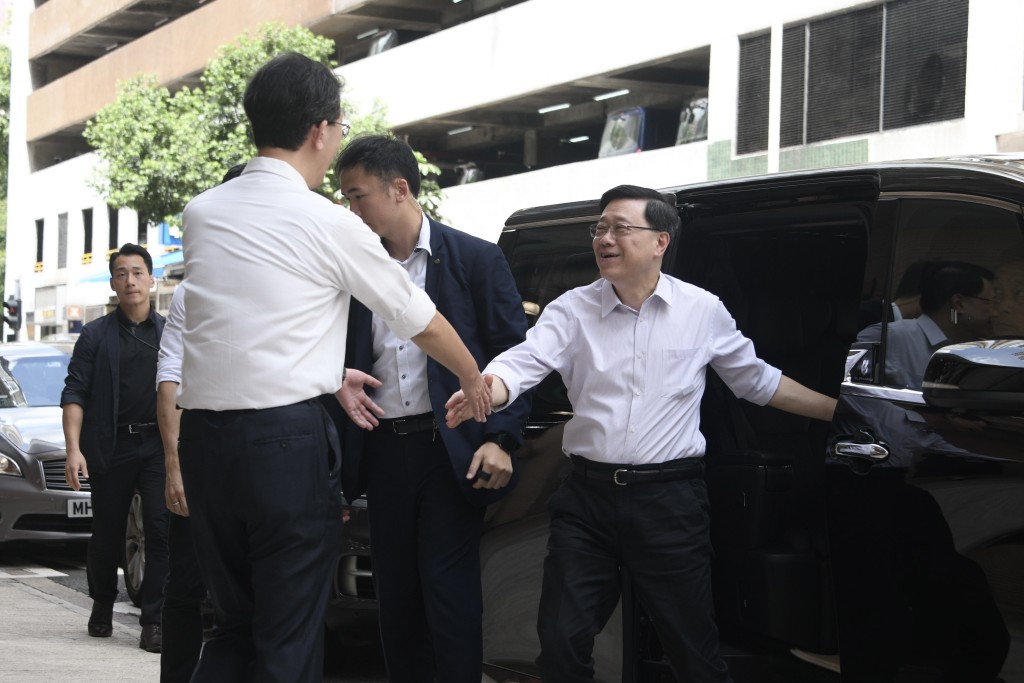
Chief Executive John Lee Ka-chiu conducted his second neighborhood tour in two weeks this Saturday, visiting public housing estates in Shau Kei Wan and Kowloon to engage with elderly residents and review support services ahead of his upcoming policy address.
ADVERTISEMENT
SCROLL TO CONTINUE WITH CONTENT
Identifying and supporting high-risk elderly households
During his visit to Oi Tung Estate in Shau Kei Wan, Lee met with two elderly women living alone who have been receiving assistance from the government’s “Care Teams” initiative. He emphasized the importance of identifying vulnerable seniors—especially those living alone or as elderly couples—and ensuring they receive timely support.
The government has recently launched three pilot programs led by the Labour and Welfare Bureau to strengthen elderly care. One initiative, launched last month in Kwun Tong and Sha Tin, cross-references housing and social welfare data to identify high-risk elderly households. Care Teams are then dispatched to visit and assist them.
Another program ensures that when high-risk caregivers are hospitalized, the Social Welfare Department is notified to provide emergency support to those under their care. A third initiative, expanded citywide in April, mobilizes over 450 Care Teams across Hong Kong to regularly visit and support isolated seniors and caregivers.
Personalized care for the vulnerable
Lee also shared details of his visit last Saturday to an elderly mother and son in Kwun Tong, who were identified through the new risk-assessment system. The 96-year-old mother cares for her 76-year-old son, who has limited mobility due to health issues. After being flagged by the system, Care Teams began providing regular meals and support.
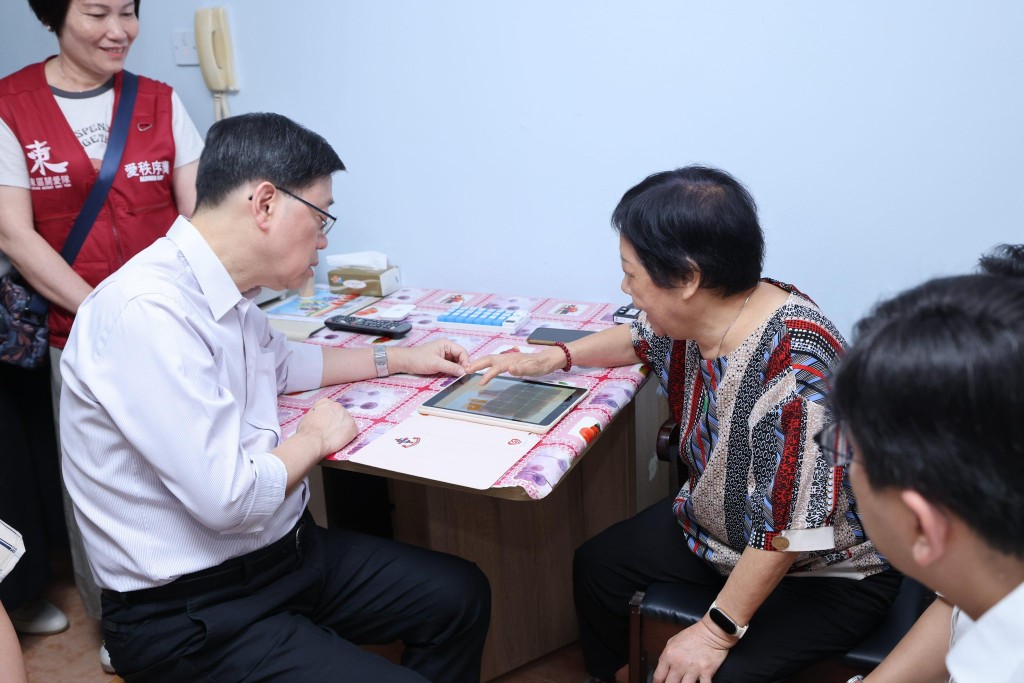
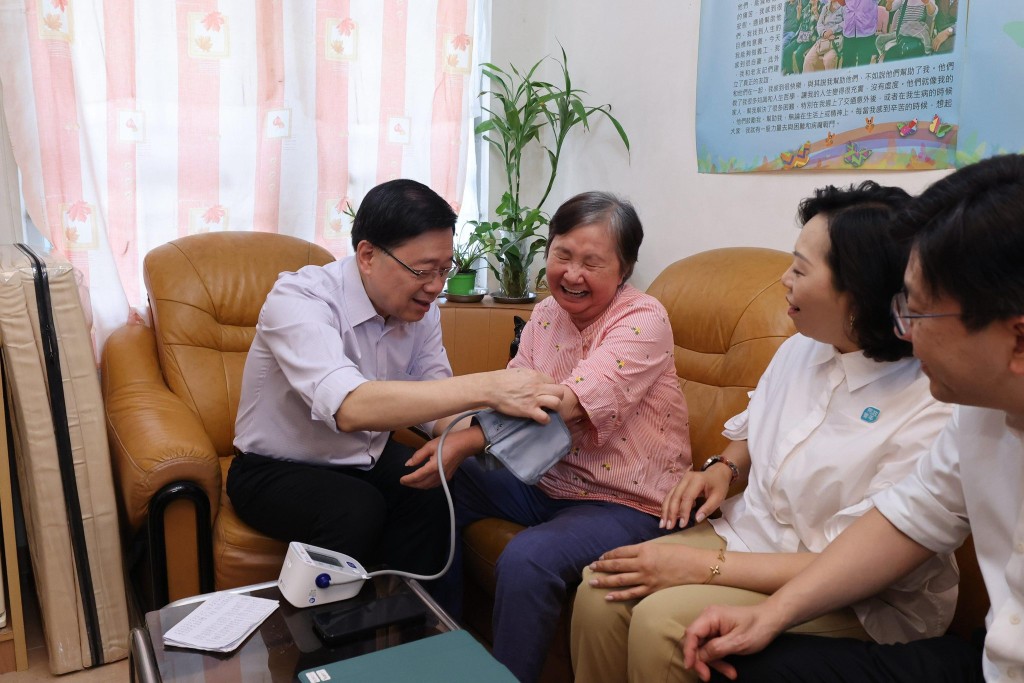
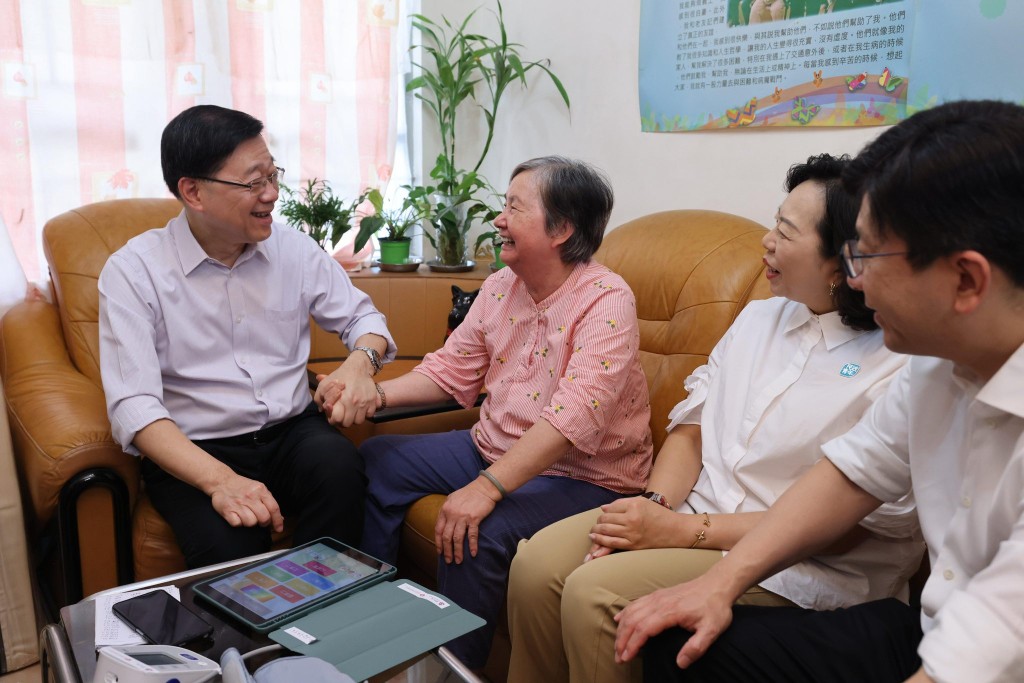
During today’s visit, a 76-year-old woman, a resident, demonstrated how she uses a smart blood pressure monitor—loaned to her through a government-funded program—and a smartphone app to track her health data. Another 80-year-old resident showed Lee her smart pillbox and a tablet computer provided by a social service organization for cognitive games.
Leveraging technology for enhanced elderly care
Lee expressed satisfaction that technology is being integrated into elderly care, noting that the government’s Innovation and Technology Fund for Application in Elderly and Rehabilitation Care has approved HK$890 million to support more than 2,100 elderly and rehabilitation service units. The fund will receive an additional HK$1 billion in the 2024–25 fiscal year.
He later visited the Tung Wah Group of Hospitals' Fong Shu Chuen Services Building to observe how technology is being used in elderly community centers and care homes. Interactive projection systems, cycling simulators, and cognitive training tools are among the devices being used to help seniors stay active and engaged.
Community engagement and festival spirit
With the Mid-Autumn Festival approaching, Lee also joined residents at a care home for soft-textured mooncakes and thickened milk tea—specially prepared for those with swallowing difficulties—in an early celebration of the holiday.
Lee reiterated that the government is committed to continuously improving services for the elderly and encouraged all residents to reach out to Care Teams or government agencies if they need assistance.
(Updated at 9.28pm)