Pickleball may look like a gentle pastime, but its sharp changes of direction, jumping and repeated racket swings can leave unprepared players with injuries ranging from muscle strains to ankle sprains, an Orthopaedic and Traumatology specialist has warned.
The warning is especially relevant to so-called weekend warriors – people who do little exercise during the week, then spend hours playing sport on the weekend. Dr Diane Tai, a specialist in orthopaedics and traumatology, said the term is not a formal medical diagnosis, but it captures a familiar pattern: people who are inactive most of the time and then suddenly place heavy demands on their joints and muscles. “The first reason is that they do not warm up,” Tai said. “Many people arrive, go straight onto the court and start playing.” Without warming up, joints are less mobile and muscles and ligaments are more likely to be strained, she said.
Another risk is fatigue, when players stay on court for too long without enough rest or continue despite pain. That can worsen an injury, particularly around the Achilles tendon at the back of the ankle, and may lead to more serious damage.
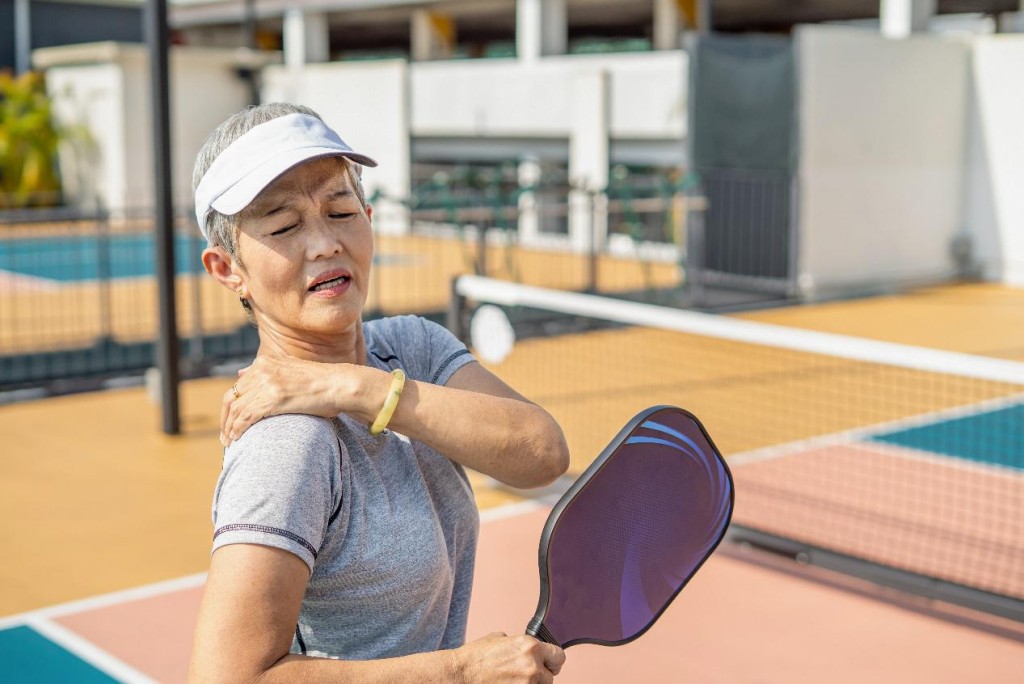
Pickleball may look easy, but quick turns, jumps and repeated swings can put stress on the body.
More than an easy game
Age can also be a factor. Flexibility in tendons and ligaments may decline over time, increasing the likelihood of injuries such as Achilles tendon tears or ruptures. Tai added that smoking may also be linked to a higher risk of tendon tears.
For pickleball players, repeated racket swings place stress on muscles around the shoulder, elbow and wrist. Players who are not used to the sport may be more likely to strain these muscles. The sport’s side-to-side movements and jumping can also lead to ankle sprains. Other common problems include Achilles tendon injuries, tennis elbow and rotator cuff injuries in the shoulder. “Do not underestimate tennis elbow,” Tai said, stressing that players should warm up properly before any sport and allow their bodies to adapt before play begins. Beginners should ideally progress with guidance from a coach.
Warming up before playing readies muscles and joints for exercise and lowers the risk of injury
When pain needs attention
Other high-intensity activities can bring similar problems. Tai cited Hyrox training, which combines running with pushing and pulling movements and may strain the back, spine, knees, ankles and calf muscles.
People preparing for a competition may suddenly increase their training load or push through pain, which can aggravate an injury. “Pain is a signal from the body and should not be ignored,” Tai said. Normal post-exercise soreness should gradually settle within two or three days. But pain lasting one to two weeks, severe swelling, bruising, a lump caused by bleeding, or pain that makes walking difficult should prompt an early medical assessment.
Tai recalled a patient in his 60s who regularly played badminton and had occasionally felt pain in his heel, but continued to play. After one game, he felt as if someone had kicked the back of his ankle and was diagnosed with an Achilles tendon rupture. His rehabilitation took more than six months before he could return to the court. Tai said the case showed why persistent pain should be addressed early, before it develops into a more serious injury.