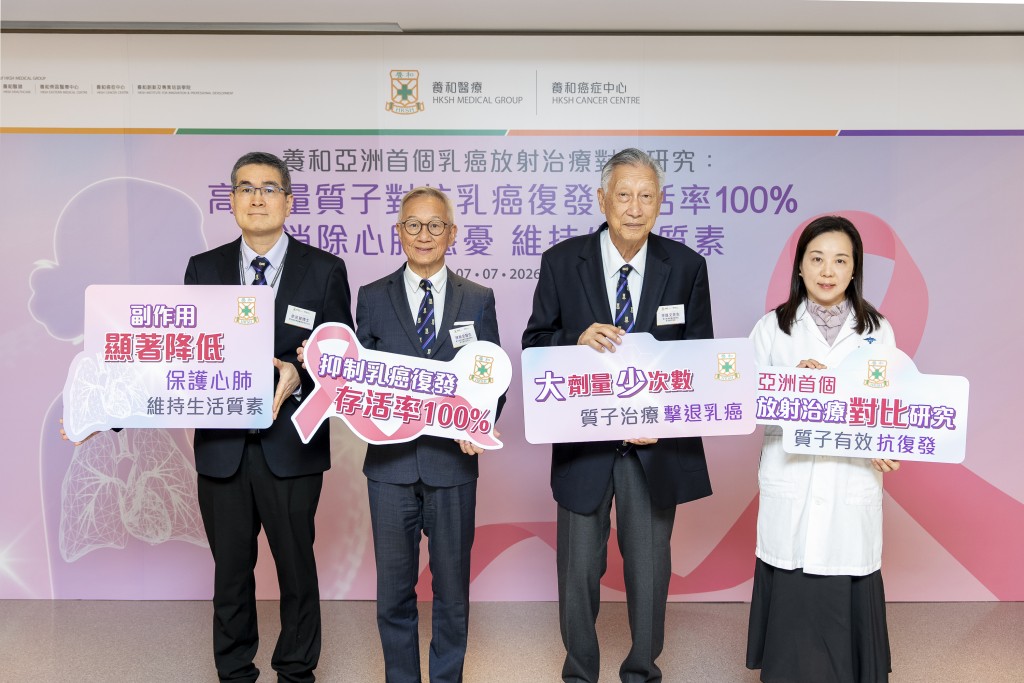
Hong Kong Sanatorium & Hospital said proton therapy for breast cancer can reduce unnecessary radiation exposure to the heart by up to 40 times compared with conventional treatment, while a shorter regimen can cut radiotherapy time from about three weeks to just over one week.
The hospital, which introduced proton therapy in 2023, cited two of its first-in-Asia comparative studies presented at international conferences. It said proton radiotherapy and conventional photon radiotherapy both recorded a 100 percent survival rate among a matched cohort of breast cancer patients during the study period.
However, HKSH said proton therapy showed a clear advantage in dose precision.
Unlike conventional photon radiotherapy, proton therapy releases radiation energy in a concentrated burst at the tumor site, with the dose falling sharply afterward, helping spare surrounding healthy tissue.
The average radiation dose to the heart was reduced by about 20 to 40 times among patients receiving proton therapy, the hospital said.
Amy Chang Tien-yee, co-director of the HKSH Proton Therapy Centre, said each 1 Gy increase in radiation dose to the heart is associated with a 7.4 percent rise in the risk of heart disease. Heart-related side effects usually emerge five to 20 years after radiotherapy, and the team hopes proton therapy can eventually halve the 10-year incidence of such complications, she said.
HKSH also highlighted a five-session whole-breast proton therapy regimen, which shortens the standard 15-fraction course. Among 27 patients who received the shorter regimen, no Grade 2 or above acute severe toxicity was recorded.
Hospital management said the shorter course could help accommodate more patients, as the Proton Therapy Centre is operating at about 85 percent capacity, and ease the burden on overseas patients.
Asked by The Standard about the short follow-up period for the proton therapy cohort, which began treatment in 2023, the research team acknowledged that the median follow-up is less than one year. It said the matching method used was robust enough to provide representative data on side effects, while longer-term follow-up would assess survival outcomes.
Meanwhile, as more proton therapy options emerge in the Greater Bay Area, HKSH said its competitive edge lies in its multidisciplinary cancer care model and advanced imaging technologies, including photon-counting CT and MRI-guided proton therapy, which enhance treatment precision and support more personalized care.