Read More
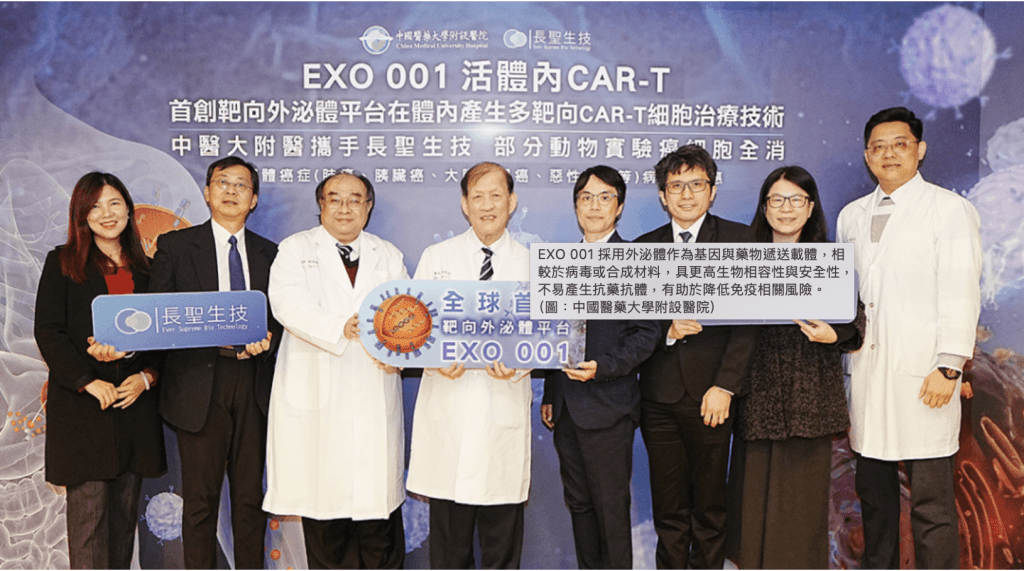
Can cancer be treated? The medical community in Taiwan recently announced the successful development of the world's first "EXO 001 Targeted Exosome Platform," which can generate cells within the patient's body to combat solid cancers. Multiple animal experiments have confirmed that this new technology not only inhibits tumor growth but can also eliminate cancer cells, offering new hope for late-stage cancer patients.
ADVERTISEMENT
SCROLL TO CONTINUE WITH CONTENT
Breaking Through Traditional CAR-T Limitations, Enabling Immune Cells for "Real-Time Combat"
China Medical University Hospital in Taiwan recently announced the development of the world's first "EXO 001 Targeted Exosome Platform." President Der-Yang Cho stated that the core design of EXO 001 is to use exosomes as a "vehicle for in vivo immune training." Traditional CAR-T cell therapy, whether using autologous or allogeneic cells, requires a complex and time-consuming in vitro culture process. This makes it difficult to help cancer patients with rapidly progressing diseases. Furthermore, traditional therapies face practical limitations such as immune rejection, manufacturing failure rates, and high costs.
The core design of EXO 001 is to use exosomes as a vehicle for in vivo immune training. However, with EXO 001 treatment, after intravenous injection into the human circulatory system, the exosomes pass through key immune organs like the spleen, precisely delivering the nanobody CAR.BiTE gene to T cells. This directly completes immune programming within the patient's body, transforming T cells into multi-targeted CAR-T cells. These CAR-T cells, generated in vivo, can actively penetrate solid tumors, kill cancer cells, and dismantle the tumor microenvironment. This design allows immune cells to be "trained in the body and deployed for real-time combat," representing a key breakthrough in fighting solid cancers.
Impressive Animal Experiment Results: Complete Disappearance of Cancer Cells
The research team validated the technology in mouse models of various solid tumors, including colorectal cancer, pancreatic cancer, malignant brain tumors, and ovarian cancer. The results found:
- After intravenous injection of EXO 001, CAR-T cells were effectively generated in vivo.
- Successful penetration of the tumor microenvironment and inhibition of tumor growth.
- Survival time was extended by 2 to 3 times in some animals.
- Complete disappearance of cancer cells and long-term recurrence-free survival were observed in some animals.
Compared to viral or synthetic material carriers, EXO 001 uses exosomes as gene delivery vehicles, offering higher biocompatibility and safety. It is less likely to generate anti-drug antibodies, helping to reduce immune-related risks. Additionally, EXO 001 is not only a breakthrough in academic research but also possesses multiple advantages for practical clinical advancement and industrialization:
- Stable Quality: Derived from a single cell source, enabling standardized production.
- Complies with International Regulations: Can be produced on a large scale, meeting FDA regulations for cell-based products.
- Ready to Use: Significantly reduces treatment waiting time.
- Cost Advantage: Lowers overall production costs, facilitating widespread application.
- Platform Technology: Can be loaded with different CAR genes, nucleic acids, or small molecule drugs, offering flexibility for developing treatments for multiple indications.
- Long-term Antitumor Immunity: Can induce CAR-T cells with immune memory characteristics, prolonging the anticancer effect.
Clinical Trials Expected to Begin as Early as Early Next Year
This breakthrough with EXO 001 brings a novel strategy for solid cancer treatment. The team hopes to apply the findings clinically as soon as possible to benefit more patients. The research results have also been accepted for publication in the January 2026 issue of the internationally renowned journal Advanced Science and have obtained patents in the US and other countries. It is understood that the technology has been transferred, and process development and clinical trial preparations are currently underway. Clinical trials are expected to begin as early as early next year, targeting patients with solid cancers such as colorectal cancer, pancreatic cancer, malignant brain tumors, and ovarian cancer.