Melody Chen
Humanoid robots are going places, from working on factory floors to flipping burgers and pouring cups of tea for diners in restaurants.
Recent quantum leaps in generative artificial intelligence by industry leaders such as OpenAI have transformed the world of robotics as robots are now being trained to think and operate like humans, with China at the forefront of this race.
In the west, big dreamers such as Agility Robotics, Apptronik, Sanctuary AI and Figure are building AI humanoids which they claim will one day be able to do work that people can't or don't want to.
And they are backed by big tech like Amazon, Google, Nvidia and Microsoft, to the tune of billions and billions of dollars.
Even Elon Musk is developing an AI humanoid called Optimus which he says will "transform the world" and be bigger than Tesla's electric cars.
Chinese charge
China remains in the thick of the race to dominate an AI humanoid market that could be worth US$38 billion (HK$296 billion) by 2035, according to reports.
At the World AI World Artificial Intelligence Conference in Shanghai in July, Chinese firms showed off eye-catching AI humanoids, including a dog-like quadruped that could walk on two legs and even navigate stairs.
Shanghai Droid Robot's chief technology officer Mou Haiming said large language models and AI are making the transition out of servers and into the real world of smartphones and electric vehicles, and bipedal humanoids will be next carrier of the technology.
This is why firms are keen on developing embodied AI technology and biped humanoid robots, he said.
Meanwhile, the 2024 World Robot Conference held recently in Beijing attracted more than 770 firms and showcased a record 27 humanoids, while generating business worth 6.9 billion yuan (HK$29.75 billion).
Ubtech Robotics's (9880) industrial humanoid Walker S was seen handling tasks like sorting and quality control on an assembly line.
The robot, which is used by Nio (9866), Geely Automobile (0175) and FAW's luxury brand Hongqi, can carry boxes up to 15 kilograms, record data in real time, and achieve inspection accuracy to the millimeter.
Unitree Robotics showed off its mass-produced G1 priced at just 99,000 yuan, the first time a bipedal humanoid has fallen below 100,000-yuan mark. It weighs about 35kg, and can run, jump, spin and climb stairs.
And Tiangong, developed by the Beijing Humanoid Robot Innovation Center using a visual-language model, demonstrated its ability to engage in conversation, respond to commands and pick up and place objects in designated spots.
Technical head Che Zhengping said humanoids will increasingly integrate into dining and shopping and become approachable helpers in daily life.
Funds continue to flow into the sector.
China currently has over 190,000 robotics patents or two-thirds of the global total and its humanoids industry attracted funds worth 5.47 billion yuan last year -- the highest in a decade -- with more than 2 billion yuan raised in the first six months of this year. Beijing wants to be ready for mass production of humanoids by 2025 and has set a roadmap to achieve this goal.
The Microsoft- and Nvidia backed OpenAI -- the maker of the pioneering ChatGPT -- just raised US$6.6 billion in its latest funding round, giving it a value of US$157 billion, similar Goldman Sachs.
Meanwhile, Agility Robotics is testing its Digit robot at Amazon and is building a factory in Oregon that will in a few years be able to roll out 10,000 robots a year for warehousing, automotive, and later, retail and health care applications.
Canada's Sanctuary AI is poised to roll out a wheeled humanoid capable of lifting up to 55 pounds and has partnered with automaker Magna to build them at scale.
Apptronik has developed Apollo, a mass manufacturable commercial humanoid with a payload of 55 pounds for logistics and manufacturing, with retail as its next target, though chief executive Jeff Cardenas admits Apollo won't be moving into people's homes any time in the near future.
And Figure has just unveiled its latest humanoid -- the Figure 02 - which uses OpenAI for natural-speech conversations.
Xiong Rong, chief scientist at the Zhejiang Humanoid Robot Innovation Center, believes humanoids could enter daily life in another five years and will first be employed in service roles within commercial environments.
While humanoids are expensive, complex machines, Xiong believes China can leverage its expertise to overcomes challenges in manufacturing core components and costs.
He said that humanoids for home use should cost no more than an affordable car, while Musk, who wants to start selling Optimus to people by the end of next year, believes they should cost around US$20,000.
So while it may be a few more years before you can have your humanoid doing your laundry or making the tea, there's no doubt that these robots are destined to transform the way we work - and live in the future.
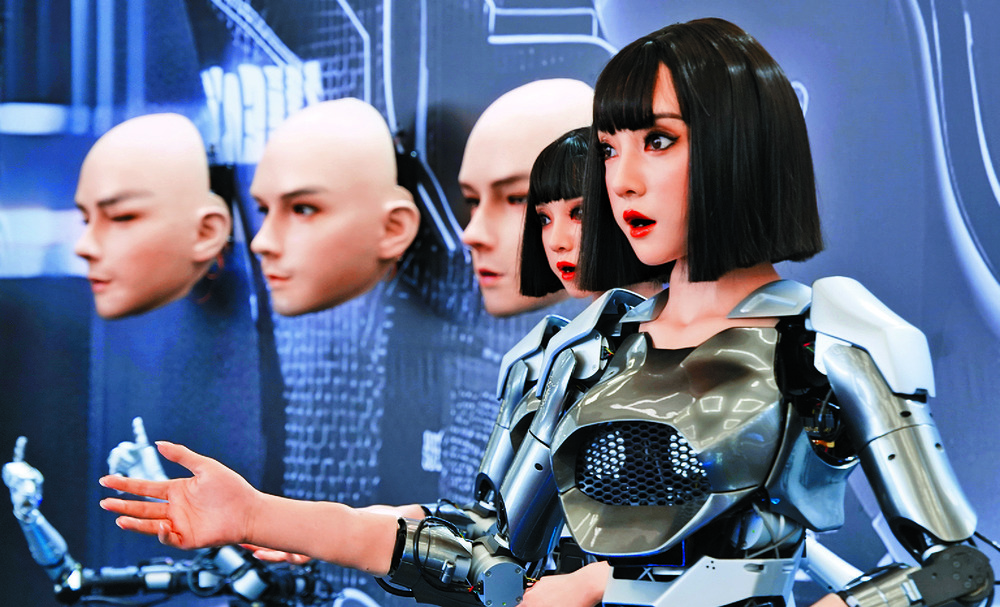
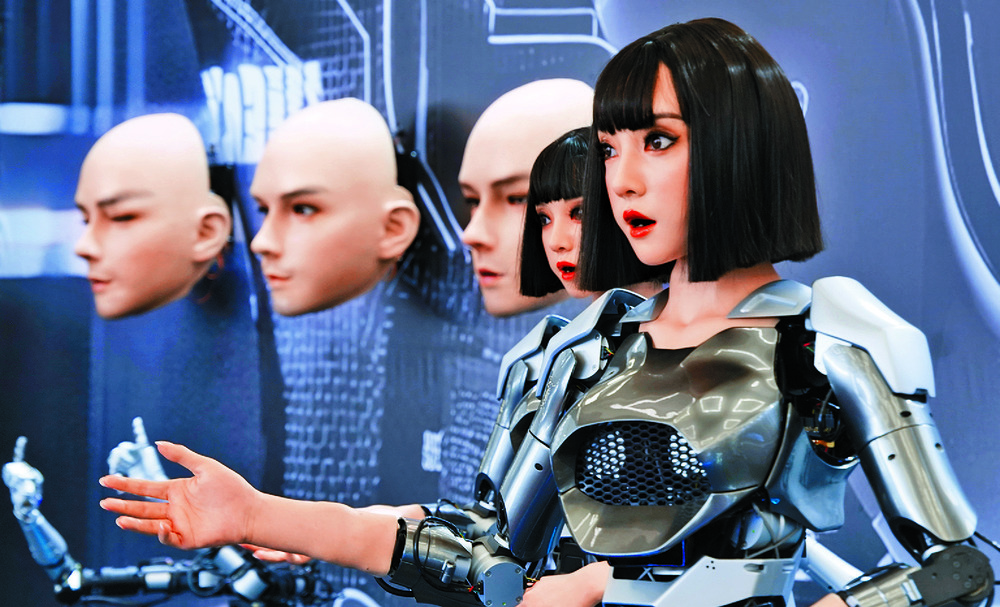
AI power: Humanoids took center stage at the Beijing show.