Read More
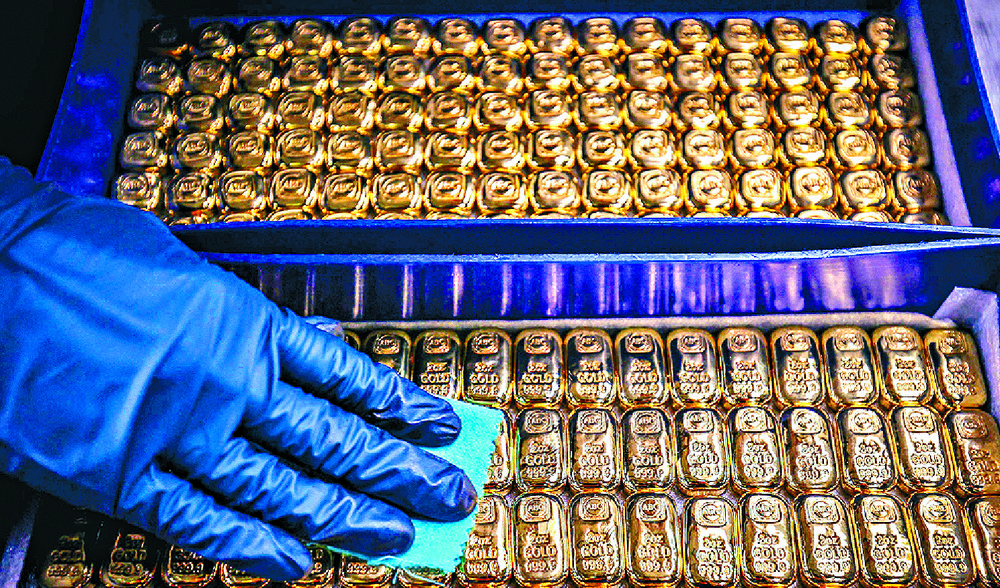
Gold has been on a record-breaking rally fulled by demand from central banks and investors seeking a safe haven amid growing geopolitical risks.
ADVERTISEMENT
SCROLL TO CONTINUE WITH CONTENT
And while oil has not hit the heady heights of US$100 (HK$780) and more, jitters over the war in Gaza, production cuts and summer demand have seen the benchmark Brent hit seven-week highs, with crude up around 12 percent so far this year.
Many investment banks and fund gurus are placing their bets on a further rally in gold and oil, with the latter expected to hold its ground at the US$80 level, at least in the near future.
Others aren't that upbeat, and see both rallies running out of steam sooner than expected.
Now in its ninth month, the Israeli-Hamas conflict has kept markets on edge over the possibility that it could erupt into a full blown war and set the Middle East on fire.
Gold hit an all-time high of US$2,450 last month and is currently trading at the US$2,300 level, while Brent hit a seven-week high of US$85.84 a barrel last week amid summer demand optimism and concerns over the escalating conflict.
CONTRASTING PREDICTIONS
Commodities such as oil and gold remain potentially helpful geopolitical hedges, says UBS strategists.
The strategists, led by chief investment officer Mark Haefele, say global industrial activity is poised for a more sustained recovery, supported by potential US interest rate cuts this year and a moderate inventory restocking cycle.
They expect oil demand to remain strong with a projected expansion of 1.5 million barrels per day this year, exceeding the long-term annual growth rate of 1.2 million bpd.
Oil producers have been reining in production to prop up prices and earlier this month, the Organization of the Petroleum Exporting Countries and its allies agreed to extend most production cuts until the end of 2025 and some voluntary cuts until September this year to support the market.
But the International Energy Agency says oil may not be so hot, and Goldman Sachs agrees.
The global energy watchdog has cut its 2024 global oil demand growth forecast for a third consecutive month, trimming 100,000 bpd from the estimate, citing contracting demand in OECD countries and signs that Chinese demand slumped to just 95,000 bpd in April.
Longer term, the IEA warns that by 2030, global oil supply will outstrip demand by a "staggering" 8 million bpd.
But UBS remains bullish, at least for now.
UBS China refining and chemicals analyst Amily Guo says short-term oil prices, influenced by geopolitical tensions and OPEC+ efforts to maintain a tight supply-demand balance, led UBS to raise its 2024 oil price forecast from US$82 to US$83 per barrel, with prices expected to drop to US$80 in the next two years and US$75 by 2027.
Brent crude has hovered at US$80 a barrel, which is below the price needed for many OPEC states to balance their budgets and OPEC+ members are currently cutting production by 5.86 million barrels per day, about 5.7 percent of global demand.
While OPEC+ expects oil demand to increase by 2.2 million bpd this year, Goldman Sachs forecasts a daily increase of only 1.5 million barrels, much lower than the group's expectations.
Goldman Sachs says the cuts by OPEC+ are insufficient to alleviate oversupply, and Brent crude may fall below the US$75 to US$90 range.
However, UBS oil analyst Giovanni Staunovo says with the seasonal increase in demand, global oil inventories are expected to decline during the summer, and this should support crude oil prices.
Longer term, things aren't that rosy for oil, says Citi's global energy strategist Eric Lee. He sees oil diving toward the US$70 range later this year and to the US$60 range by 2025 as inventories build after summer, and demand falls.
OIL PLAYERS ON A ROLL
Oil stocks listed in Hong Kong trended higher in May, with PetroChina (0857) surging 12.25 percent, and China Petroleum and Chemical Corporation, known as Sinopec (0386) and CNOOC (0883) rising by 7.36 and 3.5 percent respectively.
CNOOC and PetroChina are benefiting from growing oil and gas production, whereas Sinopec is likely to be dragged by its downstream business, CCB International says.
CNOOC's net profit for the first quarter ended March increased 23.7 percent from last year to HK$39.72 billion, with earnings per share of HK$0.84, while PetroChina recorded the first-quarter net profit of HK$45.68 billion, up 4.7 percent year-on-year, with earnings per share of HK$0.25.
CCB International has raised CNOOC's target price from HK$21.3 to HK$22, saying its profit growth will outperform in the coming years, driven by robust oil and gas production.
CNOOC currently has a dividend yield of 6.79 percent, making it the most attractive among oil stocks, with a forecast price-earnings ratio of only 6.53 times, the cheapest among the three oil majors. It's stock is up 72 percent so far this year at HK$22.75.
Citic Securities has a target price of HK$24 for CNOOC, maintaining a buy rating and raising its 2025 net profit forecast to HK$155 billion, with a high dividend payout ratio anticipated to be maintained by strong cash flows over the next three years, following last year's 43.6 percent.
Morgan Stanley has lowered PetroChina's target price to HK$7.8 while maintaining an outperform rating and revising its net profit forecasts for 2024 to 2026 down by around 2 percent.
However, JP Morgan has raised its target price from HK$8 to HK$10, with the stock having surged by 47 percent this year, driven by strong natural gas demand.
GOLD SHINES
Meanwhile, gold is expected to continue shining, with the US Federal Reserve expected to start cutting rates this year, and retail demand in China exceeding expectations.
UBS has raised its year-end forecast to US$2,600 per ounce, with the advised buying price of lower than US$2,300.
Citigroup anticipates gold will reach US$3,000 in the next 12 months, with about a 28 percent upside room from the current price, as gold is the asset most affected by interest rate fluctuations.
Max Layton, global head of Citi's commodities research, says expected interest rate cuts by the Fed at the end of this year or early next year will push gold prices up.
At the same time, China's large-scale selling of US Treasury bonds and increased gold purchases are contributing to gold price trends, says Muhammad Umair, founder of Gold Predictors.
The People's Bank of China went on an 18-month gold-buying binge that ended in April, boosting gold reserves to 2,264 tonnes, or 4.9 percent of the nation's total reserves, the highest ever. And unprecedented demand from retail investors in China, who were snapping up gold instead of real estate and stocks, helped drive the precious metal to its all time-high of US$2,450 last month.
Meanwhile, with US stocks at record highs, famed short-seller Carson Block is gathering cash for his new Muddy Waters Resources Fund that will bet on rising metals and mining stocks as alternative investments.
MINING CHOICES
In Hong Kong, investors should be taking a look at Zijin Mining (2899), which has now been included in the China Enterprises Index with a weight of 1.28 percent, say analysts.
DBS Bank has raised Zijin Mining's target price from HK$16 to HK$22, maintaining a buy rating. The bank has increased its earnings forecast for the next two years by 20 and 12 percent respectively and projects a 0.5 percent increase in earnings per share for every 1 percent rise in gold prices.
Retail investors could also look at more affordable stocks like Shandong Gold Mining (1787) and China Gold International Resources (2099), says Cynthia Tam Mei Ki, assistant vice president of KGI Asia's investment strategy team.
Tam prefers Shandong Gold Mining, which produced 41.78 tonnes of gold last year, lower than Zijin Mining's 68 tonnes, but much higher than China Gold International Resources's 4.2 tonnes.
Looking ahead, the World Gold Council's research head for China, Ray Jia, says that although bar and coin sales have cooled recently in the mainland, the WGC believes heightened geopolitical risks, as well as the fact that gold has been a strong-performing non-yuan and global asset, should continue to attract investors, though the recent price correction may push undecided ones to the sidelines.
Swiss wealth manager Julius Baer, however, strikes a note of caution. It says that while chasing gold has been one of the favorite pastimes of global investors this year, it still sees more downside than upside in the medium to longer term, in terms of prices. But from a portfolio perspective, it admits that "gold remains a hedge against economic and systemic risks in financial markets, such as a further weaponization of the US dollar."

OUTPERFORMING OIL MAJOR: CNOOC’s stock has surged 72 percent this year.