Read More
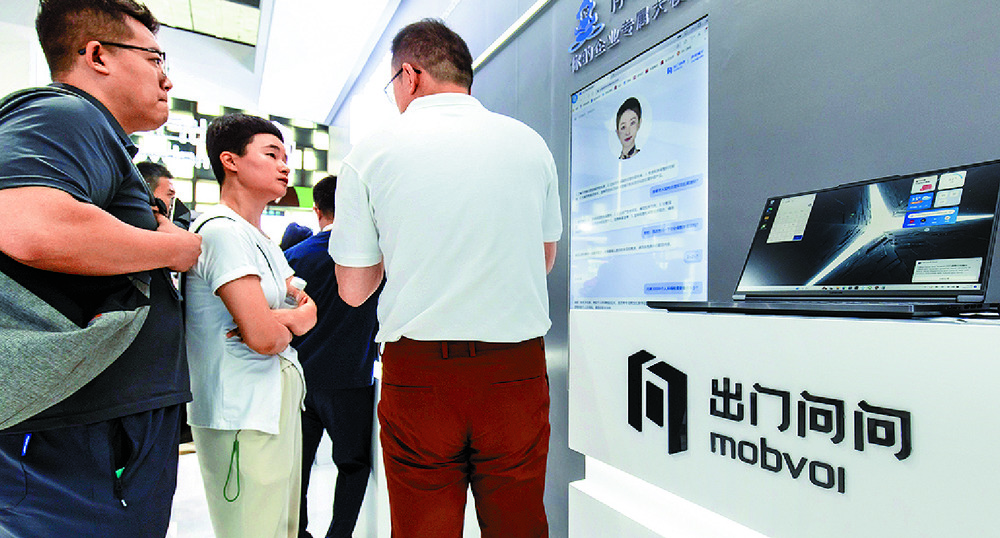
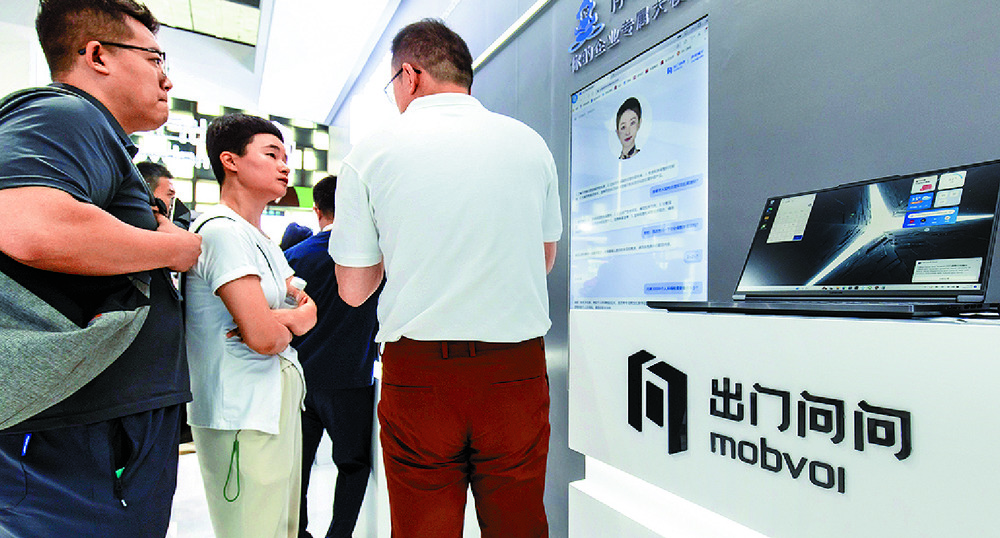
Chinese artificial intelligence solution provider Mobvoi is seeking an initial public offering in Hong Kong, inviting investors to bet on the potential of generative AI in the mainland amid a frenzy of investment into the sector across the world.
ADVERTISEMENT
SCROLL TO CONTINUE WITH CONTENT
Though backed by Google and Volkswagen, Mobvoi's available cash as of end-2022 covered only 11 percent of its total liabilities, indicating it urgently needs more liquidity to monetize generative AI.
Mobvoi was set up in 2012 by co-founder and chairman Dr Li Zhifei, a former machine learning and machine translation scientist at Google, and initially focused on human-machine interaction technologies with voice interaction as its core, before turning to AI-generated content.
Based on its voice search engine technologies, Mobvoi built up an AI-focused portfolio ranging from smart TicWatches and other AI-empowered devices to generative AI services for content creators and AI software for enterprises.
Large language model
In 2020, it developed its universal Chinese Language AI or UCLAI, a large-language model or LLM on which ChatGPT-like products are built.
UCLAI was upgraded to Sequence Monkey earlier this year, with the latter able to handle advanced text, image, 3D content, speech recognition and generative AI.
Mobvoi then rolled out an AI voiceover assistant called Moyin Workshop and its international version DupDub, as well as an AI avatar Weta365, for the generative AI market.
Mobvoi serves more than 10 million users globally, covering content creators, enterprises and customers, according to the IPO prospectus.
Its revenue grew over the last three years to 500 million yuan (HK$545.5 million) in 2022, though revenue growth slowed to 26 percent from 50 percent in 2021.
Mobvoi's valuation rose from only US$5.1 million (HK$39.7 million) in 2013 to US$757 million by September 2019 on the back of investments from Google, Volkswagen, Sequoia Capital and other key players.
But its net loss for 2022 widened nearly three times to 685 million yuan from a year ago, primarily due the valuation of redeemable shares rising from 181.9 million yuan to 775 million yuan.
Mobvoi is heavily dependent on major clients. German car giant Volkswagen, which invested US$180 million (HK$1.4 billion) into Mobvoi in 2017 in exchange for in-vehicle AI technologies, was its leading customer, contributing 213 million yuan or 42.6 percent of its revenue last year.
Though Mobvoi claims to be a leader in generative AI, revenue from this service only took up 8 percent of the total income last year.
With the launch of ChatGPT triggering an investment frenzy in generative AI, Mobvoi's capability to build its own Chinese LLM gives the startup and edge over existing English models.
Last year, Mobvoi's revenue from generative AI was the highest in China and the eighth-best in the world, according to China Insights Consultancy, with revenue from generative AI solutions soaring to 40 million yuan from only 496,000 yuan in 2020.
Moreover, China's generative market is expected to reach 32.6 billion yuan by 2027, versus only 400 million yuan last year, according to CIC.
Nonetheless, before making money from generative AI, companies need to spend a lot more cash to develop the new technology.
While US giant Microsoft is investing in billions of dollars to develop data capacity for AI, Mobvoi spent only 119 million yuan in research and development last year, which seems inadequate for generative AI development.
And chairman Li earlier revealed that Mobvoi's LLM is only half as good as ChatGPT-4, the global leader.
Mobvoi also faces competition locally with Chinese tech giants Baidu (9888), Tencent (0700), Alibaba (9988) and Huawei all launching their own ChatGPT-like products. Besides, Mobvoi's IPO foray comes when its cash and cash equivalents of 40.25 million yuan is less than 11 percent of its total debt.
China International Capital Corporation (3908) and CMB International are the joint sponsors.