
Read More
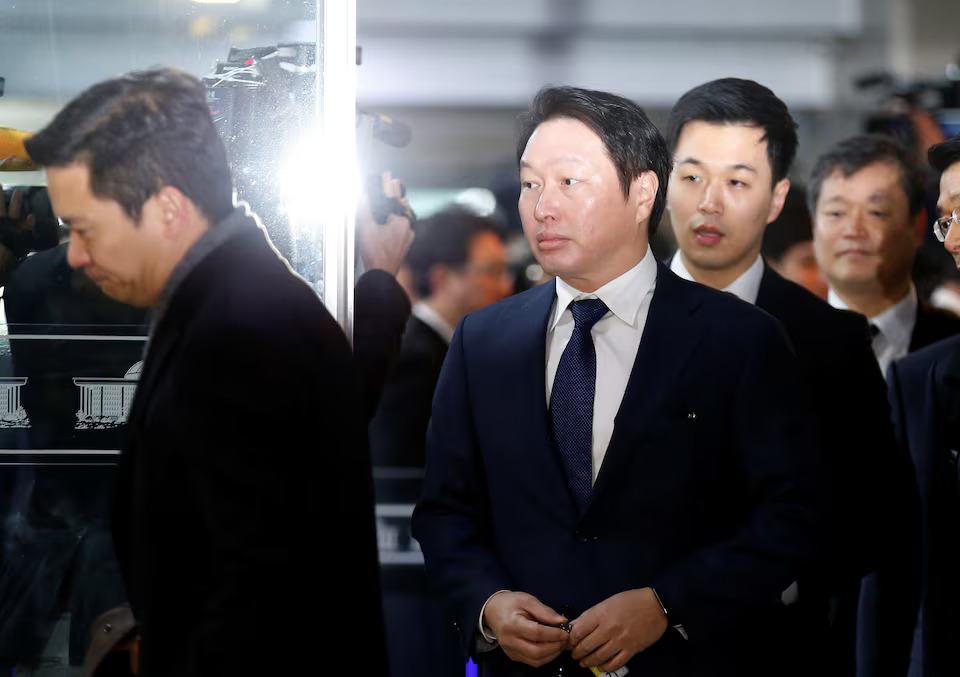
The high-profile divorce between SK Hynix founder Chey Tae-won and Roh So Young, daughter of former South Korean president Roh Tae Woo, will be ruled in Seoul High Court Friday, in which the asset division lawsuit will be concluded.
ADVERTISEMENT
SCROLL TO CONTINUE WITH CONTENT
The court will announce the ruling on the remanded appeal trial for the asset division lawsuit between Chey and Roh at 2pm on Friday.
Roh's settlement demand is half of Chey’s US$5 billion (HK$39.2 billion) fortune.
Stock prices of SK Hynix have soared tenfold since the beginning of 2025, pushing its market capitalization above US$1 trillion.
The breakup of the 1988 fairy-tale marriage was announced a decade ago, when Chey admitted that he had cheated and had a child with another woman, Chloe Kim, in a three-page letter to a South Korean newspaper, and filed for a divorce.
Roh initially refused to divorce, hoping to maintain the family for their three children, but filed for a counterclaim in 2019 and demanded half of Chey’s assets and consolation money.
The first trial in 2022 ordered Chey to pay Roh 100 million Korean won (HK$530,000) in alimony and 66.5 billion Korean won in asset division, an insignificant amount for Chey. Roh described such as “denying women’s contributions to the family.”
The second trial in 2024 raised the alimony to 2 billion Korean won and the asset division to 1.38 trillion Korean won, 35 percent of the ex-couple’s joint asset; recognizing Roh’s contributions and the 30 billion Korean won slush fund from former President Roh Tae-woo as factors in SK’s growth.
However, the settlement was overturned by South Korea's Supreme Court last October because the 30 billion Korean won was considered illegal funds.
Roh’s lawyers argue that she has devoted herself to raising their children and supporting her husband's business, and should receive reasonable compensation; while Chey’s side argues SK’s recent success was not part of Roh's involvement and division of assets should be based on previous values.
Chey currently holds 17.9 percent of SK, making him the largest individual shareholder. If he were to transfer a large portion of his shares to Roh, his control over the group would be weakened, making him more vulnerable to challenges from external investors.