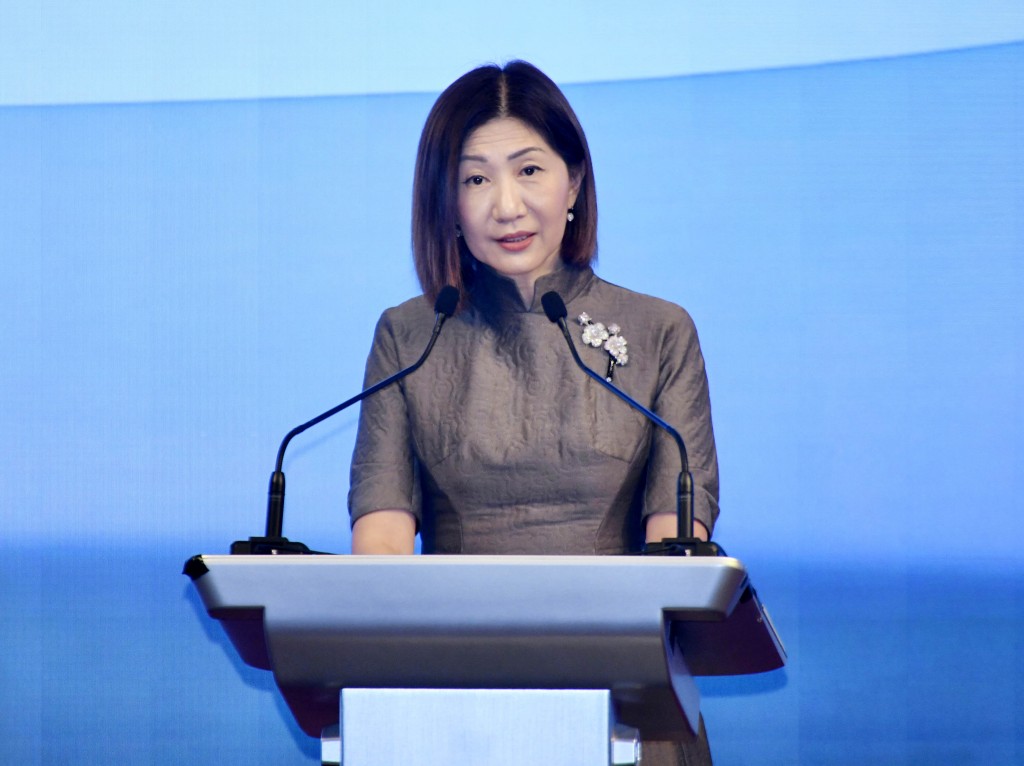
A total of 10 specialist technology companies have been listed in Hong Kong under Chapter 18C for the first five months this year, raising over HK$25 billion, said Bonnie Chan Yi-ting, chief executive of Hong Kong Exchanges and Clearing (0388).
Speaking at the HKEX Future Tech Summit on Thursday, Chan noted that Hong Kong is transforming from a traditional economic financing platform to a smart market that is driven by technology and the new economy.
These new listings span sectors like robotics, autonomous driving, artificial intelligence, and aerospace, reflecting the high alignment between the listing regime and industry trends, she added.
From January to May, proceeds of Hong Kong's initial public offering market reached HK$150 billion, while equity capital market fundraising recorded more than HK$40 billion, Chan said.
Trading activities in the city's secondary market maintained robust momentum, bringing the average daily turnover to HK$275 billion, which further advanced to HK$293 billion in May, she added.
Chan pointed out that China's technology and innovation continued to make breakthroughs in the past year, especially in the AI sector, which creates deep investment opportunities for the capital market.
The weighting of the tech sector in the Hong Kong market has increased from 15 percent to 44 percent in the past decade, while its turnover grew by more than seven times, she said, adding that the healthcare sector's proportion also rose from 3 percent to 7 percent, with its turnover expanding over sixfold.
Besides, the exchange-traded fund tracking the HKEX Tech 100 Index is expected to be rolled out, according to HKEX head of markets Gregory Yu Hock-ken.
The gauge, which was launched at the end of 2025, will take effect on its first constituent adjustment after the market close on June 12, including three stocks that comply with the fast entry rule, he added.
Yu expected more different types of products that are linked to indexes to be launched in the future, such as leveraged and inverse ETFs and callable bull/bear contracts, which can provide more flexible allocation options for the market.
Meanwhile, dual-listings in both mainland China and Hong Kong have surged since last year, with 19 new listings in the first five months of this year that already match the total number for 2025, said Stephanie Lau, managing director and co-head of IPO vetting at HKEX.
At the same event, CATL's (3750) co-chairman Pan Jian said that the company's H-shares have traded at a 25 percent to 45 percent premium over A-shares since last year's listing.
Over the next five years, the battery giant expects 200 percent to over 300 percent growth that requires significant funding, and the Hong Kong stock market provides a rapid placement channel that strongly supports its future development, Pan added.