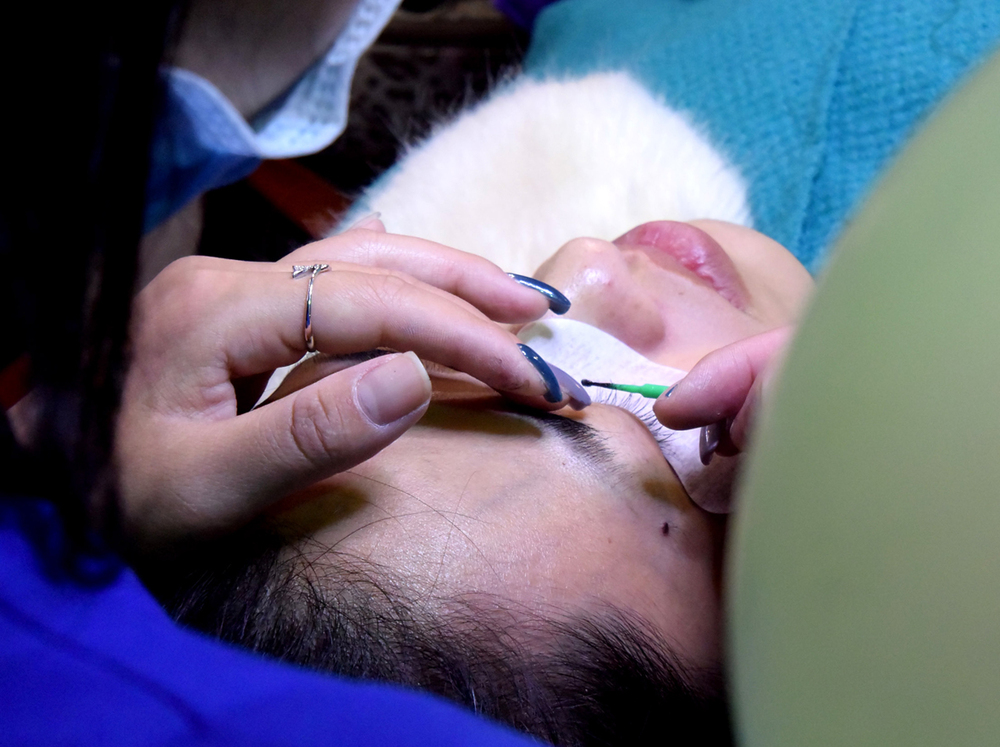
While China's booming multi-billion-dollar cosmetic surgery market nips and tucks its way to becoming the world's largest, Shenzhen has set its sights on becoming a favored destination for "medical aesthetic services" - with a little help from its neighbors.
The city's officials have come up with a 10-point plan to be implemented over the next three years, as more and more Chinese youngsters go under the knife to make themselves more desirable.
Under the plan, Shenzhen will promote cross-border medical services with Hong Kong and Macau and tap into medical resources from both the special administrative regions.
It will also encourage a wide range of cosmetic surgery specialists and brands to set up shop in Shenzhen.
Industry insiders says demand for top-notch medical services and cosmetic surgery in the mainland has been growing exponentially in recent years and Shenzhen can further cash in on this burgeoning market with the help of Hong Kong's expertise.
PIONEERING PROCEDURE
It's not just cosmetic surgery that Shenzhen is focused on. The plan also proposes cutting down on red tape to approve procedures for medical institutions solely owned by Hong Kong and Macau or mainland-Hong Kong-Macau joint ventures.
Earlier this year, a pilot program was launched to bring in senior medical professionals and technicians from Hong Kong and Macau and allow the import of drugs and medical devices that have been clinically approved outside China for urgent use.
Under the initiative, a 28-week pregnant woman called Yang became the first patient in the Greater Bay Area to use an imported drug approved for trial use at the University of Hong Kong-Shenzhen Hospital under the "Hong Kong and Macao Medicine and Equipment Connect" scheme.
The Rho(D) immune globulin injection is used to prevent hemolytic disease of fetuses and newborns in Rh-negative mothers and to treat idiopathic thrombocytopenic purpura - a type of blood disorder where the person has a very low number of platelets - in people who are Rh positive.
"The drug was not available in the mainland before, so I was planning to go to Macau for an injection," Yang said, adding that she felt "especially lucky" that she no longer had to travel to Hong Kong or Macau for the injection.
A Deloitte China report showed that China's medical aesthetics market tripled in value to 177 billion yuan (HK$212.56 billion) from 2015 to 2019 - an annual growth rate of 28.7 percent, well above the global rate of 8.2 percent - and will exceed 300 billion yuan by 2023.
At this rate, China will become the world's largest cosmetic surgery market by the middle of this decade, according to the Global Times.
China's Ministry of Health describes medical aesthetic services as "repair and reshaping the human appearance and body parts by invasive medical techniques such as surgery, drugs and medical devices."
People generally prefer procedures that don't involve surgery or are non-invasive as they are safer and do not cost the earth, with dermatology treatments such as photo rejuvenation or photofacials being the most popular.
For surgical interventions, plastic procedures on the eyes and nose are in hot demand, according to the Deloitte report, while reports indicate that double eyelids and elfin ears are currently all the rage, though fashion fads can and do change in the blink of an eye.
Women have traditionally dominated the medical aesthetic market but China's men too are now splashing out on cosmetic procedures.
The consultancy iResearch says male customers in China spend around 1,000 yuan a month on such services, almost matching the amount spent by women.
And the specialists are cashing in. Last month, Imeik Technology, a Shenzhen-listed manufacturer of skin fillers and facial implant threads, filed an application to list in Hong Kong and raise between US$2 billion and US$3 billion (HK$15.6 billion and HK$23.4 billion), according to IFR Asia.
Imeik turned in a profit of 433 million yuan in 2020, up 45 percent over the previous year as its revenue grew 27 percent to 709 million yuan. And the first quarter of 2021 saw its net profit triple to 166 million yuan.
REGULATION AND RISKS
But do people know or care about risks that come with cosmetic surgery?
iResearch last year estimated that China had more than 80,000 unlicensed cosmetic clinics compared to just 13,000 licensed ones.
And Shenzhen, which has a plethora of firms offering aesthetic medical services, was recently rocked by cosmetic surgery scandals.
In March, China's social media was set afire as news broke about a 30-year-old woman who suffered a heart attack during surgery in Shenzhen last year, leaving her unable to recognize her family.
Authorities at Nanshan district of Shenzhen said they had punished the institution with a fine of 20,000 yuan and suspended it for a month while the doctor who performed the operation was separately fined 5,000 yuan and suspended for six months.
And last month, Xiaoran, a web celebrity with more than 130,000 followers on China's Twitter-like Weibo, died of a serious infection after undergoing liposuction at a beauty clinic in Hangzhou.
The China Consumers Association says the number of complaints about cosmetic surgery had increased more than ten-fold between 2015 and 2019.
Meanwhile, the government has been tightening its controls on the industry.
In June, the National Health Commission and other government departments said they would crack down on unlicensed medical aesthetic operators while the National Internet Finance Association of China said it would bar firms from financing such institutions.
And earlier this month, the stock markets in Shanghai and Shenzhen banned medical aesthetic-related loans from structured debt products.
Imeik's stock fell 9.55 percent to 539.99 yuan last Friday, or 34 percent from its July peak amid the clamp, but the stock is still 360 percent up from its debut price last September.
If Shenzhen wants to become a favored destination for cosmetic surgery, it must tighten its grip over the sector, says an industry veteran.
Yin Weimin, who heads a medical aesthetics-related industry association in the city, told the Southern Metropolis Daily that Shenzhen is the "birthplace of cosmetic surgery in China" but it must strengthen supervision to become the go-to place for the China's youngsters who are willing to alter their bodies in their quest to be a thing of beauty.