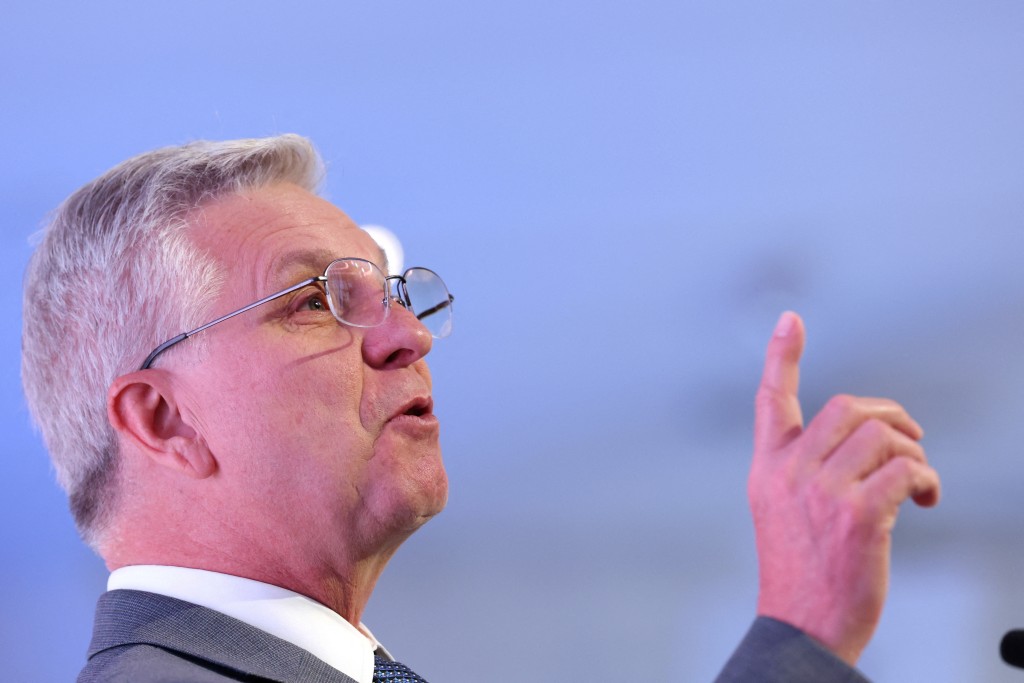
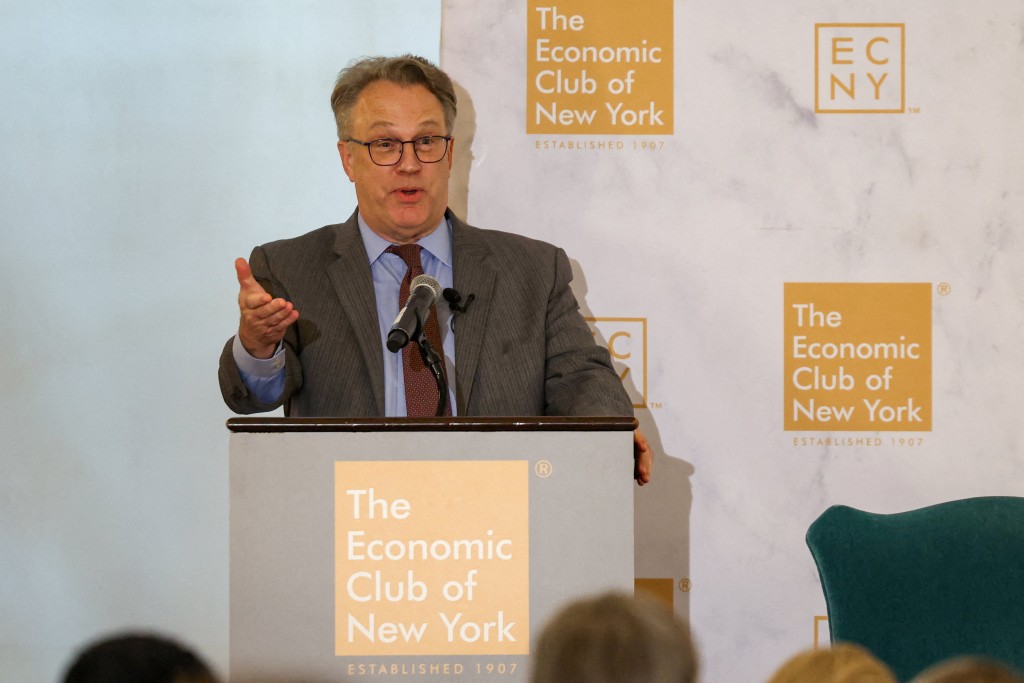
Federal Reserve Governor Christopher Waller said on Friday that while the U.S.-Israeli war with Iran is likely to push up near-term inflation, a swift end to the conflict would keep the door open for interest rate cuts later this year.
"If the war is wrapped up soon, I see a forecast in which underlying inflation would continue to move toward 2 percent, leaving me cautious about rate cuts now and more inclined toward cuts to support the labor market later this year when the outlook is more steady," Waller said in a speech at Auburn University.
However, he warned that a prolonged conflict would make the Fed's job much more difficult.
"The longer energy prices remain elevated and the Strait of Hormuz is constrained, the greater the chances that higher inflation gets embedded across a wide variety of goods and services, various supply chain effects start to emerge, and real activity and employment start to slow," Waller added.
Waller's remarks are expected to be the last from a Fed policymaker before officials enter the pre-meeting blackout period ahead of the Federal Open Market Committee (FOMC) meeting on April 28-29, where rates are widely expected to remain unchanged.
FED'S INFLATION-JOBS DILEMMA
The Fed governor highlighted the difficult balance between controlling inflation and supporting employment.
"If high inflation and weak hiring came to define the economy, I'll have to balance the risks to the two sides of the Fed's dual mandate to determine the appropriate path of policy," he said. "That may mean maintaining the policy rate at the current target range if the risks to inflation outweigh those to the labor market.”
Waller noted considerable uncertainty in the current environment and said it is becoming harder for the Fed to treat shocks as purely temporary. "With a sequence of shocks, policymakers need to be more vigilant," he said, warning that repeated shocks could keep inflation elevated for a prolonged period.
In the near term, he expects the personal consumption expenditures (PCE) price index — the Fed's preferred inflation gauge — to rise to 3.5 percent in March, well above the central bank's 2 percent target.
On the jobs front, Waller pointed out that the level of job creation now needed to keep the unemployment rate steady has fallen to around zero, meaning that some job losses in a given month do not necessarily signal the start of a recession.
Waller also downplayed concerns about risks in the private credit sector, describing it as a relatively small part of the financial system with limited systemic risk, as funds cannot be withdrawn rapidly.
While Waller supported the Fed's decision to hold rates steady in March, he had voted for a rate cut in January. He has generally been supportive of easing monetary policy, believing that inflation driven by trade tariffs will be short-lived, while rising risks to the job market warrant more support from the Fed.
Waller spoke as hopes for a quick resolution to the conflict grew following the Lebanese-Israeli ceasefire and Iran's reopening of the Strait of Hormuz. President Donald Trump, however, said the U.S. would maintain its blockade of Iran's ports.
Following the developments, oil prices dropped and U.S. stocks surged as investors raised their expectations for a Federal Reserve rate cut by the end of the year.
Reuters