Read More
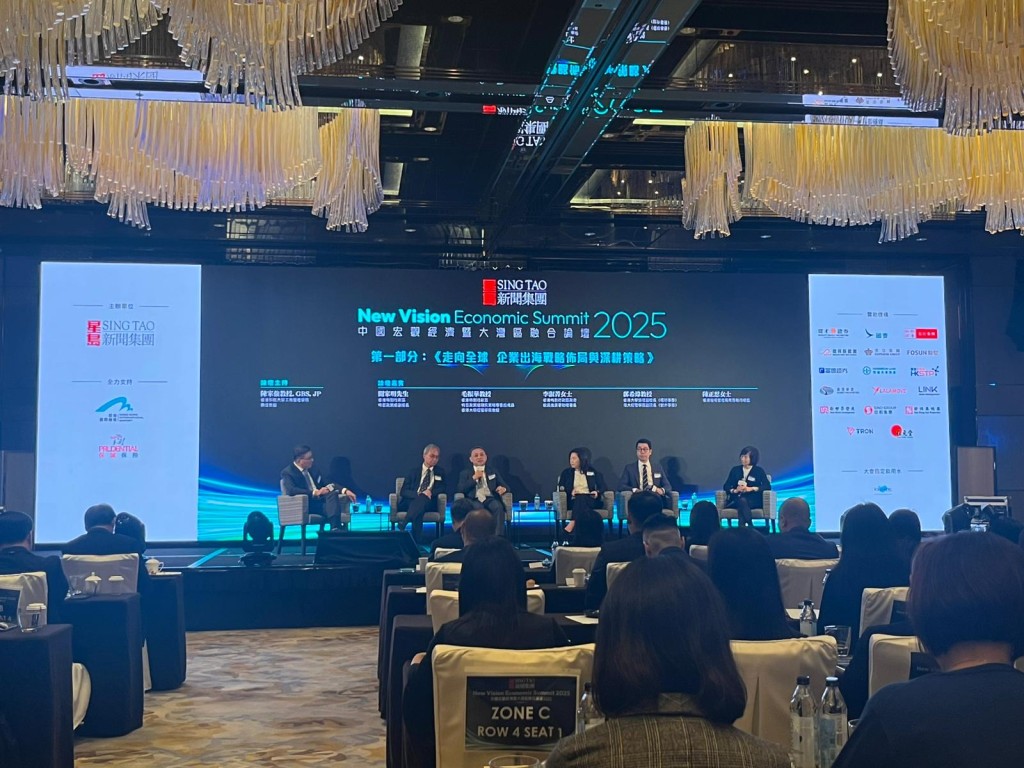
Mainland Chinese companies are entering a more advanced phase of overseas expansion, driven in part by geopolitical tensions with the United States, speakers told a forum on Tuesday hosted by Sing Tao News Corporation (1105), the parent company of The Standard.
Nicholas Kwan Ka-ming, the deputy head of the Chief Executive's Policy Unit, said Chinese firms’ “going out” strategy had moved into a “2.0 stage”, with a broader mix of state-owned and private companies expanding abroad.
He said US President Donald Trump’s policies had indirectly accelerated this shift by pushing firms to diversify markets.
Kwan said Hong Kong’s traditional model for supporting mainland firms overseas was no longer effective, prompting the government to establish a dedicated “Go Global Taskforce” in September.
Academic speakers said demand for overseas-expansion training had surged.
Mao Zhenhua, professor of practice of business school of University of Hong Kong said more than 200 mainland executives were attending programmes in the city to learn about internationalisation.
HKU associate vice-president Tang Heiwai said intense domestic competition meant more mainland firms were seeking growth abroad, adding that government and university programmes were helping them acquire the expertise needed.
Cissy Chan Ching-sze, the Hong Kong Airport Authority's commercial executive director highlighted Hong Kong’s logistics strengths, noting that about 70 percent of the Greater Bay Area’s air cargo exports pass through Hong Kong International Airport, which connects to 220 global destinations.
She said new blockchain-based logistics data platforms were enabling financing solutions for small and medium-sized exporters.
Speakers also pointed to gaps in Hong Kong’s support for companies targeting Belt and Road markets, where language, legal and cultural barriers differ from those in Europe and the U.S.
Kwan said Hong Kong needed stronger education links and more renminbi-denominated financing tools to meet companies’ needs.
Mao agreed, saying Hong Kong should seize opportunities to expand offshore financing, bond issuance and settlement services.
Speakers said supporting mainland firms was no longer only about helping them “go out”, but about providing an end-to-end platform that companies can continue to use once they expand overseas.
Loretta Lee Shuk-ching, associate director-general of Investment Promotion 2 of Invest Hong Kong, said the government had shifted from one-way promotion to a two-way model that both attracts foreign investment and helps Chinese firms invest abroad.
Tang said Hong Kong could also strengthen academic exchange with countries in the Global South, noting rising interest from Latin America and the Middle East in Hong Kong and mainland capital.
ADVERTISEMENT
SCROLL TO CONTINUE WITH CONTENT