Read More




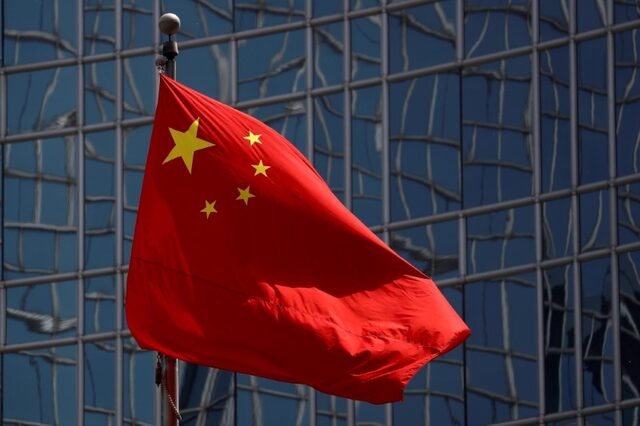






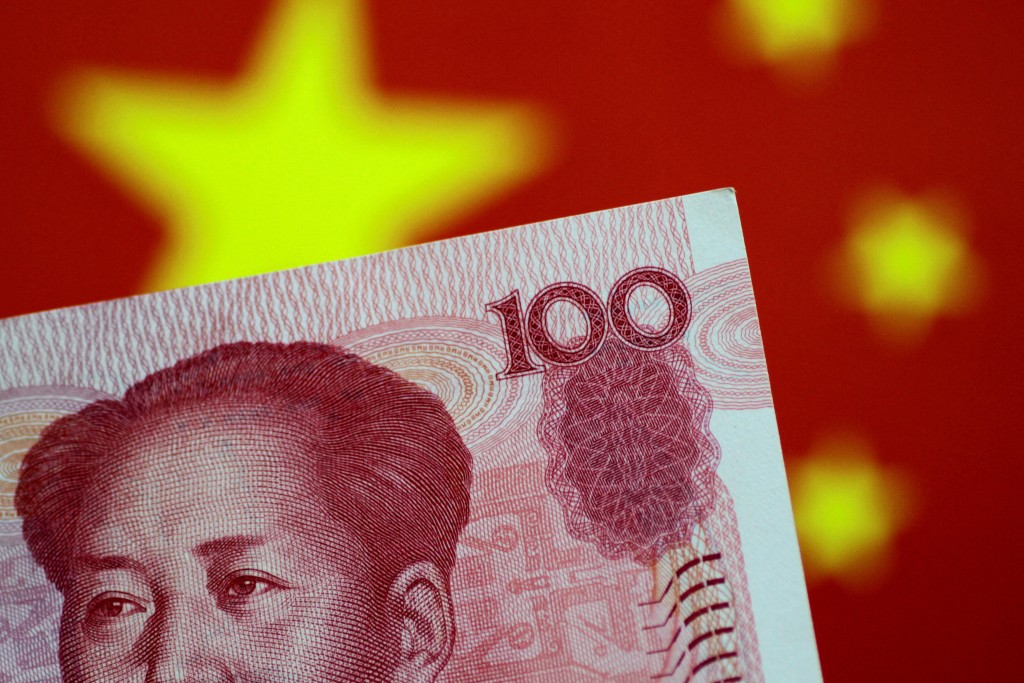
China's yuan briefly revisited a more than 10-month high against the US dollar on Tuesday before paring most of the gains, lifted by heightened expectations for a Federal Reserve interest rate cut later this week.
The Chinese currency has been grinding firmer in recent weeks, guided by the central bank's stronger official midpoint guidance fix. Investor sentiment was also buoyed by signs of easing Sino-US trade tensions, following a framework agreement
to resolve the ownership issue of the short-video app TikTok.
However, market participants were reluctant to drive the yuan much higher given persistent weakness in the world's second-biggest economy.
China-related factors are at play, "such as stock market inflows, the US-China trade truce, record trade surpluses, and the People's Bank of China's (PBOC) preference to allow a somewhat stronger yuan," said Tommy Wu, senior China economist
at Commerzbank.
"While these factors may remain supportive of the yuan in the near term, we remain cautious in our forecast because some or all of these factors may fade over time."
Wu expects the yuan to stay around the 7.10 to 7.15 per dollar range through to the year-end, versus 7.20 to 7.30 previously.
The onshore yuan strengthened to a high of 7.1145 per dollar in morning deals, the strongest level since November 5, 2024, before changing hands at 7.1159 as of 0345 GMT.
Its offshore counterpart traded at 7.1128 per dollar, up about 0.09 percent.
Prior to the market opening, the PBOC set the midpoint rate at 7.1027 per dollar, and 132 pips firmer than a Reuters' estimate of 7.1159. The spot yuan is allowed
to trade 2 percent either side of the fixed midpoint each day.
Market attention is now shifting to the Fed's policy decision from its September 16-17 meeting, with expectations for a rate cut largely priced in.
A Fed cut to its benchmark rate could provide some monetary policy leeway to its global counterparts, but many analysts do not expect the PBOC to follow suit.
"We especially expect the PBOC to be reluctant to follow the Fed in cutting rates in September, despite the decline in CPI inflation in August," said Ting Lu, chief China economist at Nomura.
"Rolling out pro-growth measures could fan the flames and inflate a stock market bubble. However, doing nothing risks worsening the growth slowdown."
China's stock market has been on a tear, with the benchmark Shanghai Composite Index hovering near its 10-year highs.
Reuters