Zhaoke Ophthalmology is on course to raise about HK$2.07 billion by going public.
Local brokers have loaned at least HK$4.18 billion via margin financing for retail investors as of last Friday, meaning a 19-time oversubscription.
CaaS Capital, GIC, OrbiMed Funds, Golden Valley and VMS Investment are among the cornerstone investors to subscribe a total of US$55 million worth of shares.
Founded by Lee's Pharmaceutical (0950) in 2017, the loss-making company mainly provides ophthalmic drugs on five major indications in China in terms of market potential, including dry eye disease (DED), wet age-related macular degeneration (wAMD), diabetic macular edema, near-sightedness, and glaucoma.
It has built a product pipeline comprising 13 innovative drugs and 12 generic ones, according to the prospectus.
According to a commissioned China Insights Industry Consultancy report, Zhaoke has one of the most comprehensive ophthalmic drug pipelines in China.
At the current stage, its core product Cyclosporine A (CsA) ophthalmic gel to treat DED is expected to complete the ongoing phase three trial in China in the third quarter of this year.
The company says that the drug diffuses faster on the ocular surface and stays longer, compared with Restasis, the first CsA ophthalmic drug approved in the United States, and plans to submit a new drug application to the National Medical Products Administration in the fourth quarter of 2021.
This comes as another core product ZKY 001, which is going through the phase two trial and to treat the corneal epithelial defect, is expected to start the final trial in the second half of 2022.
Corneal epithelial defect refers to the partial or complete loss of the epithelial cells in the cornea.
Meanwhile, four of its innovative drugs to treat DED, wAMD, near-sightedness, and allergic conjunctivitis separately, are expected to start the phase three trial from the second quarter of this year to 2023.
In addition, another drug NTC010 to treat post-cataract surgery inflammation and infection will be submitted to an investigational new drug application in the second quarter of 2021 and then apply for waiver of clinical trials in China.
As for generic drugs, two of its products to treat glaucoma, a condition that optic nerve damages, are expected to get the green light to be an approved drug in China in the last quarter this year and the first half of 2022, respectively.
Before the initial public offering, Zhaoke has attracted a total of US$195 million through two rounds of fundraising. It was valued at US$470 million after the series B financing on October 9, 2020, up from a corresponding valuation of US$110 million in series A financing in May 2019.
After the spin-off, Lee's Pharmaceutical, which owns 34.1 percent of Zhaoke, will remain the single largest shareholder.
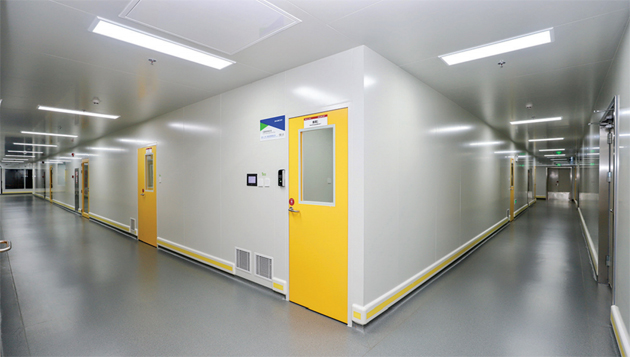
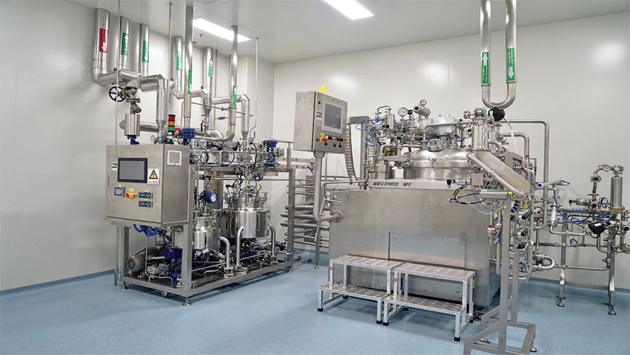
Zhaoke plans to spend 32 percent of the net proceeds in development and commercialization of its two core drugs and 46 percent in other drug candidates. It also intends to use 7 percent to expand the production line expansion of the Nansha manufacturing facility and 5 percent to fund its business development activities and the expansion of drug pipeline. The remaining 10 percent is for working capital and other general corporate purpose.
As it has no commercialized product at the current stage, the company posted no revenue in the past two years. Net loss widened nearly by 3.12 times to 670.86 million yuan (HK$798.43 million) year-on-year in 2020, due to an increase in finance cost.
Research and development expenses dropped by 12.45 percent to 81.78 million yuan in 2020, due to a decline of 28 million yuan in clinical trial professional service fees. This came after it incurred costs for two clinical trials in 2019.
As a pre-revenue pharmaceutical company, it warns that it will continue to incur operating losses and may never become profitable.