Art and culture are powerful mediums for fostering unity and peace – but can also be weaponized for death and destruction.
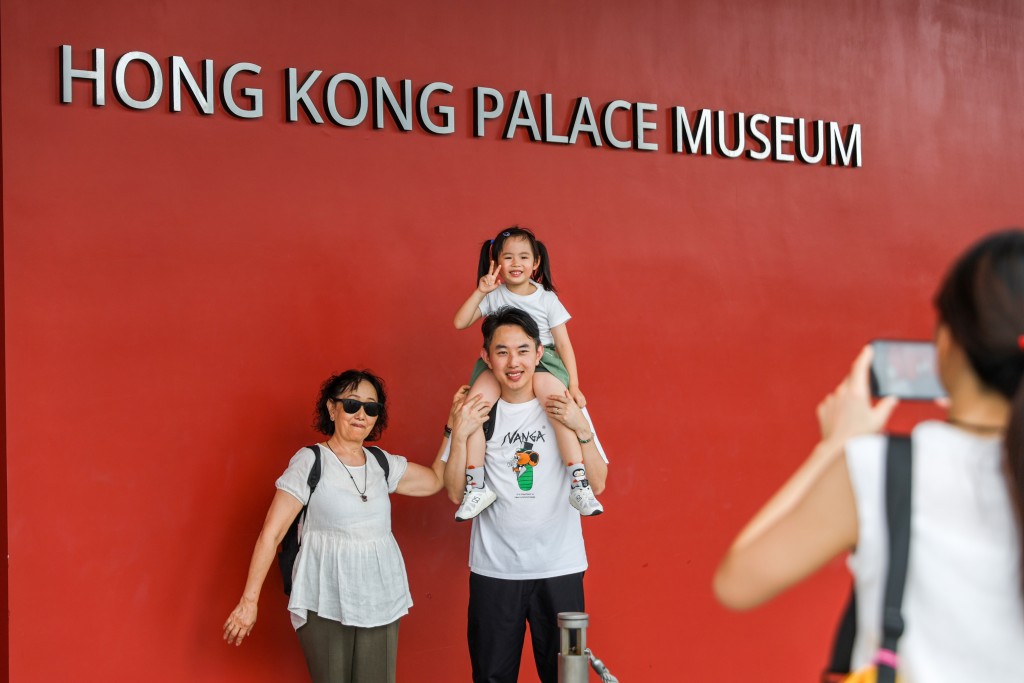
Consider this: In Hong Kong, an exhibition of Lingnan art draws people together in a celebration of cross-cultural exchange. Meanwhile, a deadly shooting in America outside a museum leaves two people dead, underscoring how race can become a target of hatred.
It shows how bridges for dialogue can tragically turn into battlegrounds.
The Hong Kong event, titled The Reform Mission: Guangdong Art Centennial Exhibition, has 160 works of Lingnan art on show.
The Lingnan School, rooted in Guangdong’s culture south of the Nanling Mountains, reflects a tradition of blending Eastern and Western influences.
Lingnan art: legacy of openness
Artists like Gao Jianfu and Gao Qifeng, who studied in Japan, infused their work with revolutionary themes, moving beyond classical landscapes to address social struggles.
Gao’s White Bones Deepen the Sorrow of National Suffering starkly critiques inequality, while Sepia captures impermanence through ink-washed squids, a metaphor for unpredictability.
His innovative spirit influenced Hong Kong’s New Ink Movement, including pioneers like Lui Shou-kwan.
But Lingnan’s cultural fusion extends beyond painting. As a historic trade hub, Guangdong adapted foreign tastes into its crafts, such as porcelain painted for European buyers.
Such craft has been brought to Hong Kong too. Lingnan gardens like Shunde’s Qinghui Garden mix Jiangnan elegance with Western stained glass.
Even architecture reflects this hybridity: Kaiping’s diaolou watchtowers blend Baroque and Cantonese designs, built by overseas returnees. These examples embody Lingnan’s outward-looking ethos.
When culture becomes a target
But the attack at Washington’s Jewish Museum lays bare the violence that culture can provoke. The shooting, fueled by antisemitism, struck at a space dedicated to Jewish history – a history marked by resilience amid persecution.
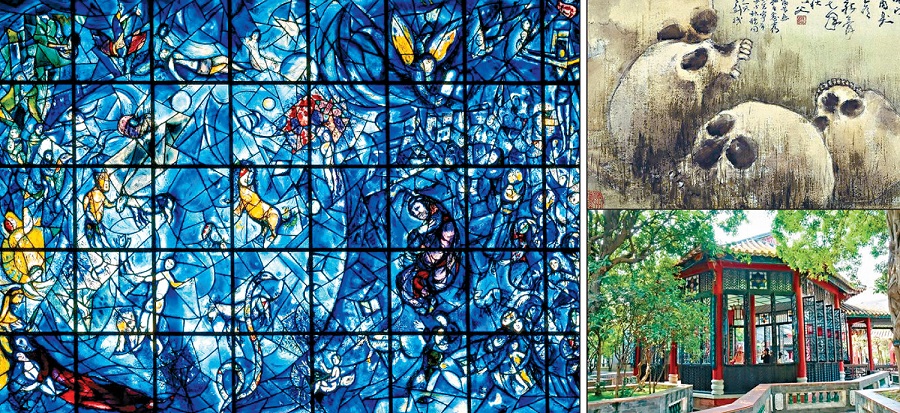
Jewish artists like Marc Chagall wove multicultural influences into their work, while figures like conductor Daniel Barenboim advocate for Israeli-Palestinian peace.
Jewish museums worldwide preserve these narratives not just as art, but as testaments to survival and calls for tolerance.
Yet, as the Gaza war reignites tensions, cultural symbols remain caught in the crossfire.
Lingnan art demonstrates how exchange fosters innovation, while the attack on the museum shows how identity can be weaponized.
When Chagall revealed his stained glass window homage to UN secretary-general Dag Hammarskjöld who died in a plane crash while on a peace mission to Northern Rhodesia, now Zambia, in 1961, he said: “I should like people to be as moved as I was when I was engaged in this work which was done for people of all countries, in the name of peace and love.”
Culture’s power lies in its ability to transcend borders or deepen divides.
The world has just lost famed political scientist Joseph Nye but his advocacy of soft power – a nation’s ability to shape preferences through attraction rather than coercion – endures and will remain relevant forever.