Read More










Ocean Park crowds revive memories of its busiest days
15-06-2026 14:27 HKT


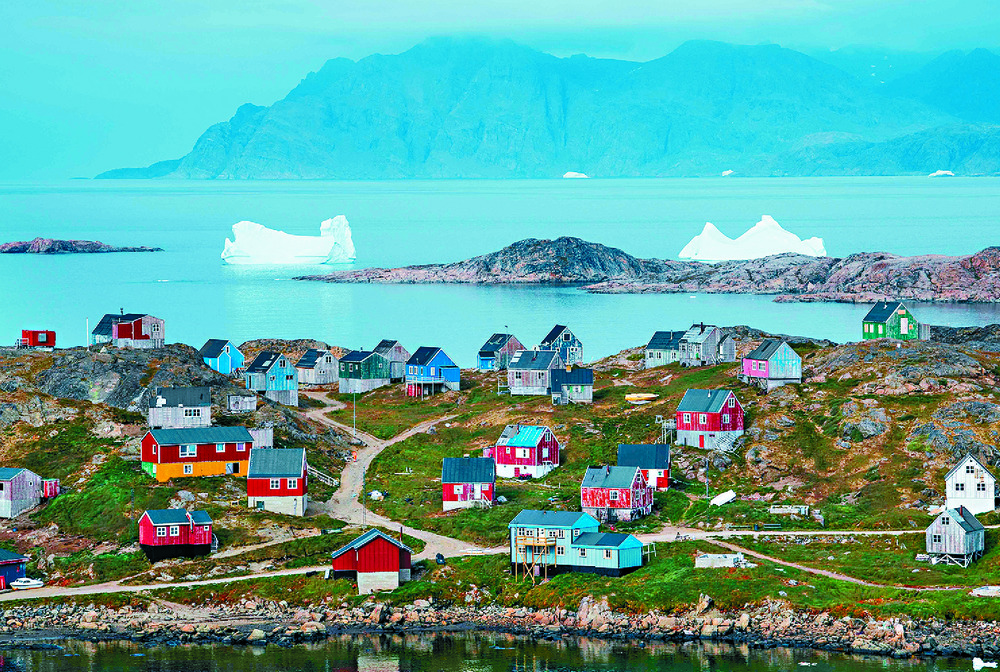
Now a new study shows that the melting of the polar ice caps is causing our planet to spin more slowly, increasing the length of days at an "unprecedented" rate.
"It's like when a figure skater does a pirouette, first holding her arms close to her body and then stretching them out," added coauthor Benedikt Soja of ETH Zurich.
Earth is commonly thought of as a sphere, but it's more accurate to call it an "oblate spheroid" that bulges somewhat around the equator, a bit like a satsuma.
What's more, its shape is constantly changing, from the impacts of the daily tides that affect the oceans and crusts, to longer-term effects from drift of tectonic plates, and abrupt, violent shifts caused by earthquakes and volcanoes.The paper used the Global Positioning System, which measures Earth's rotation very precisely, to about one-hundredth of a millisecond, and even looked at ancient eclipse records going back millenia.
If the Earth turns more slowly, then the length of day increases by a few milliseconds from the standard measure of 86,400 seconds.A currently more significant cause of slowdown is the gravitational pull of the moon, which pulls on the oceans in a process called "tidal friction" that has caused a gradual deceleration of 2.4 milliseconds per century over millions of years.
But the study comes to a surprising conclusion that, if humans continue to emit greenhouse gases at a high rate, the effect of a warming climate will be greater than that of the moon's pull by the end of the century,. AGENCE FRANCE-PRESSE