Read More












Iran demands transit fees in yuan, stablecoins for Strait of Hormuz passage
03-04-2026 02:45 HKT
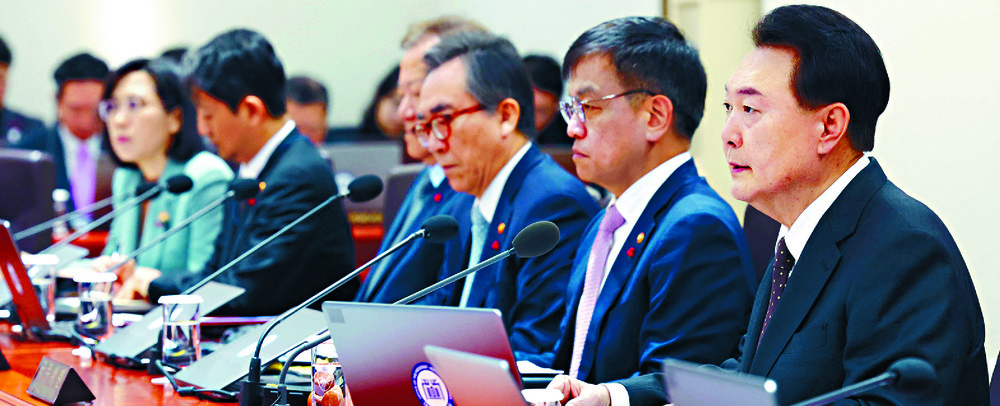
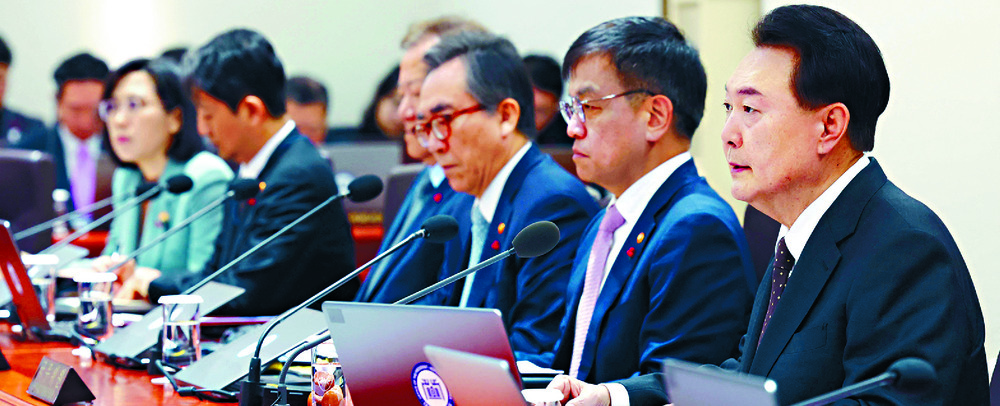
South Korean President Yoon Suk Yeol yesterday criticized North Korea's move to define the South as a hostile country, saying it showed Pyongyang's
"anti-national and ahistorical" nature.
Yoon also said North Korea's recent missile launch and artillery firing were a "political act" to divide the South Korean public and vowed that provocations will be met with its own response on a "multiplied scale."
Yoon's retort was in response to North Korean leader Kim Jong Un's calling for the constitution to be changed to ensure that the South is seen as the "primary foe" and warning that his country did not intend to avoid war should it happen, KCNA reported yesterday.
In a speech to the Supreme People's Assembly, Kim said he had concluded that unification with the South was no longer possible, and accused Seoul of seeking regime collapse and unification by absorption.
Kim said the constitution should be amended to educate North Koreans that South Korea is an "invariable principal enemy" and define the North's territory as separate from the South.
North Korea should also plan for "completely occupying, subjugating and reclaiming" South Korea in the event of a war, and South Koreans should also no longer be referred to as fellow countrymen, Kim added, calling for the severing of all inter-Korean communication and the destruction of a monument to reunification in Pyongyang.
Three organizations dealing with unification and inter-Korean tourism would also be shut down, state media added.
Kim's call for constitutional changes come as tensions worsened recently amid missile tests.
Significant portions of Kim's speech laid out plans for improving livelihoods and he suggested his rhetoric toward South Korea and the US was designed to help maintain internal unity and achieve economic and military goals, while the US was distracted with other crises, said Lim Eul Chul, professor of North Korea studies at South Korea's Kyungnam University.
Won Gon Park of Seoul's Ewha Womans University argued that Kim appeared to feel threatened by strengthened extended nuclear deterrence by the South and the US, the deployment of US strategic assets to the peninsula, and trilateral military efforts with Japan.
"Kim's increasingly aggressive language appears to show he feels he's lost the upper hand in the inter-Korean relationship," Park said.