





Read More











Bowie Woo, 94, sets Guinness World Record at star-studded concert
08-06-2026 18:03 HKT

Nine days of rain ahead as temperatures dip, Observatory says
09-06-2026 17:35 HKT
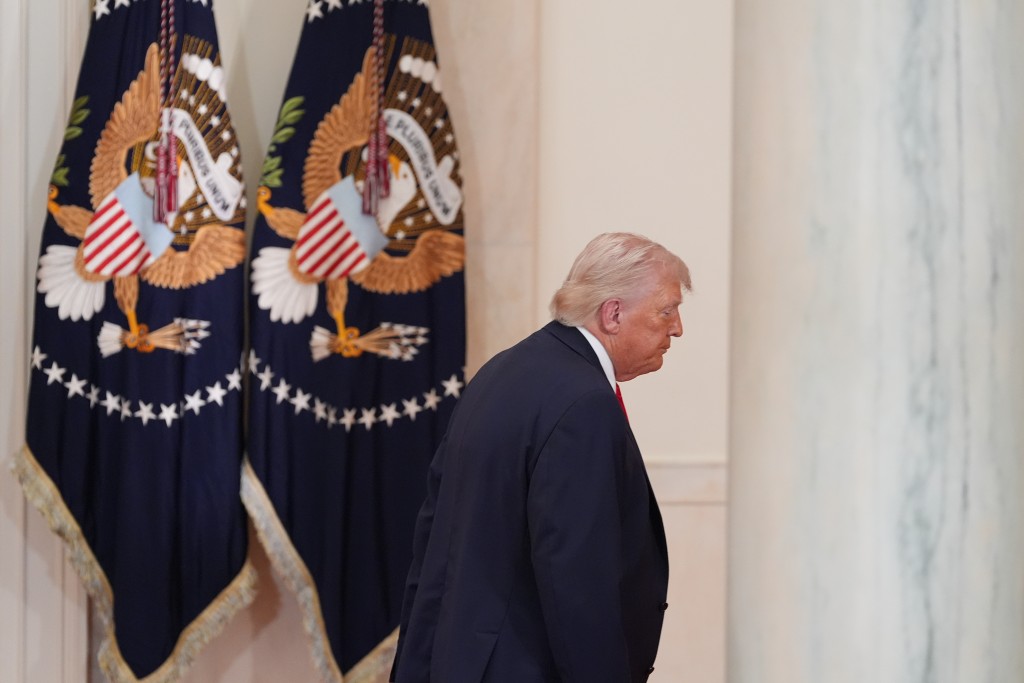
US President Donald Trump delivered a national address on Thursday regarding the war with Iran. To his right was the American flag, and to his left was the Presidential Flag, a symbol peace and unity that could not be more paradoxical of a nation that is at its most divided and its leadership bent on war.
The Presidential Flag is the visual embodiment of US executive power, a symbol of the president's personal authority. It is displayed only within the presence of the president during appearances such as a national address, White House events, or traveling.
No one else may use it, and it is never flown alone or at half-mast.
It is usually located to the *president's left and must be higher* than the *national* flag.
Initially, the US presidential flag had no unified standard until President Truman signed an executive order establishing the core prototype in 1945. The final version we see today was finalized by President Eisenhower in 1960.
The iconic American bald eagle, centrally emblazoned, holds the olive branch of peace in its right claw and the arrows of war in its left, with its head facing toward the olive branch. The eagle’s direction symbolises the priority peace over war.
The breast shield represents the union of the original 13 states with the blue chief and the red and white stripes.
The stars about the eagle’s head also represent the 13 states with a Latin inscription above reading “E Pluribus Unum," meaning "Many among one.”
The current 50 states are represented by the ring of stars.
In addition, the US also has vice-presidential flags and governor's flags. The flags of the Democratic and Republican parties also have their own historical significance, originally drawn up as a cartoon to mock the politics of the two parties.
The colors of the Vice Presidential Flag are opposite to the Presidential Flag to distinguish rank.
Only 16 states have their own governor's flags, such as California, New York, and Texas.
The flag of the Democratic Party has a blue background with a blue donkey's head in the center, often with three or five stars, whereas the Republican flag has a blue background with a red and blue elephant, often with three stars, representing the separation of powers.
Both party symbols originated from political cartoons by famous American cartoonist Thomas Nast. Initially satirical, they gradually became officially recognized party emblems, unintentionally creating classic symbols of American politics.
In the 1870s, Nast used the donkey to satirize the Democratic Party's blind, reckless, and stubborn nature. Later, the donkey came to represent the Democratic Party as: grassroots, approachable, flexible, tenacious, and indomitable.
In Nast's cartoons, elephants represent Republican voters panicked by public opinion. However, Republicans believe elephants represent stability, strength, dignity, and solemnity, aligning with the Republican Party's self-image and symbolizing strength, stability, conservatism, power, and order, retaining the design.