Read More






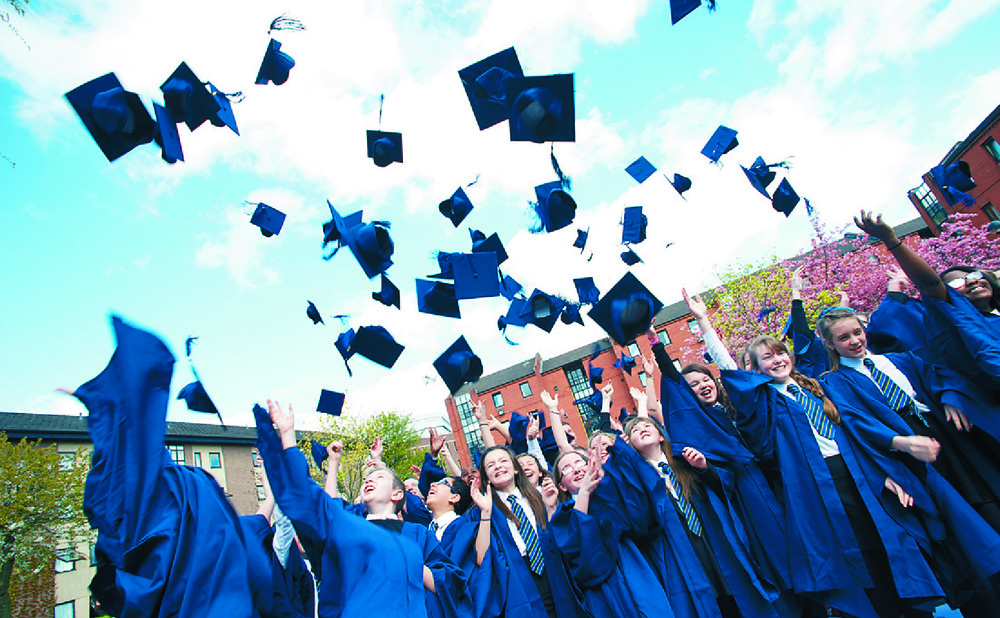
A storm is currently brewing surrounding grading at UK universities. A report, released by the Office for Students, in May last year, suggests that the proportion of first-class degrees handed out in the country has more than doubled in the last decade - from 15.7 percent in 2010-2011 to 37.9 percent in 2020-2021 - leading to allegations of grade inflation and an external investigation.
However, in January, the UK's Higher Education Statistics Agency recorded a fall in the number of first-class degrees awarded for the first time since records began in 1993.
Nearly a third (32 percent) of undergraduate degrees were awarded a first-class honors classification in 2021-2022, a drop from 36 percent the year before, the agency said.
However, 46 percent of students were awarded upper second-class degrees in 2021-2022, the same proportion as in 2020-2021. The extensive changes required to education delivery and assessment during Covid-19 might have something to do with these surprising figures and fluctuations.
Chairman of the OfS, James Wharton,said recently that the regulator is considering acting over the "significant" grade inflation, which he said could devalue the degrees. Highlighting the figures,
The Conservative peer told the Industry and Regulators Committee in the House of Lords:"This is a significant amount of grade inflation and more and more people are getting firsts. There may be very good reasons for that.
'We may have cohorts of much brighter students but there is also a risk that if everyone gets a first, no one gets a first. It could be seen to devalue the award in itself. Students quite like getting firsts, so in the short term individual students who are studying now might quite like their chances being enhanced.
"But it may well not be in their interest in the long term if it undermines the value of the thing they have earned and worked so hard for."
He acknowledged that the OfS has "not taken sufficient action over a very long period of time," but said the regulator is now looking at what actions can be taken to address the issue, including investigations.
Universities could be required to retain an "appropriate selection" of graded work from students as evidence for investigators to consider, he added.
Grade inflation, the practice of rewarding the same level of student achievement with increasingly higher degree classifications, is explicitly banned.
If the universities or colleges are found to have broken OfS rules, they could be fined up to 500,000 (HK$4.87 million) or 2 percent of their income.
It is important to note that not all universities are affected and whatever the investigations conclude, students who have already received their grades will not be affected. Students still studying should hand in their best attempt at assignments, and respond thoughtfully to feedback, an approach that always fosters improvement.
If you have any questions about our column, or the issues raised within it, please e-mail them to us: enquiry@brightentestprep.edu.hk