Read More





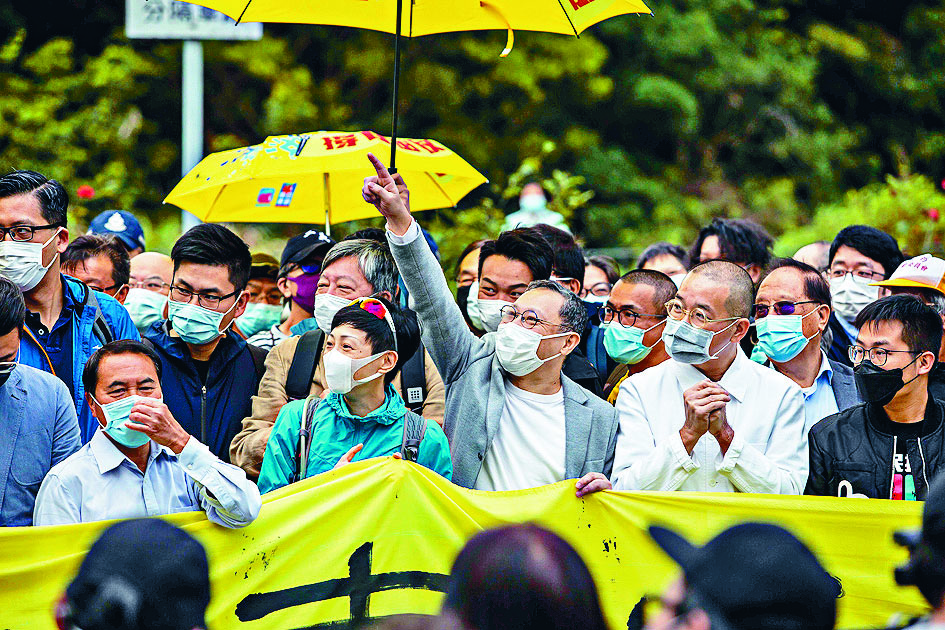
In the past, Hong Kong's top universities have managed to attract academic talents from all over the world to carry out research as well as teach. But the year-long social unrest and the subsequent national security law could now potentially thwart this.
The key question is now this: is Hong Kong still able to attract and retain foreign academics?
A Western professor who has worked as an academic in Hong Kong for around two decades and did not wish to be named said he has a concrete plan to leave the SAR, citing the current political situation.
One of his motivations for leaving is resentment toward the government. "After the Hong Kong government's incompetent and unjust response to the political events of 2019, Hong Kong has become an unattractive place to live and work," he said.
"Personally, I am uncomfortable living under and paying taxes to a dishonest government that treats its people unjustly while ignoring their voices and offering no channel for them to participate in a way that can improve the situation."
Although he has not faced any political barriers to his academic studies, he feels that political interference is still a concern.
"The pro-vice-chancellor selection issue in 2015 in my view was a case of unacceptable political interference in university affairs, as was the dismissal of Benny Tai Yiu-ting," he said, referring to two controversial decisions made by the University of Hong Kong's governing council in the past few years.
The professor had come to Hong Kong 20 years ago as he felt it provided unique opportunities.
"I work in a China-related field. The advantages of teaching in Hong Kong have been high pay, low teaching load, availability of research funding and an interesting city to live in."
But now he feels doubtful about his prospects here.
"The recent criminalization of a wide but vague range of speech acts, in my view, now makes it an extremely disadvantageous place for scholars in the humanities," he said.
Another professor, who is from the United States and also wishes to remain anonymous, is thinking of leaving too but has made no plans yet.
She worked in the mainland before taking up an academic position in Hong Kong six years ago.
"The definition of academic freedom in the mainland is very narrow. As long as you work in your particular field and write in English for your academic journals, that is fine," she said.
"But they discourage you from saying anything publicly in Chinese. I felt compromised, so I was excited to move to Hong Kong, which had more freedom."
However, as time went by, she felt that freedom was decreasing. "The past year has changed very quickly, and it is the national security law that has caused the change," she said.
"When I was in the mainland, a lot of mainland academics knew where the line was - what they could say, they couldn't say. But here no one really knows where the line is. Some of my colleagues are self-censoring as they are afraid of the repercussion on them and their students."
Now the professor is anxious about the law and seeking opportunities outside of Hong Kong.
Though some believe politics can be kept out of academia, the American disagreed. "The way I approach my work is informed by contemporary, political issues and understanding of the society," she said.
"To take politics outside the classroom is just misleading. To do so is a political stance in itself."
On the other hand, Lo Chung-mau, the chair of hepatobiliary and pancreatic surgery in the department of surgery at HKU, believes the security law will attract more foreign talent. "Society is more stable now. At least there is not as much violence as compared to before," he said.
Lo added that non-local academics not only come from Western countries but also from other places in Asia, with mainlanders playing an important role.
"Last year, the protests in many ways were directed against the Chinese. We have to remember that the Chinese can be from Singapore, Taiwan and the West," he said.
He added that the law could culminate in a stable environment that could see academia bloom in the SAR. "Some academics from Asian countries told me they are more willing to come to Hong Kong now."
The hepatobiliary surgery expert also disagreed with the view that academics may easily cross the security law's red lines.
"Academic freedom in Hong Kong is not worrying. We have to draw a very clear line between academia and politics," said Lo.
He cites a clinical trial as an example. "When we ask whether a treatment is superior to the other, true academics should not be biased and say the treatment is effective because they work for a certain company or government," he said.
"Those who are not true academics would try to push to say the treatment is positive."
Academia can be separated from politics, he said. "There is always a line, we all know that. Things that are political shouldn't be dressed up as academia. Those who are really academics should not feel threatened."
Lo is unconcerned by the influence of the security law but regretted the US's inclusion of academics in politics by suspending the Fulbright program - an educational exchange program sponsored by the US government - for Hong Kong.
"True academics should say no to these interventions," Lo said, believing academic exchanges should be borderless in order to benefit the world.
lisa.kao@singtaonewscorp.com