Read More
The Democratic-controlled House voted overwhelmingly to override President Donald Trump’s veto of a defense policy bill, setting the stage for what would be the first veto override of his presidency.
ADVERTISEMENT
SCROLL TO CONTINUE WITH CONTENT
House members voted 322-87 on Monday to override the veto, well above the two-thirds needed to override. The Senate, which is expected to vote on the override this week, also needs to approve it by a two-thirds majority.
Trump rejected the defense bill last week, saying it failed to limit social media companies he claims were biased against him during his failed reelection campaign. Trump also opposes language that allows for the renaming of military bases that honor Confederate leaders.
The defense bill, known as the National Defense Authorization Act, or NDAA, affirms 3 percent pay raises for U.S. troops and authorizes more than US$740 billion in military programs and construction.
House Speaker Nancy Pelosi, said after the vote that the House had done its part to ensure the NDAA becomes law “despite the president’s dangerous sabotage efforts.″
Trump’s “reckless veto would have denied our service members hazard-duty pay,″ removed key protections for global peace and security and ”undermined our nation’s values and work to combat racism, by blocking overwhelmingly bipartisan action to rename military bases,″ Pelosi said.
Republican Senator Jim Inhofe, chairman of the Senate Armed Services Committee, called the bill “absolutely vital to our national security and our troops,″ adding, “Our men and women who volunteer to wear the uniform shouldn’t be denied what they need — ever.”
Trump has succeeded throughout his four-year term in enforcing party discipline in Congress, with few Republicans willing to publicly oppose him. The bipartisan vote on the widely popular defense bill showed the limits of Trump’s influence in the final weeks before he leaves office, and came minutes after 130 House Republicans voted against a Trump-supported plan to increase coronavirus relief checks to US$2,000. The House approved the larger payments, but the plan faces an uncertain future in the Republican-controlled Senate, another sign of Trump’s fading hold over Congress.
Trump has offered a series of rationales for rejecting the defense bill. He urged lawmakers to impose limits on Twitter and other social media companies he claimed are biased against him, as well as to strip out language that allows for the renaming of military bases such as Fort Benning and Fort Hood that honor Confederate leaders. -AP
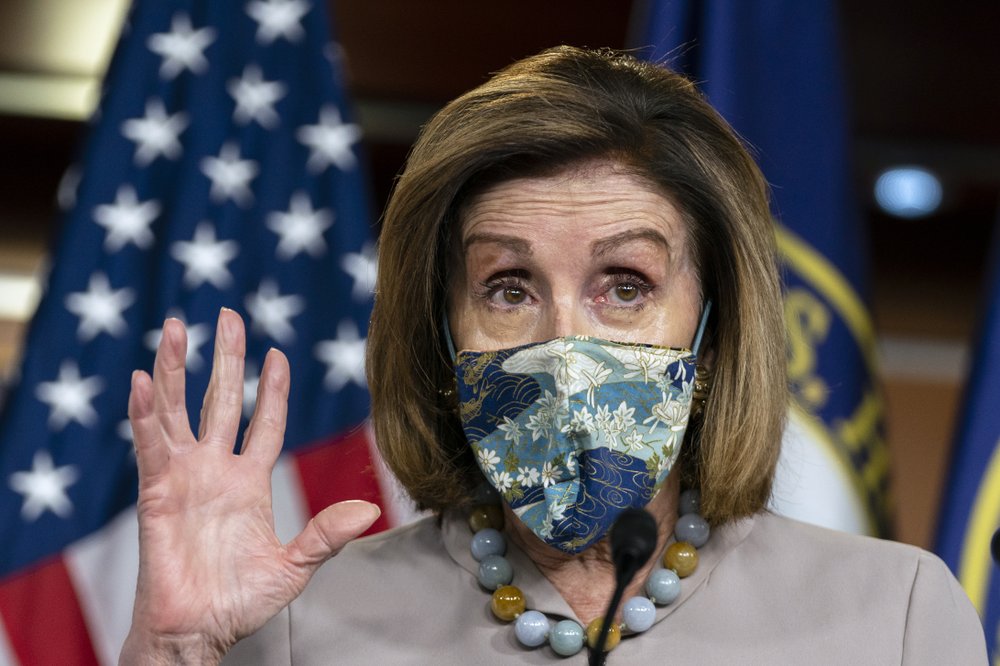
House Speaker Nancy Pelosi during a news conference at the Capitol, Thursday, December 10, 2020, in Washington.