Read More









Iran demands transit fees in yuan, stablecoins for Strait of Hormuz passage
03-04-2026 02:45 HKT
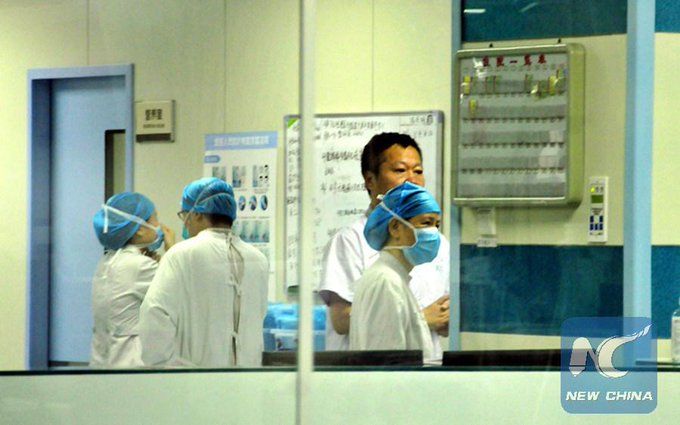
A man who had traveled to Japan after visiting Wuhan in China's Hubei province was infected with a new pneumonia-causing coronavirus, widening the spread of the SARS-like disease first reported in China less than three weeks ago, Bloomberg reports.
Kyodo News agency said the patient is Chinese.
The man in his 30s, who lives south of Tokyo, spent time with an infected person in Wuhan, Japanese health officials said today.
He developed a fever on January 3 before returning to Japan on January 6, according to a statement.
He was hospitalized with pneumonia on January 10 and discharged with a mild cough five days later.
Like a case reported Monday in a Chinese traveler to Thailand, the man had not visited the wholesale seafood market in Wuhan implicated in the outbreak, which has hospitalized dozens of people, killing one.
On Monday, Thai authorities reported that a woman living in Wuhan traveled with a tour group to Bangkok on January 8 -- three days after experiencing fever, chills, sore throat and a headache -- and was hospitalized on her arrival.
Lab studies confirmed she was infected with the 2019-nCoV virus, making her the first case outside China. The traveler was a regular visitor to a fresh produce market in Wuhan, but had not visited the one linked to most of the other cases.
The novel coronavirus, thought to be the source of the infections, has captured international attention because of similarities with the one that sparked Severe Acute Respiratory Syndrome, or SARS, 17 years ago.
There is no evidence the so-called 2019-nCoV virus spreads from person to person and it’s difficult to imagine a major increase in infections, Hiroshi Umeda, an official with the Ministry of Health, Labor and Welfare, told reporters in Tokyo.
That is unlike SARS, which killed almost 800 people. Still, cases in Japan and Thailand reported this week suggest it may be spreading more widely in Wuhan, a city of 11 million people.
“Cases like the ones who traveled to Thailand and Japan after being exposed in Wuhan are not unexpected,” Michael Osterholm, director of the Center for Infectious Disease Research and Policy at the University of Minnesota, said in an email. “But public health officials are still laser-focused on whether any of the cases residing in China or now somewhere else in the world will turn out to be ‘super shedders’ and potentially infect many contacts.”
No new related pneumonia cases have been detected in China since January 3.
Genetic studies of virus material collected from patients indicated that 41 people in central China had been infected with the 2019-nCoV virus, excluding the two cases reported in Thailand and Japan.
Doctors in Japan used genetic sequencing analysis to confirm the case.
“We really are seeing the power of advanced rapid diagnostics at work here, which is super cool,” said James M. Wilson, a pediatrician who has helped monitor health security threats for 25 years.
The outbreak is linked to a wholesale seafood market in Wuhan that also sold live animals such as poultry, bats, and marmots, along with wildlife parts.
That has prompted concern that the infectious respiratory pathogen has emerged from an as-yet unidentified animal reservoir.
Since the patient in Japan didn’t visit the seafood market in Wuhan, it’s possible he was infected via another source. Health officials said they have no details of the infected person with whom the man had spent time in Wuhan.