Singapore has long been known for its tough laws, but recent amendments have further turned up the heat. Effective as of December 30, 2025, scammers, including recruiters and members of scam syndicates, will face mandatory caning of at least six and up to 24 strokes, in addition to the existing maximum penalty of 10 years' imprisonment and fines, as reported by East Week magazine, a sister publication of The Standard.
This puts scams on par with rape and drug trafficking. To increase deterrent effect, "scam mules" who enable scammers by laundering scam proceeds, providing SIM cards, or giving up their Singpass credentials will face discretionary caning of up to 12 strokes.
The amendments came amid growing prevalence of scams in Singapore as well as worldwide. In November last year, senior minister of state for home affairs Sim Ann said scams account for 60 percent of all reported cases in the city-state. Losses caused by scams globally in 2024 exceeded HK$8 trillion, according to the Global Anti-Scam Alliance.
Singapore, which has used caning since its founding, finds few counterparts among developed countries. While abolished in Europe and America, the corporal punishment remains lawful in countries such as Malaysia, Brunei, Indonesia, Saudi Arabia, and Nigeria.
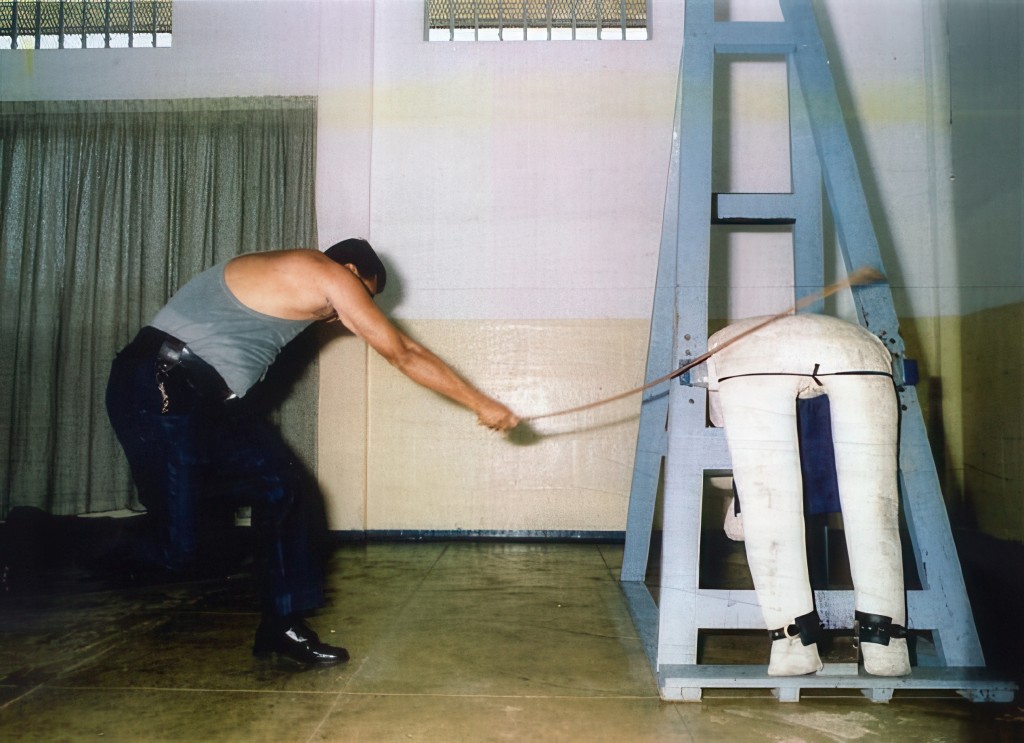
Specially trained staff at Changi Prison, Singapore practice caning on dummies or wooden stakes. ONLINE PHOTO
Caning in the city-state is limited to male offenders aged 18 to 50. The punishment takes place in a special caning room within the prison, where specially trained staff use an approximately 1.2-meter-long and 1.3-centimeter-thick cane on the prisoner, who is strapped to a wooden frame, with his hands bound and buttocks exposed.
After each lash, a doctor examines the injury to ensure the prisoner can withstand further caning before continuing. The flogging is required to "tear skin and flesh apart with each lash." Though no deaths have been reported from the punishment, records show that some prisoners fainted due to severe pain or shock.
The injuries inflicted take weeks or even months to recover, often leaving permanent scars. On top of excruciating physical pain, those who have undergone caning reported deep psychological trauma from humiliation and fear.
International human rights organizations generally consider caning a contravention of article 7 of the International Covenant on Civil and Political Rights, which prohibits "cruel, inhuman or degrading treatment or punishment."
This recent bolstering of caning goes in line with the Singapore's "zero tolerance" stance on law enforcement, analysts say, deterring crime with the image of "rule by cane."
Merlion Park, Singapore. AFP