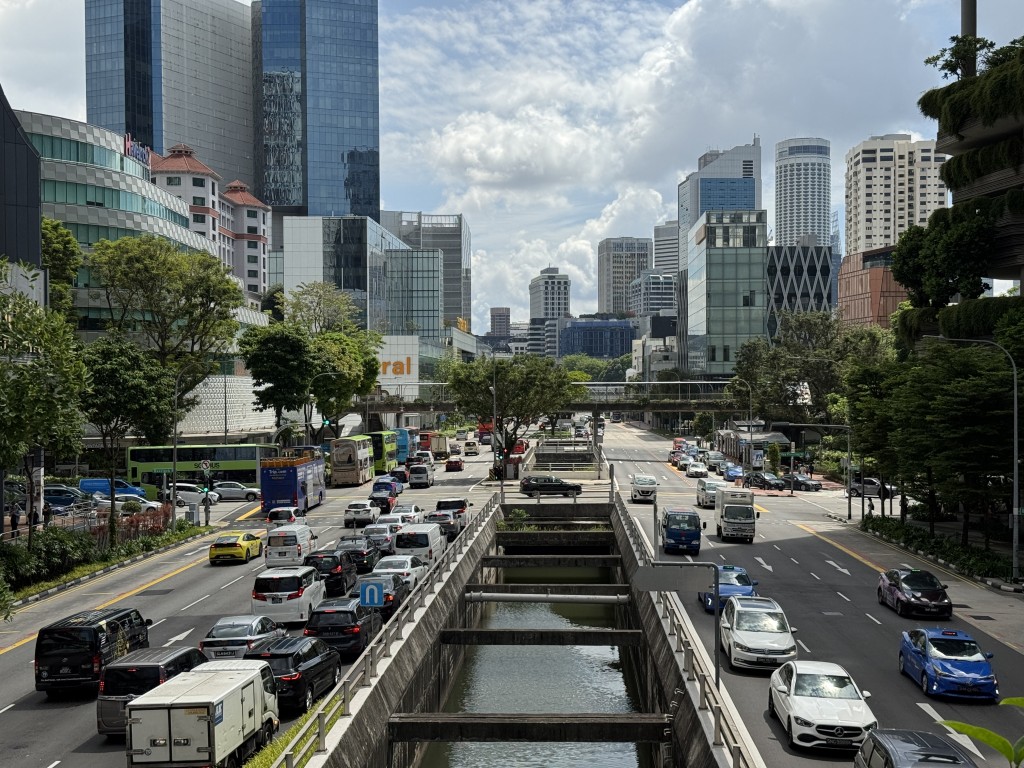
Ride-hailing drivers in Singapore expressed surprise when learning that Hong Kong still hasn’t legalized private car hire services, as the two Asian financial hubs take dramatically different approaches to regulating point-to-point transport.
While Singapore fully legalized private hire cars (PHCs) under its 2020 point-to-point passenger transport industry regulatory framework, Hong Kong continues to grapple with conflicts between taxi operators and unlicensed ride-hailing platforms like Uber.
The SAR government plans to establish a regulatory framework this year, insisting that taxis and ride-hailing platforms can coexist.
Singapore' s taxi fleet shrank from 26,000 in 2014 to just 13,117 last year, while PHCs surged from 18,847 in 2014 to 90,383 in 2024.
Hong Kong maintains 18,163 taxis, with Uber claiming over 10,000 active private car drivers despite operating in gray areas.
Veteran Singaporean cabbie Thia, who was over a decade behind the wheel, described an increasingly tough market.
"Young people prefer ride-hailing apps and only older passengers still flag down taxis," said the driver who now earns about SG$2,500 (HK$15,000) monthly -- barely enough to cover living expenses.
However, Thia emphasized that he wouldn’t complain about the government, describing the situation as a change in the times and industry dynamics.
As for illegal taxis in Singapore, he mentioned that such cases are rare due to severe government penalties, which can lead to court appearances or license revocation, meaning "most don’t dare to overcharge passengers," though a few bad apples remain.
PHC driver Teng, a top-tier "Diamond" driver on Grab, expressed bewilderment at Hong Kong's situation.
"I'm shocked it's still illegal there," he said, blaming Singaporean taxi drivers' declining fortunes on their own practices, such as bad service attitudes.
Despite PHC’s easier access to licenses than taxi drivers, Teng said taxi drivers still earn 20 percent more monthly than private hire drivers due to more street passengers, additional fees for airport or mall pickups, and designated taxi waiting areas where private cars can be fined for entry.
Singapore's journey to legalizing ride-hailing services followed years of gradual regulatory evolution. When services like Grab and Uber first launched in 2013, they operated in a regulatory gray area while facing strong opposition from traditional taxi operators.
The turning point came in 2017 when Singapore’s Land Transport Authority began implementing the Point-to-Point Transport Services Regulatory Framework, which established new rules for the emerging industry.
This framework introduced mandatory vocational licenses for drivers, required commercial insurance coverage, enforced fare transparency with digital receipts, and mandated data sharing with authorities.
The process culminated in 2020 with a new licensing scheme, which formally recognized ride-hailing as a regulated transport service and created a level playing field by applying similar safety and licensing standards to both private-hire vehicles and traditional taxis.
Ayra Wang
Download The Standard app to stay informed with news, updates, and significant events - https://urlgeni.us/TheStandard. The upgraded app will be available in late April.