Doing the dishes is a daily chore in every household, but removing food residue and grease from plates doesn't mean they are truly "clean." Sinks and dishcloths can be teeming with invisible bacteria that can easily contaminate tableware, causing cross-infection, and subsequently contaminating food, leading to health problems. Below, experts share 8 proper dishwashing techniques and habits for maintaining kitchen hygiene to avoid accidentally ingesting germs and suffering from food poisoning.
According to a report by the UK's Daily Mail, British home cleaning expert Lisa Ackerley, who has 40 years of experience in the environmental hygiene industry, emphasizes that the kitchen is the most bacteria-prone area in the home. Studies have even found that the number of bacteria in a kitchen sink can be 100,000 times greater than on a bathroom washbasin. After daily dishwashing, even if you simply wipe down the kitchen countertops, the faucet and sink may still harbor invisible bacteria that can contaminate clean dishes or ingredients for the next meal. She shares 8 tips for properly washing dishes, including details to note when using a dishwasher, to avoid cross-infection.
8 Tips for Proper Dishwashing
1. Clean the Sink Before Washing Dishes
Especially after handling raw meat, poultry, or soiled vegetables, the sink surface may be coated with bacteria that can cause food poisoning, such as Salmonella, E. coli, and Listeria. Studies have found that the number of bacteria on kitchen faucets and countertops can be 44 times higher than on a toilet seat, and the bacteria count in the sink is even higher than in other areas of the kitchen. The correct practice is to clean the sink and washbasin with an antibacterial spray before washing dishes, let it sit for 1 minute, and then rinse thoroughly to ensure hygiene and prevent cross-infection.
2. Prioritize Cleaning Chopping Boards and Knives
Chopping boards and knives used to cut raw meat or poultry are top high-risk items for cross-infection. To avoid accidentally using a knife contaminated with raw meat bacteria to cut cooked food, handle them immediately after cutting raw items. Place the used chopping board and knives in the sink and carefully pour boiling water over them. High temperatures can kill most bacteria within seconds. Then wash them normally with dish soap, and clean the sink and wash your hands again.
3. Wear Rubber Gloves When Washing Dishes
Rubber gloves not only protect the skin on your hands from chemicals, preventing allergies or irritation, but they also provide some heat insulation, making it easier to use hot water for washing dishes, which helps break down grease more effectively. However, avoid touching raw meat while wearing dishwashing gloves. If you accidentally do so, immediately wash the gloves thoroughly with soap, just like washing your hands, before touching anything else to prevent spreading germs. After using rubber gloves, wash them while still wearing them, then turn them inside out to dry to prevent mold.
4. Scrubbing is More Crucial Than Hot Water
Some people think washing dishes with hot water is the key to cleanliness, but research has found that the real key to removing bacteria is the physical action of "scrubbing," not the water temperature. Using dish soap combined with scrubbing effectively breaks down grime and scrubs away bacteria. Then rinse with clean water to wash away the bacteria and dirt. When rinsing, both cold and hot water can achieve the same cleaning effect; the benefit of hot water is that it helps dishes dry faster.
5. Avoid Using Sponges
This might be the most common and also the most dangerous mistake! Damp, porous sponges are the perfect breeding ground for bacteria. Using them to wash dishes is no different from spreading bacteria onto your tableware. A 2017 study found that a single kitchen sponge could harbor 362 different types of bacteria, with up to 45 billion bacteria per square centimeter. Switching to a dish brush or scrub brush is a better choice. They dry faster than sponges, effectively eliminating the damp environment bacteria need to thrive. However, they must be thoroughly cleaned after each use; otherwise, you'll be cultivating bacteria on them too. The proper cleaning method is to put the dish brush or scrub brush in the dishwasher and run a cycle of at least 60°C, or directly place it in the sink and soak it in boiling water for disinfection.
6. Air-Drying is Better
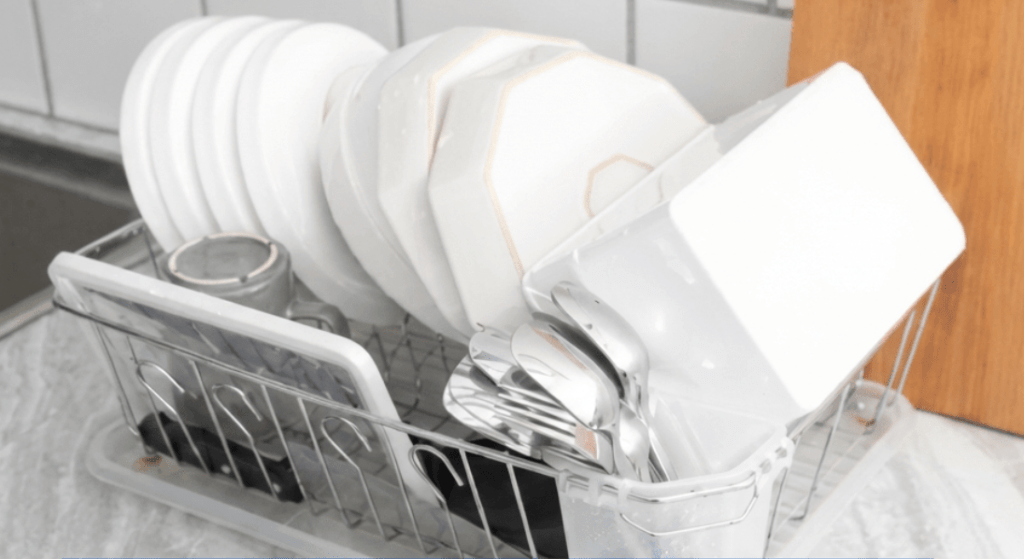
Many people are used to drying dishes with a cloth, but don't think that just wiping down tableware makes them safe for reuse – that cloth can become a vector for spreading bacteria. Allowing dishes to air-dry naturally is a more hygienic choice. If you're accustomed to using a dishcloth, it must be changed after each use and regularly washed and disinfected in water above 60°C. It must also be stored separately from hand towels and drying cloths to avoid contamination.
7. "Soaking Overnight" is Actually Okay
Elders often say that soaking dishes overnight turns the sink into a bacterial breeding ground. However, experts point out that while dirty water can breed bacteria, leaving it overnight poses an extremely low risk because "bacteria won't jump out and contaminate other areas." For stubborn stains or "stuck-on" food in pots, feel free to soak them overnight in hot water and dish soap. The soaking process helps soften and break down grease and residue. When washing them the next day, just remember to pour out the dirty water first and then wash the dishes normally.
8. Using the Dishwasher Correctly
Don't treat the dishwasher like a garbage disposal. Before putting dishes in the dishwasher, you must scrape off food scraps, but there's no need to pre-rinse them. There's also a technique to loading them: forks, knives, and spoons should be placed with the handles up so you don't touch the parts that go into your mouth when unloading them. Leave enough space between dishes to ensure water flow can clean them effectively. Some people use the eco mode to save electricity, but the water temperature in this mode is often not high enough and may not effectively kill bacteria.
The dishwasher itself needs regular cleaning. Empty it and scrub the filter. Every few months, use a specialized cleaner to remove limescale and grease. If you're going on a trip or won't be using the dishwasher for a while, leave the door slightly open to prevent mold growth.