Read More



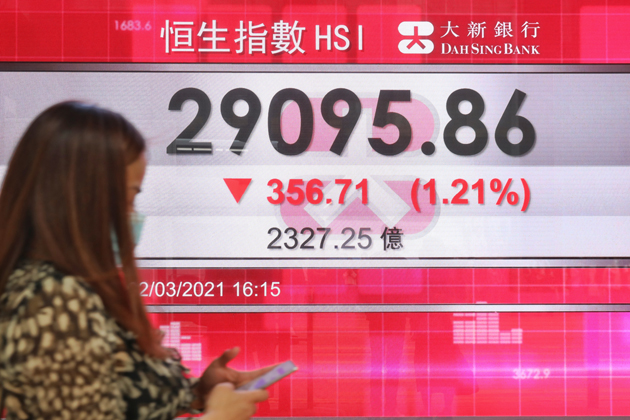
The Hang Seng Index reform will spark an influx of foreign capital as more exchange-traded funds may be set up in the overseas market to capture greater growth potential despite higher price-to-earning ratio and volatility.
The Hang Seng Index Company announced the largest reform in a half-century last week. It plans to increase the benchmark constituents to 80 before mid-next year and expand to 100 as an ultimate goal. Alibaba Health (0241), Longfor (0960) and Haidilao International (6862) will become blue chips next Monday, expanding the number of HSI members to 55.
The "HSI 100" seems reasonable to the market watchers as it can better emulate its international counterparts like MSCI and FTSE Russell.
More ETFs tracking the local benchmark may launch after the HSI overhaul completion as the local index representative will have stronger rising momentum along with the new economy shares participation. The HSI is expected to have a higher PE ratio and be more volatile due to technology shares inclusion but it is still better than the previous unremarkable performance, analysts say.
However, they criticize the fast-paced index inclusion, which increases the switching cost for ETF tracking the HSI.
The index compiler will lower the weighting of financials and all HSI constituents, including weighted voting rights and secondary-listed companies, will have a common weighting cap of 8 percent.
JP Morgan expects a total US$1.3 billion (HK$10.14 billion) capital to leave Tencent (0700) and AIA (1299), which each have 10 percent weighting. HSBC (0005) will record US$548 million outflows too. Investors will pour over US$1 billion into Meituan (3690) which has a weighted voting rights structure and a 5 percent weighting cap. The money inflow also applies to Alibaba (9988).
The index provider plans to maintain 20-25 Hong Kong companies in the benchmark, which means around three-quarters are mainland companies.
The new HSI constituents will be selected from seven groups after consolidating 12 industries, with market capitalization coverage of not less than 50 percent for each group. Given the current market capitalization and turnover, "consumer discretionary and staples", "information technology", and "healthcare" sectors appear to be the major winners, according to the Index compiler's simulated portfolio.
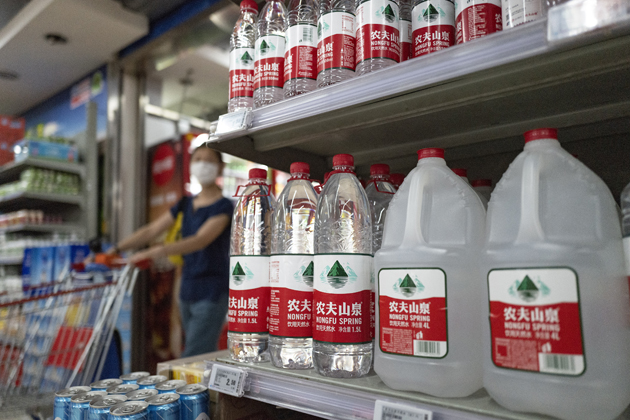
In the combined consumer discretionary and staples sector, the Hang Seng Index Company will add eight companies. Bottled water giant Nongfu Spring (9633), chaired by Asia's wealthiest, Zhong Shanshan, has the highest chance to be included, as it has top market cap and turnover among the sector.
Automaker BYD (1211), whose H-shares are worth HK$204.36 billion, is the frontrunner. Investors could also bet on domestic demand stock, China Resources Beer (0291), hotpot soup base maker Yihai International (1579) and dairy producer China Feihe (6186).
Listed last year, e-cigarette device maker, Smoore International (6969), with a market value of HK$369.11 billion, educational services provider New Oriental Education & Technology (9901), China's largest laundry detergent maker Blue Moon (6993) and toy seller Pop Mart International (9992) are likely to be blue-chips.
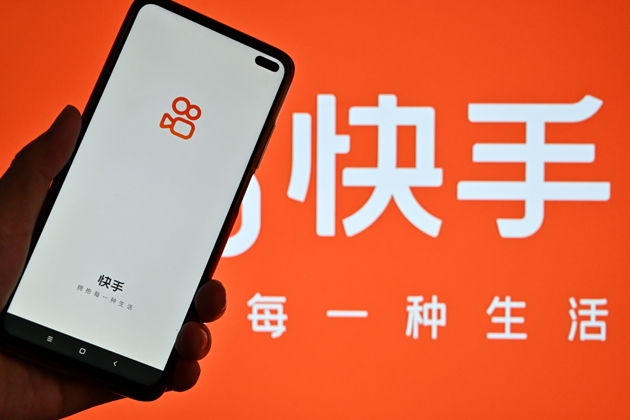
Six more are projected to be added to the information technology sector. Mainland short video platform Kuaishou (1024), which will meet the three-month listing history requirement in May, may become the first new listing to take advantage of the fast entry rule. It has a leading market cap of HK$1.19 trillion. Kuaishou has surged by over 147 percent since its debut on February 5.
E-commerce company JD.com (9618) and mobile games developer NetEase (9999), which completed homecoming listings last year, are expected to join the benchmark. State-owned chipmaker Semiconductor Manufacturing International (0981), Shanghai-based data centers operator GDS (9698), mobile modules manufacturer BYD Electronic (0285), software developers Kingdee International (0268), and computer brand Lenovo (0992) are competing for the remaining three positions.
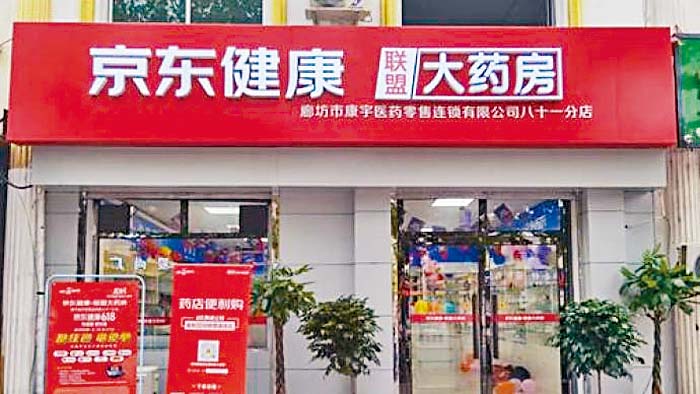
In the healthcare sector, the index compiler predicts six potential shares will join. Online healthcare platform JD Health (6618) has the leading market cap ranking. Its rival Ping An Healthcare (1833) ranked fifth in terms of market value.
The largest drug firm in the market Hansoh Pharmaceutical (3692) by maket value, cancer treatment producer BeiGene (6160) and Covid-19 vaccine maker Shanghai Fosun Pharmaceutical (2196) may take a seat in the blue-chip list. Tumor drugs maker Innovent Biologics (1801) and medical equipment manufacturer MicroPort Scientific (0853) also could be included.
Energy, materials, industrials and conglomerates have been grouped into the same sector. The index provider proposes to add three. Renewable energy products maker Xinyi Solar (0968), with a market cap of HK$113.29 billion may be first of the selections.
Conglomerate Fosun International (0656) and aluminum products maker China Hongqiao (1378) could become a blue-chip. Former blue-chip Swire Pacific (0019) may also seize back its place.
In the merged utilities and telecommunications sector, it will include two additional stocks. China Gas (0384) and ENN Energy (2688) may join the benchmark as many funds are holding them. Water distributor Guangdong Investment (0270) and China Resources Gas (1193) could also be the top dog.
In the property and construction sector, debt-ridden China Evergrande (3333) with a market cap of HK$201.8 billion may join the index.
The six selected groups have newcomers but not the financials. Bank of Communications (3328), whose daily average turnover in the past 12 months was only HK$130.57 million, or China Life Insurance (2628) with the lowest market capitalization and turnover compared with AIA and Ping An Insurance (2318) may leave the benchmark.