Gigi Wong delves into the history and grandeur of Guilin rice noodles to revisit her favorite childhood memory.
Though born and raised in Hong Kong, I've developed a natural affinity for Guilin, my mother's hometown. Perhaps it's the relaxed rural lifestyle that contrasts sharply with Hong Kongers' hectic pace of life, or the majestic mountain scenery as opposed to Hong Kong's concrete jungle, that has nurtured my fondness for this renowned scenic city in Guangxi. However, there is one thing I'm certain I can never love less: Guilin rice noodles.
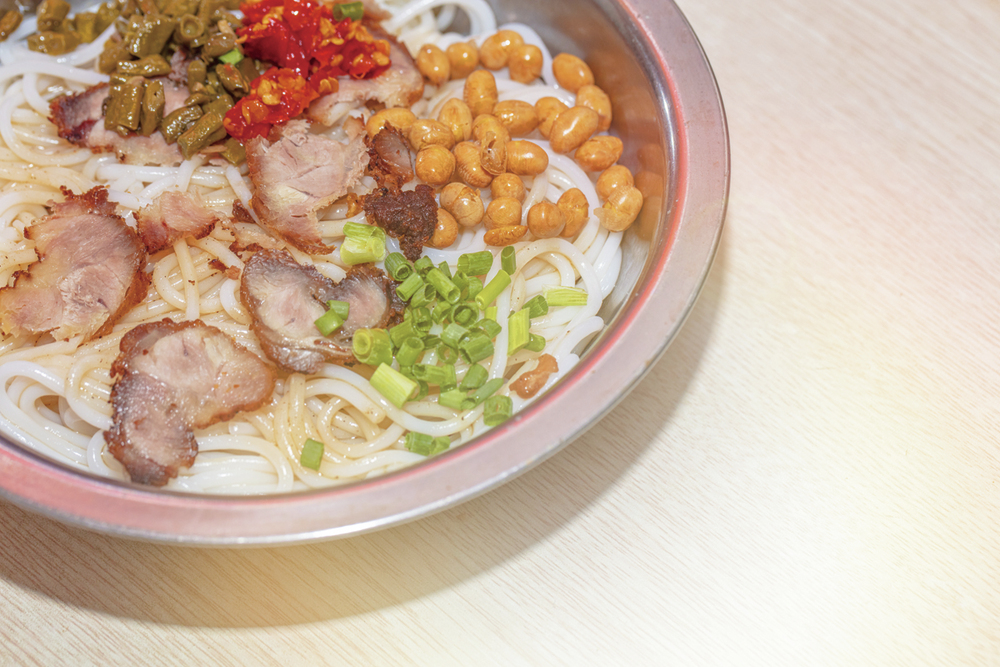
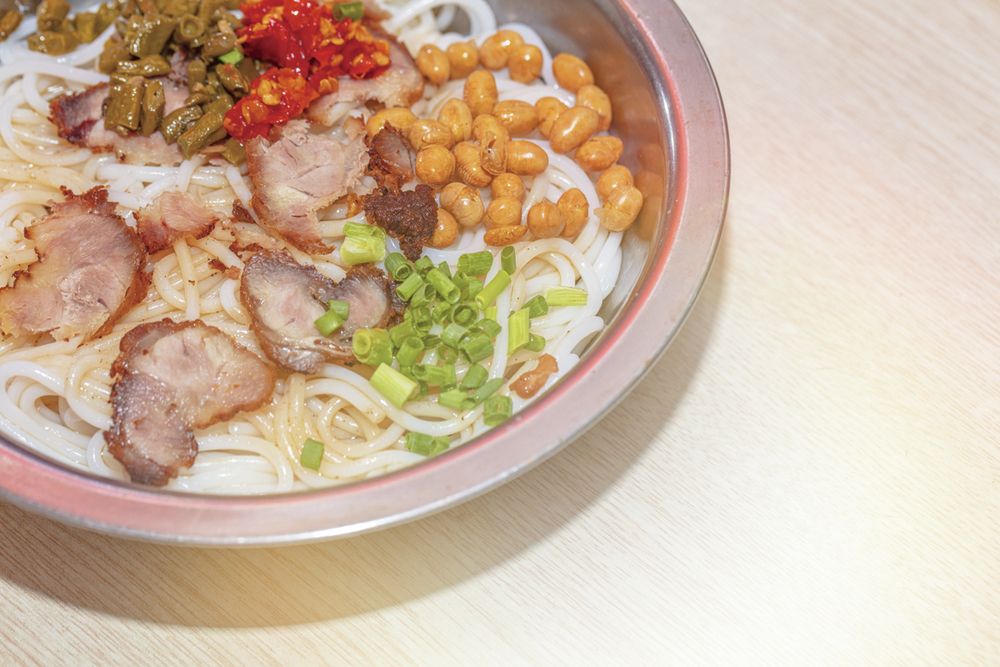
For people from Guangxi, a bowl of Guilin rice noodles – featuring pliant rice noodles mingling with an exquisitely rich sauce, delectable slices of meat, and flavorful condiments like pickled vegetables, soybeans, and chili flakes – is equivalent to Shandong's quintessential dumplings, Shanghai's pan-fried baozi, or Lanzhou's beef noodles. It's the ultimate comfort food that stirs fond memories and creates a warm, cozy feeling.
Whenever I visit Guilin for a family holiday, securing a bowl of steaming hot Guilin mifen – as it's called in Chinese – at the nearest eatery is always my first task upon disembarking from the plane. It's the perfect remedy for those craving a taste of Guilin.
The intriguing history of a regional cuisine
The origin of Guilin rice noodles can be traced back approximately 2,200 years. According to local folklore, during the Qin Dynasty (221 BC to 207 BC), the first emperor sent troops southward to construct the Ling Canal, linking the Xiang River and Li River.
However, due to the mountainous terrain, supplying food and provisions to the front lines proved difficult. As the Qin soldiers came mostly from northwest China and were accustomed to wheat noodles, they struggled to adapt to the rice-based southern Chinese diet. This presented a conundrum for the army chefs.
After much deliberation, they devised a way to convert rice into noodles. Rice was first soaked until softened, then ground into rice milk. Using a cloth filter, the chefs collected the dough and steamed it halfway before pounding it in a mortar to produce a chewy texture. The dough was then forced through a utensil with holes to produce rice vermicelli, finally boiled to make rice noodles.
While silky and tender, the noodles themselves lacked color and flavor. So the chefs boiled broth with Chinese herbs to accompany the noodles. Not only did the soldiers delight in the dish, but it cured illnesses from acclimatizing to the south, regaining their strength. Legend has it this aided the Qin forces in ultimately unifying south China.
An elaborately crafted recipe
Over centuries of refinement and modification, the broth has evolved into the uniquely flavored Guilin mifen gravy. While each restaurant holds its own secret recipe handed down generation to generation, the essence of Guilin rice noodles lies in its broth – a soy-braised sauce comprising no less than 20 ingredients.
Slow-simmered for 20 hours, the broth features pork bones, beef bones, and an abundant amount of seasonings like cinnamon, luo han guo, and licorice to create an aromatic base.
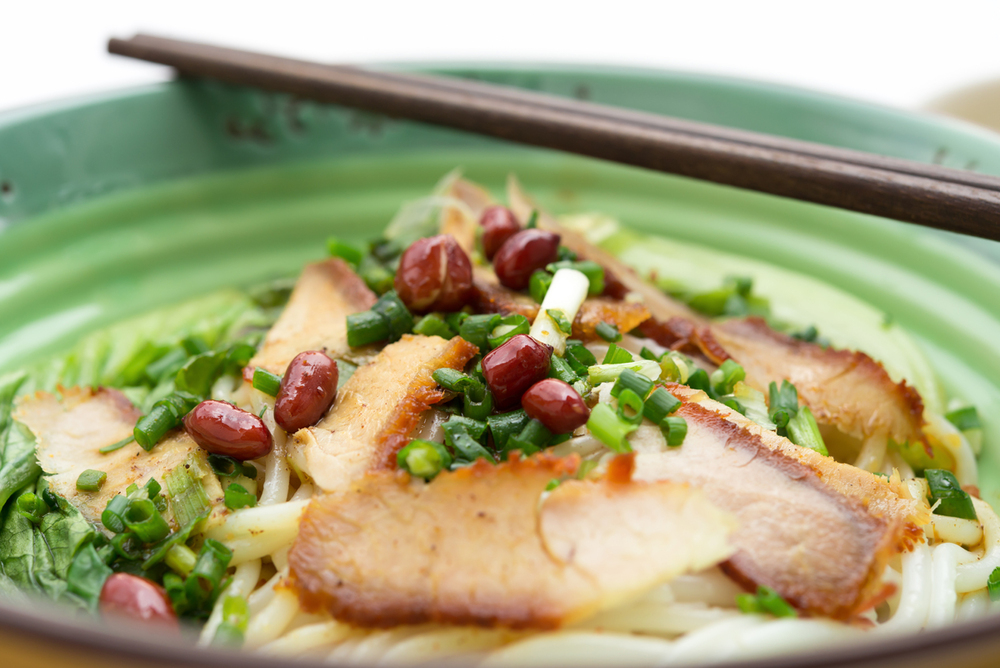
Well-executed Guilin mifen should contain just the right amount of soy-based broth, piping hot, with each rice noodle strand retaining a distinct al dente bite alongside toppings such as crunchy pork neck, braised beef slices, and savory condiments. Its humble appearance belies the work and expertise required in its preparation.
In search of the perfect bowl
Thousands of eateries in Guilin serve this delicacy. The truly old-school ones feature locals sitting on wooden stools, holding an iron bowl of mifen in hand. If you spot a packed restaurant during breakfast hours, it's likely an indicator of quality.
Locals consume the dish as breakfast, lunch, or dinner - basically anytime a slurp of its lip-smacking broth beckons. While offered in different portions, costs remain seriously low. Priced by noodle weight, 100 grams (two liang) runs just ¥5 CNY (HK$5.6), or ¥10 (HK$11.05) for 200 grams (four liang).
If rustic eateries seem off-putting, restaurant chains exist in Guilin. Notable is Minggui Rice Noodles, boasting a history over 30 years. Its gravy brings success, with brining techniques certified national intangible cultural heritage.
I recommend the Minggui branch at Dongxi Lane's entrance. By restoring remnants of Ming and Qing architecture, this new commercial and tourist district, which opened in 2016, replicates old Guilin, offering historical insights alongside modern amenities. What better backdrop for indulging in Guilin mifen than amid scenery marrying antiquity with today?
For maximum delight
The general rule is first placing an order and paying at the cashier desk, then collecting one's dish at the pickup counter. When ordering, one specifies the desired noodle weight. In Guilin dialect, one says “si liang mi fen” – meaning “I'd like to order a bowl of four liang rice noodles” – a 200-gram serving. As a little girl always at grandma's side, I worked to learn the local tongue, and “four liang of noodles” was among the earliest phrases I could repeat in Guilin's dialect.
At pickup, chefs first lay fresh rice noodles in a large steamer. Within two minutes they're ready, lifted and drained from boiling water using a sieve ladle into a bowl. Cooked mifen, broth, fried peanuts, thin slices of marinated pork and braised beef are added. Generous restaurants may include extra meat slices.
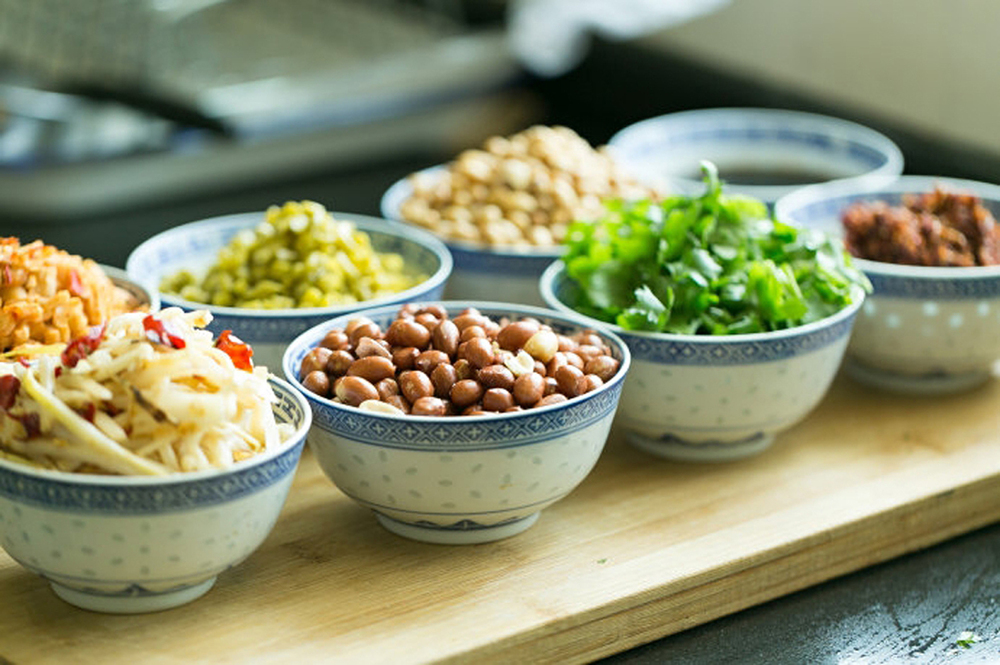
Before eating, one stirs all ingredients thoroughly so noodles soak up the tangy sauce. Help yourself to pickled bamboo shoots, sautéed pickled soybeans and chili flakes on the table, further aromatic toppings. Finally, slurp the heavenly Guilin rice noodles. After enjoying the noodles, ladle out the rich pork bone broth from the simmering pot for the perfect cap to this gastronomic delight.
As the evening fell, my sister and I would often still be playing in the front yard, lost in the careless ways of children without weariness or want. Yet grandma always seemed to have a sense and got takeout Guilin mifen from across the street. And I would gorge on the freshly cooked noodles as though I could never feel fully satisfied.
Now that I’ve grown up, a single taste of Guilin mifen still brings me joy, and with it comes a moment of serenity that tells me I’m home.
Guilin mifen features pliable noodles made from rice that mingles with exquisitely rich gravy, delectable slices of meat and flavorful condiments like pickled vegetables.
Guilin, a city in Guanxi, is renowned for its natural beauty.
Authentic Guilin rice noodles boast a chewy and delicate texture.
Condiments are an indispensable part of the dish.