Read More
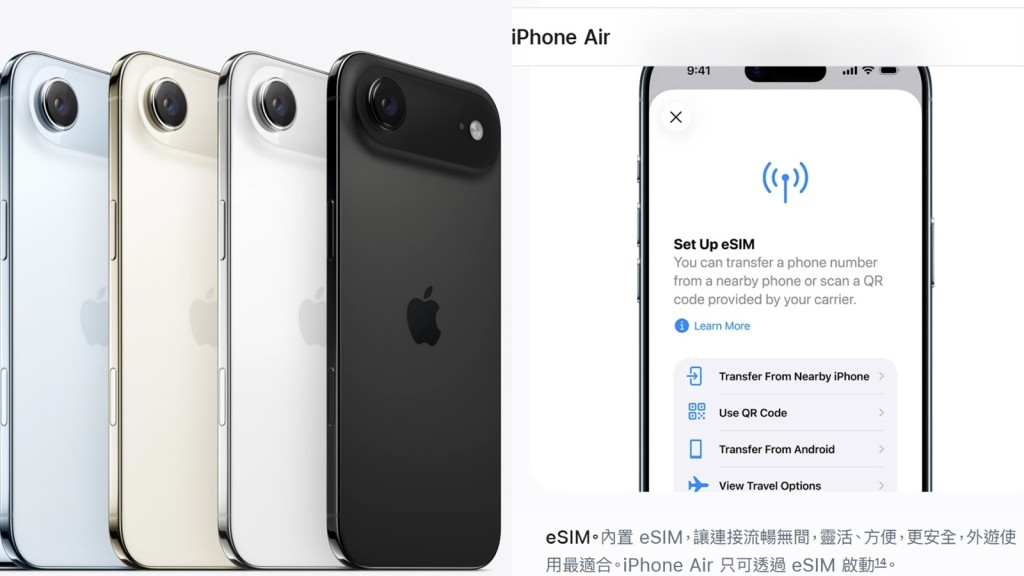
Apple’s newly unveiled iPhone 17 series has drawn significant attention, particularly the ultra-slim iPhone Air — now the thinnest iPhone in history at just 5.6mm.
ADVERTISEMENT
SCROLL TO CONTINUE WITH CONTENT
In a bold design choice, the iPhone Air will support only dual eSIM functionality, completely omitting the traditional physical SIM card tray. This marks the first time Apple has released an eSIM-only model in the Hong Kong market.
Francis Fong Po-kiu, honorary president of the Hong Kong Information Technology Federation, noted that while the standard iPhone 17 and Pro models still support one physical SIM and one eSIM, the iPhone Air’s sleek form factor necessitated the removal of the physical slot.

He confirmed that most major telecom providers in Hong Kong are already well-prepared for eSIM adoption, citing previous support for the technology in Apple Watch and iPad models.
An eSIM, or embedded SIM, is a digital SIM integrated directly into the device, allowing users to activate a cellular plan without a physical card.
According to Apple, the technology enables users to store multiple eSIMs, switch between carriers effortlessly, and enjoy enhanced security and seamless connectivity — particularly beneficial for frequent travelers.
However, Fong also highlighted a notable drawback: cost.
While eSIMs offer clear convenience, they often come at a premium compared to physical SIM cards, especially for roaming data.
Traditional physical roaming SIMs can be discounted as their expiration dates approach, whereas eSIMs — typically sold as QR codes for instant activation — are usually offered as prepaid data packages with fixed pricing and little flexibility for last-minute deals.
The move signals Apple’s continued shift toward a port-free, integrated future, though it remains to be seen how consumers will respond to the trade-offs between cutting-edge design and practical cost considerations.
Marco Lam (marco.lam@singtaonewscorp.com)