Inside Stamford American School Hong Kong’s new West Kowloon campus, where teenagers learn like uni students
ADVERTISEMENT
SCROLL TO CONTINUE WITH CONTENT
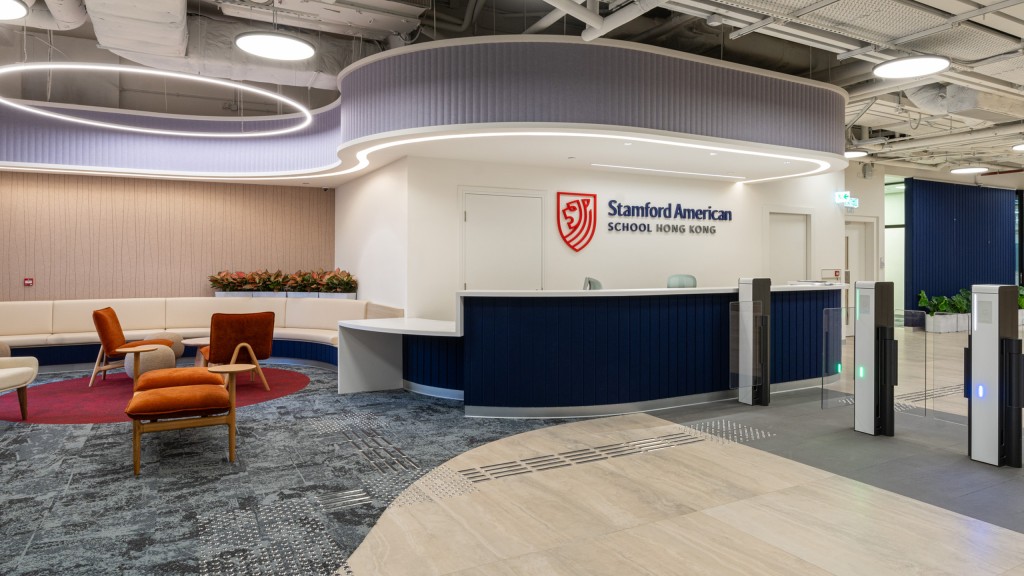
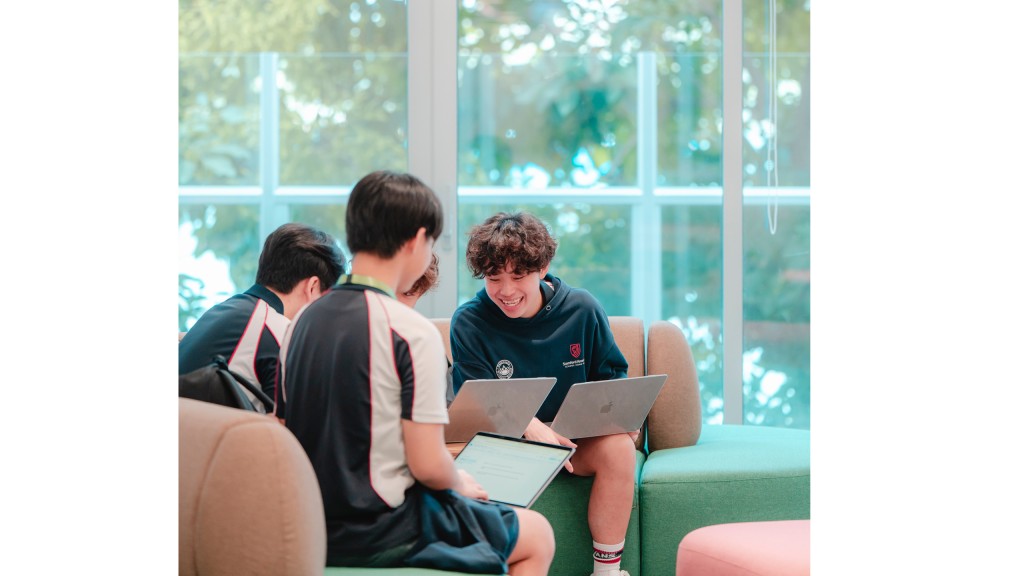
The first thing that strikes visitors at Stamford American School Hong Kong’s new West Kowloon campus is a sense of calm. No ringing bells. Nor crowded corridors. The right amount of light, an easy rhythm and a feeling of focus. Natural light pours through parts of the campus, while students move between glass-walled rooms and café tables as if they were on a university quad rather than in a secondary school.
“We wanted this campus to feel like a pre-university space,” says Andrew Noakes, Head of School. “A place where students manage their time, collaborate and take ownership, much like they will in the world beyond school.” And that sense of calm is no accident. It’s thoughtfully engineered, with every beam of light and curve of the corridor shaped to prepare adolescents for adulthood.
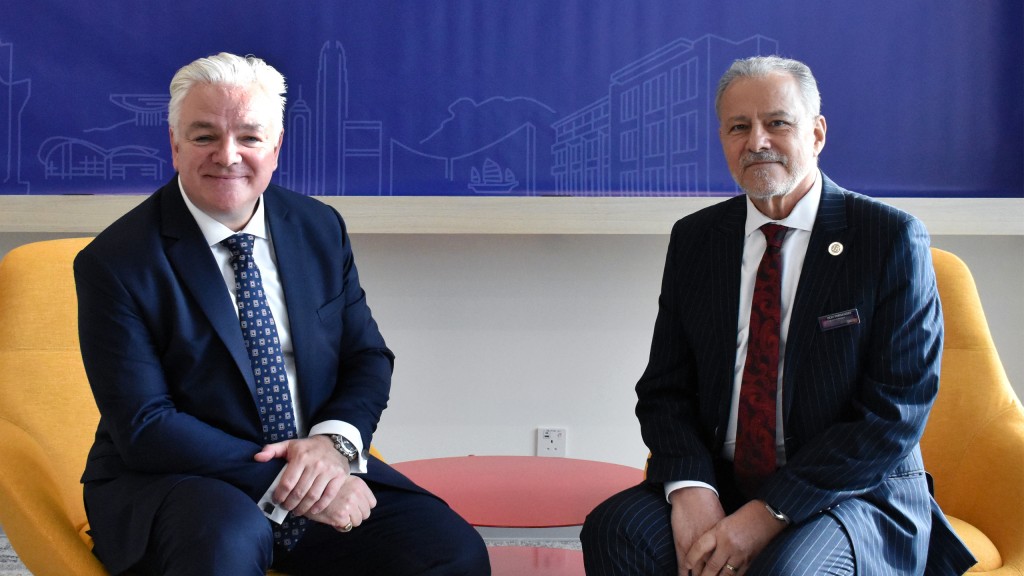
Stamford American School Hong Kong’s Andrew Noakes (left) and Ocki Fernandes (right) discuss how design and wellbeing shape learning at the new West Kowloon campus.
A Formula 1 approach to education
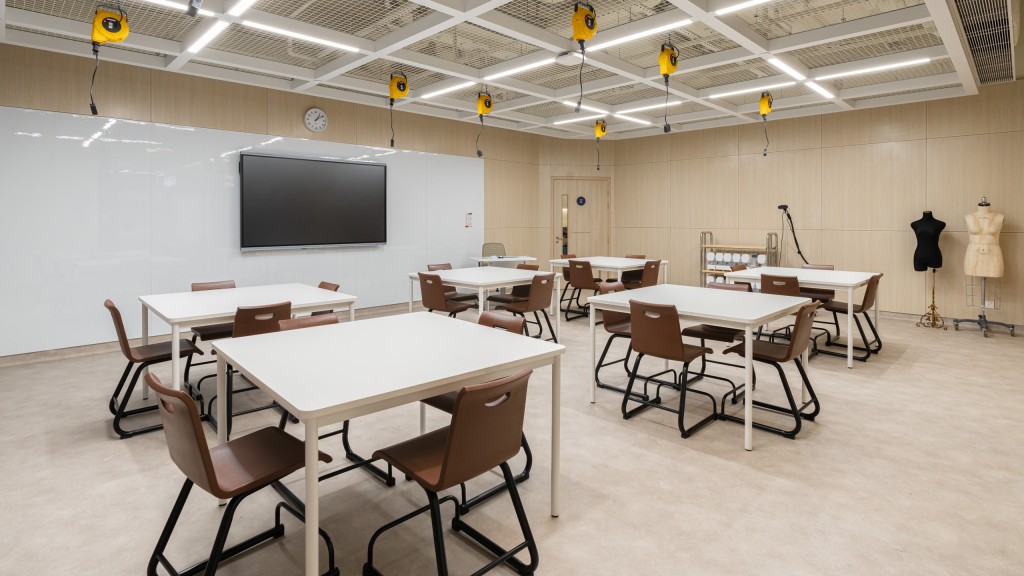
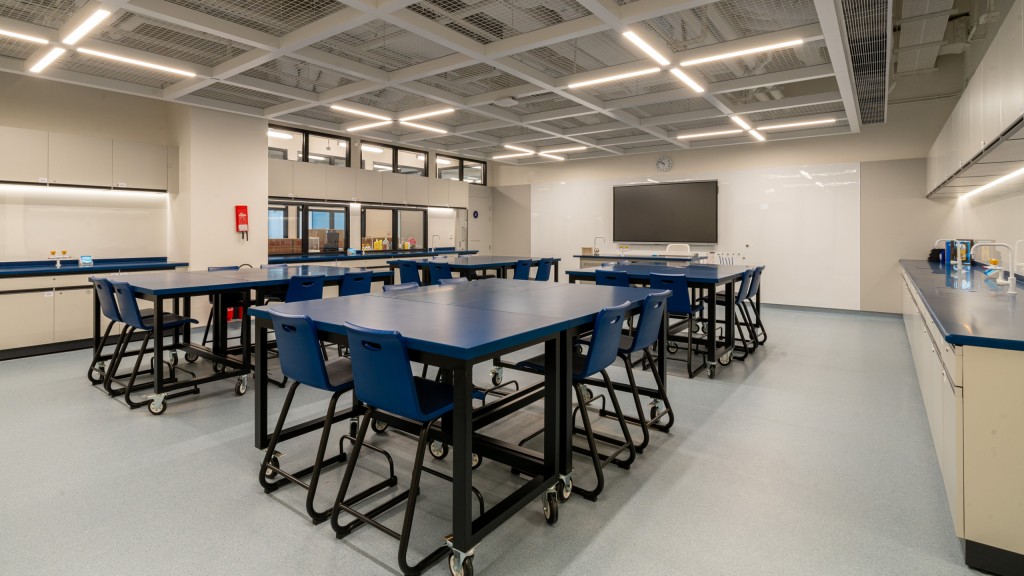
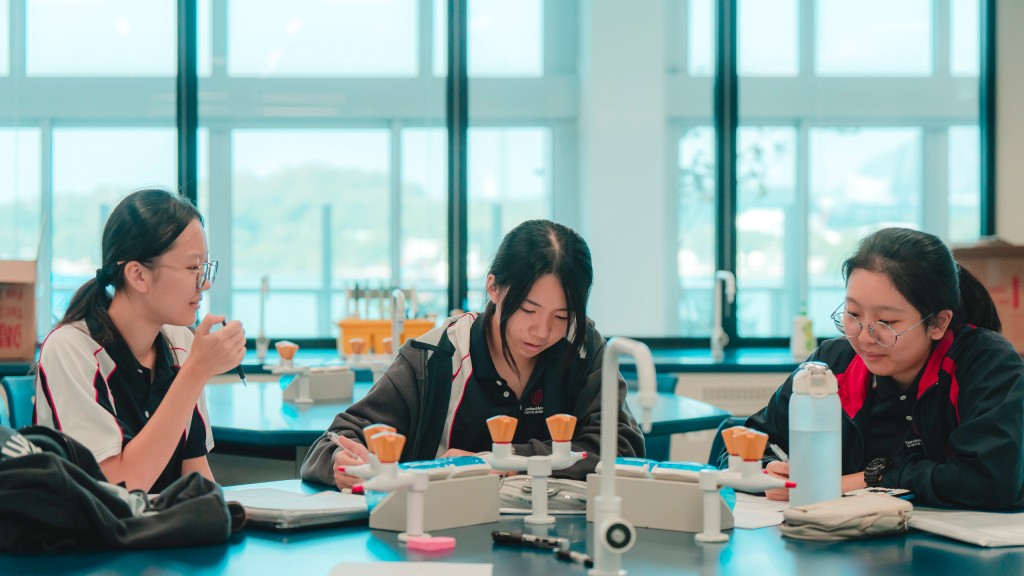
The West Kowloon site marks Stamford’s ninth year in Hong Kong and the next phase of its development under Cognita Group. Spread across 75,000 square feet, the purpose-built campus can accommodate up to 630 high school students. Inside are three science laboratories, two art studios, a black-box theatre, a music wing with six practice rooms and a café where seniors spend study blocks between lessons.
Noakes likens the process to precision engineering. “Education is a bit like Formula 1,” he says. “Every small adjustment, every gram you shave off, adds up. The same goes for how we design environments that help students learn.”
The new campus represents a bridge between high-school learning and university life – part of Stamford’s through-train model that leads from early years to the International Baccalaureate Diploma (IBDP). The school’s signature STEMinn programme – blending science, technology, engineering, maths and innovation – underpins the entire system.
+3
Designing for thinking
Every sensory detail of West Kowloon has been tuned for cognition. Classrooms use circadian lighting that shifts through the day, bright in the morning and warm after lunch. “The environment should work with the body, not against it,” says Noakes.
According to John Mortensen, project manager, the choices were deliberate. “We kept the colour palette soft and the acoustics gentle to create a mature, calm atmosphere. Everything – from the lighting to the indoor air quality – is tuned for comfort.”
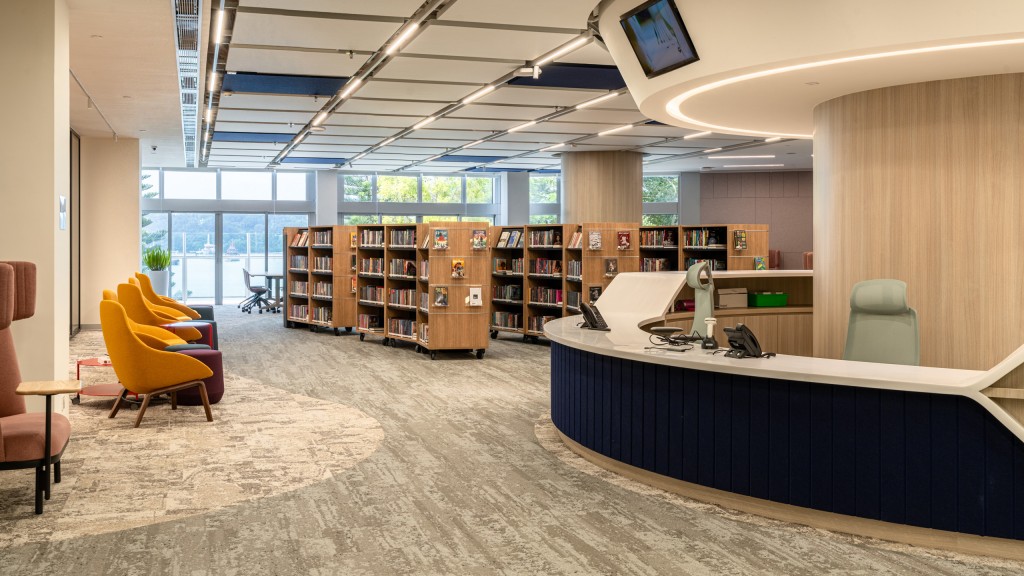
Acoustic walls hide within normal-looking finishes, while the library’s panels “have the sound rating of a recording studio,” he adds. Even the rounded corners serve a purpose. “Curved architecture isn’t an accident. Research shows soft forms reduce anxiety and create calm, so we built that psychology into the structure.”
Behaviour by design
For Ocki Fernandes, Stamford’s High School Principal, the transformation was immediate. “At the old campus it was full of teenage energy,” he says. “Here, the calm was instant – the difference was almost physical.”
There are no bells at West Kowloon. Each classroom clock synchronises to computer time, allowing teachers to finish lessons naturally. “Students transition on their own,” Fernandes explains. “It’s remarkably civilised.”
Mobile phones are off-limits during lunch. Instead, students crowd around table tennis games or hold lunchtime interviews for the student council. Others run a student TV channel from a studio on site.
“Students treat this as their own environment now,” Fernandes says. “They run clubs, host interviews and respect the space. That’s how you build community.”
Noakes sees the same ethos in the building itself. “The best learning happens when the environment supports curiosity – when there’s space to talk, to think and to work with others.”
Learning neighbourhoods
Instead of traditional classrooms, the campus is divided into “learning neighbourhoods” resembling co-working hubs. Students can book glass meeting rooms for projects or use open tables for discussions. “The children are learning the way we do at work,” Noakes says. “We have a meeting room and they have one next door. It’s fun to see.”
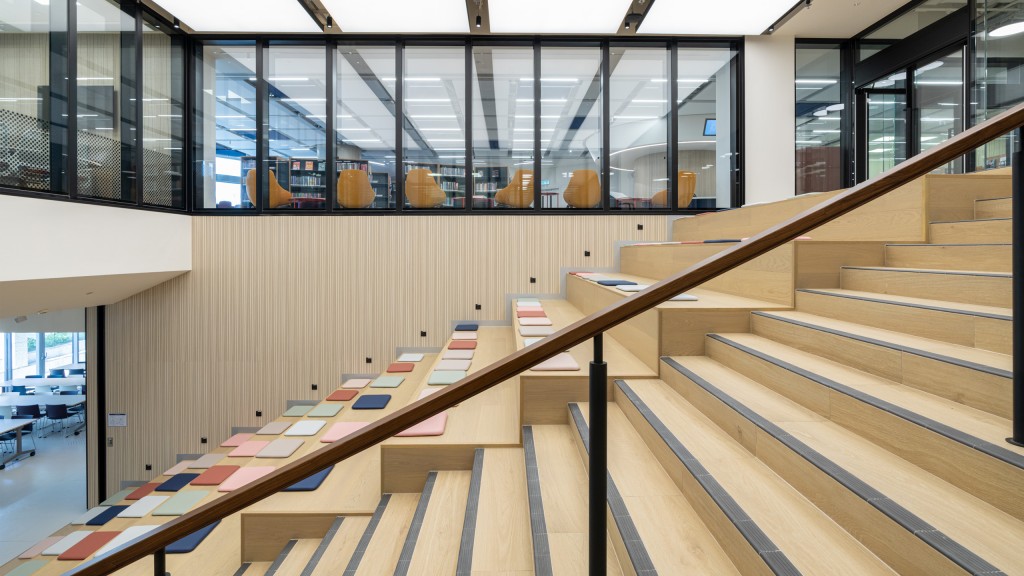
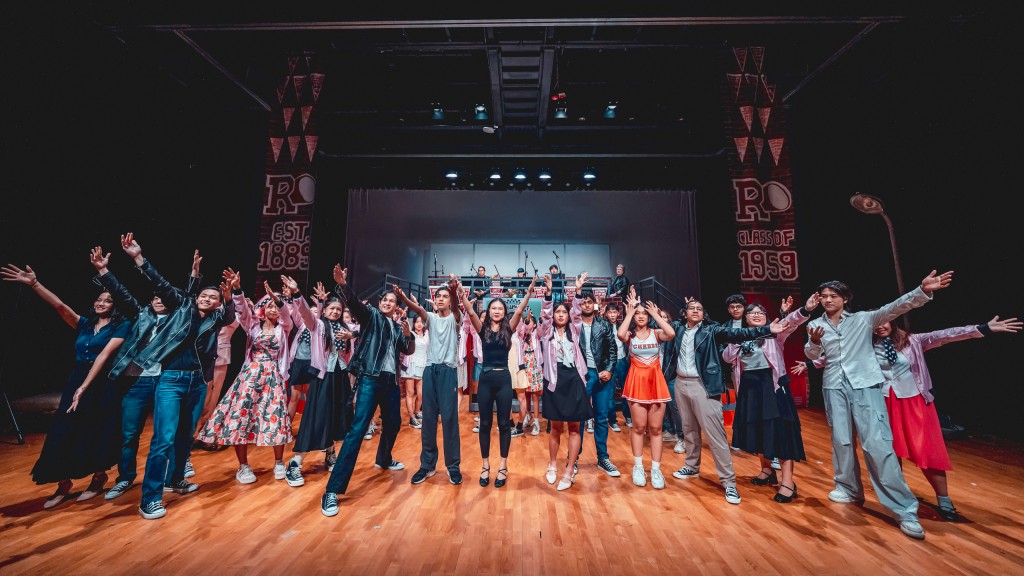
Versatility runs throughout. The central atrium doubles as a presentation hall with retractable tables, theatrical lighting and a three-metre LED wall linked to the black-box theatre. It hosts assemblies, lectures and performances – an everyday stage for the art of communication.
Holistic education with an innovative edge
Apart from space design, Stamford’s ethos is grounded in whole-person education, with academic stretch, wellbeing and access given equal weight.
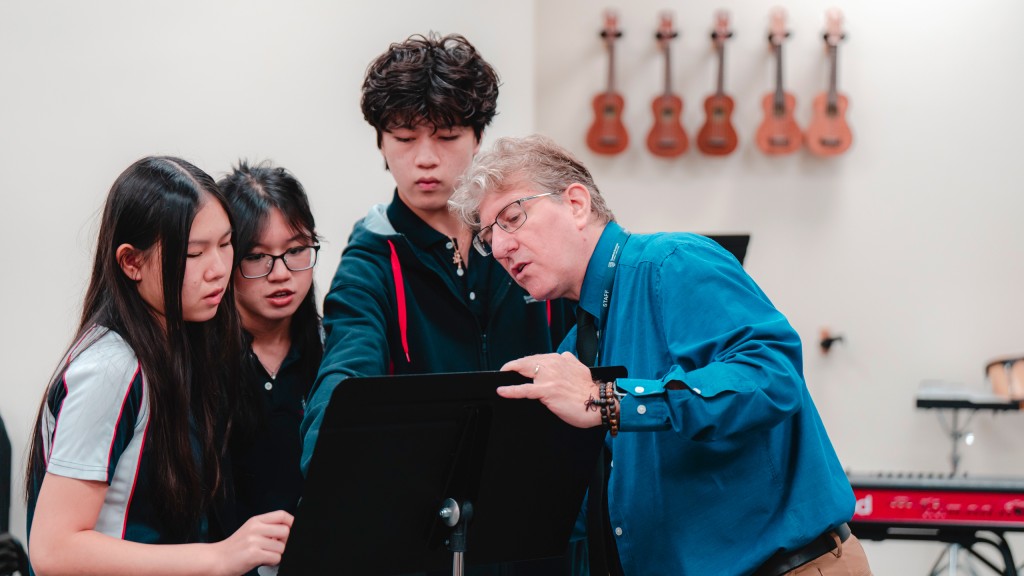
Within that, STEMinn has become a signature strand, teaching design thinking from the early years through to Year 12. “It’s not just a subject; it’s a way of thinking,” says Noakes. “That’s why half of our top graduates last year went into mathematics, engineering or computing.” The school will also host Hong Kong’s first VEX robotics tournaments, inviting teams from across the city.
Innovation at Stamford is matched by an equal focus on access and opportunity. This year the school has relaunched its Spirit of Stamford Scholarships for external applicants entering Grades 9-11. Awards include partial tuition support and, for exceptional candidates, a fully funded IBDP.
“We’re very keen that a child who couldn’t otherwise afford an IB education can access one here. Opportunity shouldn’t depend on income,” says Noakes, adding that last year one scholarship student progressed to study medicine at Hong Kong University, a validation of the model.
Belonging and wellbeing
Roughly half of Stamford’s 1,050 students are Hong Kong residents. Noakes calls that diversity “a commitment to Hong Kong”. “It’s getting to the point where children here don’t need to go overseas for world-class schooling,” he says.
Parents are kept closely connected to their children’s progress through Toddle, a single digital platform that unites assessment, communication and reporting across all year levels. Teachers and counsellors monitor wellbeing as closely as academics, with each section of the school having its own pastoral and safeguarding leads.
“We’re structured so we really know where the children are, how they are,” says Noakes. The school also maintains an open-door policy, encouraging regular dialogue and reassurance that every student is known and cared for as an individual.
Fernandes sees environment and wellbeing as inseparable. “The wider corridors and open spaces have eased that sense of population pressure. Kids aren’t bumping into each other or jostling for space anymore. Even the balconies reinforce that idea, with each one planted in a distinct biome such as Mediterranean, citrus or tropical, and tended by student environmental clubs.
Partners and purpose
Beyond academic pursuits and daily life on campus, Stamford connects with the wider community through partnerships with NGOs such as Habitat for Humanities Box of Hope, Hunuman Charity, Crossroads Foundation and professionals.
Recent collaborations include a Cornerstones programme on sustainability with over 100 Cognita schools worldwide, and a course created by Olympian swimmer Yvette Kong that teaches transferable skills for career transitions and the ethical use of AI to Stamford’s tenth graders.
“The best learning happens when the environment supports curiosity, when there’s space to talk, to think and to work with others,” says Noakes.
---
Stamford American School Hong Kong
Ho Man Tin Campus: 25 Man Fuk Road, Ho Man Tin, Kowloon
West Kowloon Campus: GF-2F, Imperial Cullinan, 10 Hoi Fai Road, Tai Kok Tsui, Kowloon