Greta Ng
Some might view medication as the be-all and end-all of mental health struggles but a local student says otherwise.
Drawing on her first-hand experience in non-profit organizations, Natalie Cheng says arts workshops can boost mental health for vulnerable groups in society and even address the city's overwhelmed hospitals.
Cheng, a year 13 student at Chinese International School, was volunteering at a nonprofit RUN that serves refugees when she began organizing community-based arts workshops for the service users.
"Creating art works, from film to painting to music, has really helped with my wellbeing. When I noticed there wasn't a creative outlet for them, I became interested in the intersection between mental health and arts," she says.
That's how the avid volunteer came to learn about the Arts on Prescription model.
A form of social prescribing, Arts on Prescription refers to programs in which health-care providers and social service agencies bolster patients or clients' health and wellbeing by "prescribing" non-clinical activities in a supportive environment, such as arts, cultural and nature experiences.
Originally popularized in the United Kingdom, the evidence-based practice has gained traction around the globe in the aftermath of Covid.
"Most nonprofits in Hong Kong do arts workshops on an ad hoc basis. There's substantial funding for these projects but they don't collaborate with health-care departments, " Cheng says.
She believes the model benefits not only our mental health but also overall well-being.
A few statistics from the National Healthcare Service in the UK stood out for Cheng.
About 67 percent of dementia patients saw a reduction in their need for medication after musical therapy. And an Arts on Prescription project led to a 27 percent decrease in hospital admissions.
After reaching out to social workers about the idea, the first thing Cheng set out to do was invite artists to host workshops. They ran one workshop for street photography and another for mask making.
A participant from RUN told Cheng she's never had this sort of exposure to arts before.
"In the mask-making workshop, she's able to express her culture and identity creatively without sacrificing her privacy. It was like she came alive through the mask," says Cheng.
"Looking at how these professional artists run the workshops, I believe what matters isn't the quality of the art that you're making but the intention. I realized that I could even run the workshops myself."
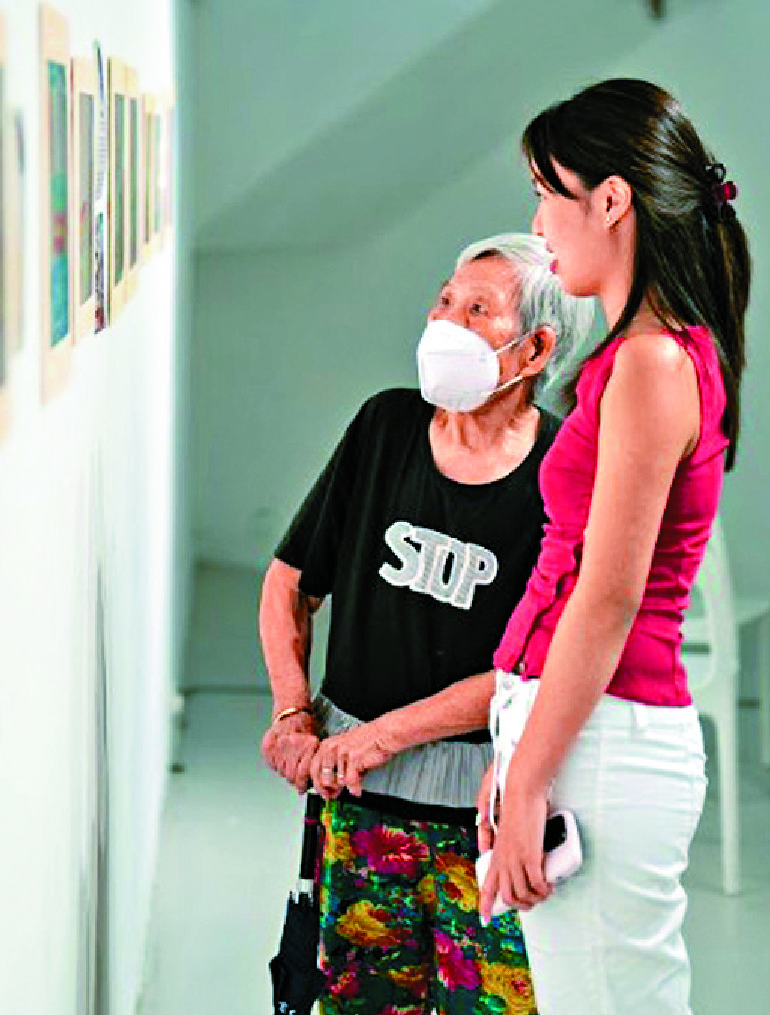
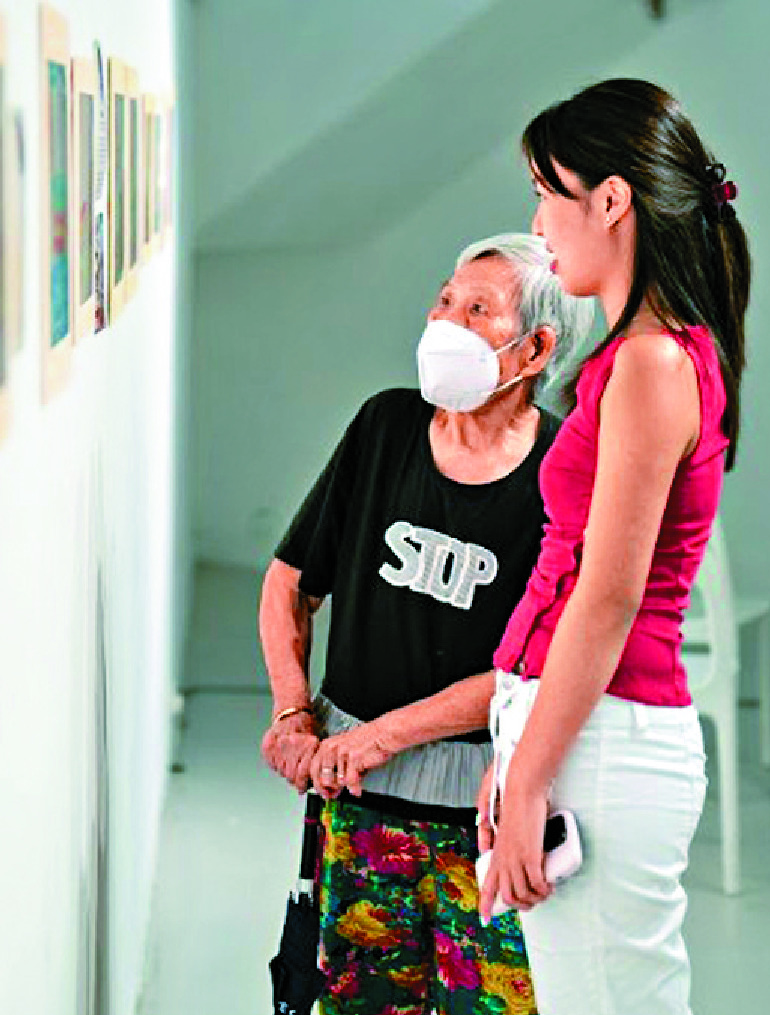
Cheng now offers weekly arts workshops at RUN and holds larger sessions with seniors at Food Angels, a food rescue organization, during school holidays.
"Something that I've done with young girls at RUN, for example, is what I like about my body. This helps with their confidence. With the elderly people at Food Angel, I try to get them to talk about their past and childhood," she says.
"I've been able to see the same faces at Food Angel for a year. Research has shown that there are major benefits in long-term arts workshops, which is why it's really great to have this continuity."
For 77-year-old Hung, it's like a new lease on life.
"It's been decades since I've picked up a pen. There's joy in simply painting flowers and my home."
For 99-year-old Tsao, it is spending time with other people that she enjoys the most.
The social workers would provide feedback on how Cheng can adjust the workshops, catering to the different needs of participants, such as social isolation and anxiety.
"A social worker told me that she's worked with these elderly people for many years, but she's never seen them open up the way that they did during the brainstorming process during the art workshops," Cheng recalls. " I was just really moved to hear that."