Read More










China's relationship with Britain has always had its ups and downs. Like a seesaw in a children's playground, the relationship shifts from a high point to a low one.
Friendly, warm relations sometimes give way to hostile, frosty variety - especially when national self-interests are at odds.
Precisely 178 years ago this month, in 1842, the infamous Treaty of Nanking was imposed on China by Britain.
The world's most powerful imperial power compelled a weak and decadent Qing dynasty emperor to accept a very unequal treaty. The consequence was the colonization of Hong Kong, something that took 155 years to undo.
But even 23 years after the handover, it remains true that successive British governments have such different political objectives that it is not possible to predict accurately how Sino-British relations will develop in future years.
As recently as 2015, the then British finance minister George Osborne declared that ties would see a "golden decade."
Five years later, the relationship is so bad that the Chinese ambassador complained that Britain has "seriously poisoned" it.
In this struggle, there is one issue that especially intrigues me.
It's London's offer to let Hongkongers with a British National (Overseas) passport live in the UK for five years and provide them with a "pathway to citizenship."
Beijing, for its part, quickly responded by saying it will not recognize the validity and therefore the legality of BNO passports.
Basically, the Chinese argument is saying the granting of British citizenship to BNO passport holders would be in breach of the 1984 Sino-British Joint Declaration.
Would British citizenship for BNO holders breach the 1984 agreement?
The history of the BNO's creation, and its origins in the 1981 British Nationality Act, is saddled with legal niceties.
But what is certain is that in the 1984 accord, both China and the UK agreed that British subjects in Hong Kong would not have the right of abode in the UK after 1997.
China accepted BNO passports as "travel documents" only, and it was agreed that BNO passports would state that the holder has the right of abode in Hong Kong.
This was a compromise arrangement that satisfied both China and the UK.
Assuming China will now change its stance and not recognize the legality of BNO passports, what are the practical implications? Unfortunately, there are more questions than answers.
There are said to be around 350,000 BNO passport holders and another 2.7 million qualified to apply for them.
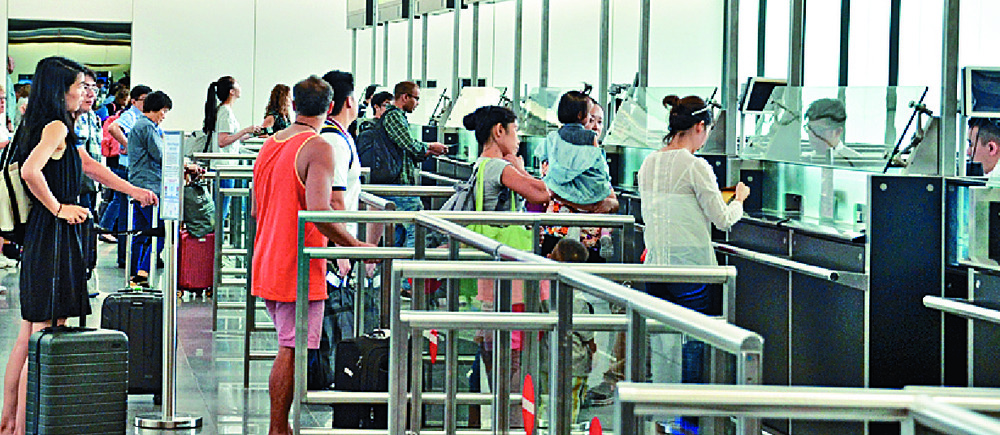
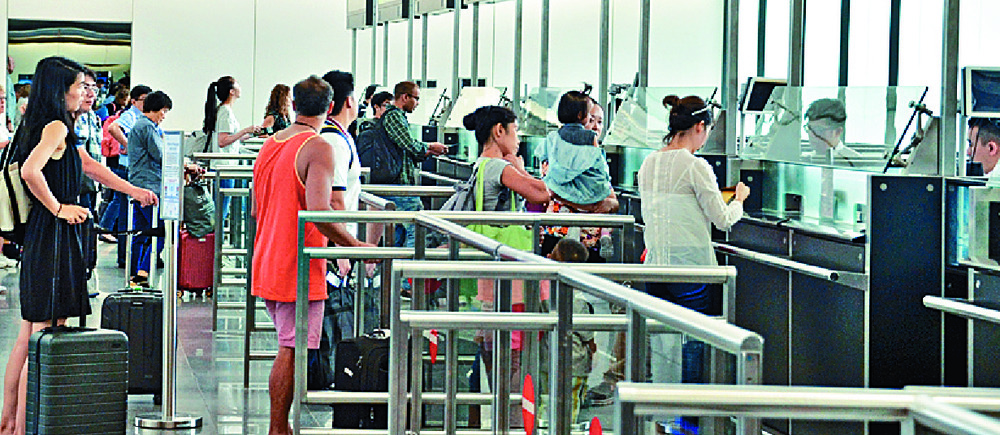
At the moment, it is now lawful to pass through Hong Kong immigration in either direction with nothing more than an ID card, but that could easily change,
Immigration could easily take more interest in passports, which must be registered in the airline manifest at check-in and shown to security staff on entering the closed airside area.
It would be a simple task to require passengers to sign a declaration stating whether they hold BNO passports.
On the other hand, the British declaration that BNO holders will have "a path to citizenship" is, to my mind, a hollow promise.
For example, will it be a requirement that such persons must secure jobs for the duration of their initial five-year stay?
Will applicants have to abide by Britain's new Australian-style "points-based" immigration stem, which is in the process of being introduced?
Above all, how will the people of Britain react to the possible influx of three million Hongkongers?
It is often said that one week is a long time in politics and God only knows what the political situation in the UK will be like in a few year's time.
Because of its imperial past, the issue of immigration to the UK has always been an emotive and thorny issue.
The finer details of the "route to citizenship" have yet to be revealed, but I suspect they will be less generous than optimists might hope.
Cheng Huan is an author and a senior counsel who practices in Hong Kong