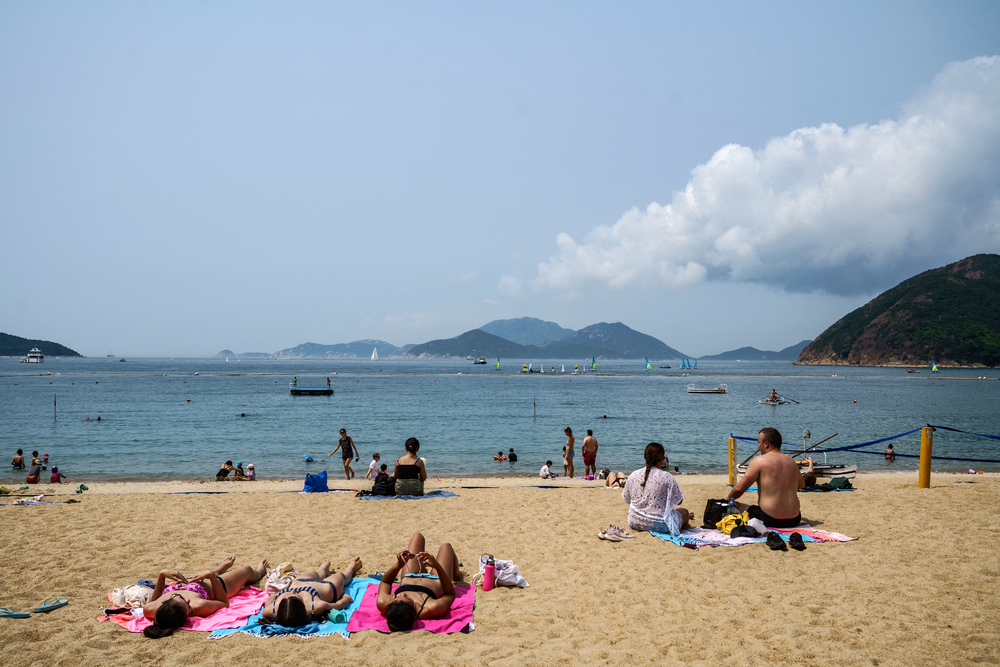
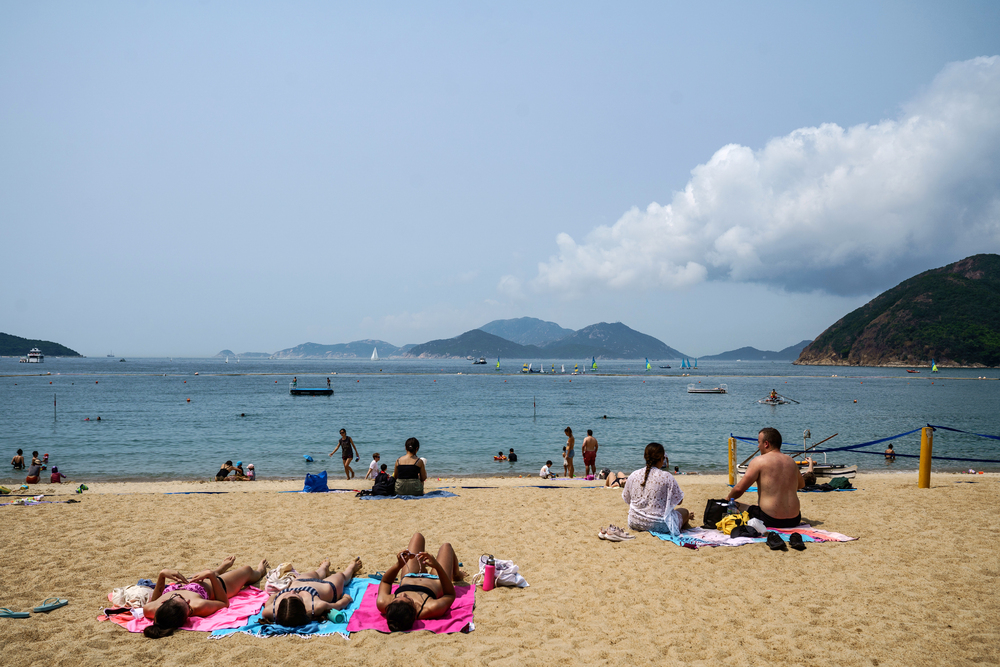
Swimmers can now check the water quality on their mobile phone before heading to the beach, as the Environmental Protection Department yesterday launched the Beach Water Quality Forecast System.
The system will produce daily water quality forecasts, with updates every morning for all 42 gazetted beaches that are open for swimming.
The beach water quality is categorized as 1-Good, 2-Fair, 3-Poor and 4-Very Poor, and the department encourages swimmers to avoid taking a dip when the forecast index is "very poor."
The beach water quality is based on minor illness rates, with level 1 meaning an undetectable number of swimmers getting ill from swimming in those waters, level 2 with fewer than 10 cases of minor illness, level 3 with 11 to 15 cases and over 15 cases of minor illness for level 4 waters.
Though beaches will not be closed despite a very poor water quality index, the Leisure and Cultural Services Department will hoist a red flag to remind the public of potential risks.
The beach quality system was jointly developed by the EPD and the University of Science and Technology to help Hong Kong develop into a smart city, according to the department's spokesman.
"Through the smart technology platform, we wish to transform the water quality forecast model into a practical tool for disseminating the latest water quality forecast results to the public," the spokesman said.
It takes into account microbiological data, rainfall, onshore wind, tide level, salinity, solar radiation and water temperature to forecast the daily Escherichia coli level in the water of the beaches.
According to the EPD, E. coli is an indicator that "reflects the risk of skin and gastrointestinal diseases caused by exposure to sewage."
However, the system can only predict risks from environmental factors. For unforeseen pollution events such as sewage leakages, the system will show a "!" symbol to alert the public of the event.
The overall accuracy of the forecast system is over 80 percent, slightly higher than the existing beach water quality monitoring program of less than 80 percent.
The accuracy in capturing events where E. coli level exceeds 180 per 100mL is about 30 to 40 percent, significantly higher than the existing program of less than 20 percent.
The system takes samplings every three to 14 days during the bathing season. It updates much more frequently than the previous system and is designed to supplement the existing program.
A 60-year-old swimmer said: "This is a really good system. Instead of showing information such as the amount of E. coli, this system makes it easy for the public to know about the water quality of different beaches."
Another outdoor activity enthusiast said: "I think beach swimmers already make their own estimations [of water conditions] based on weather, season and tide levels. Also, will it be a bit confusing when there are two systems for beach water quality?"
The beach ratings were mostly good and fair yesterday, with most of the beaches around Tsuen Wan and Tuen Mun at level 2.
lorraine.chiang@singtaonewscorp.com