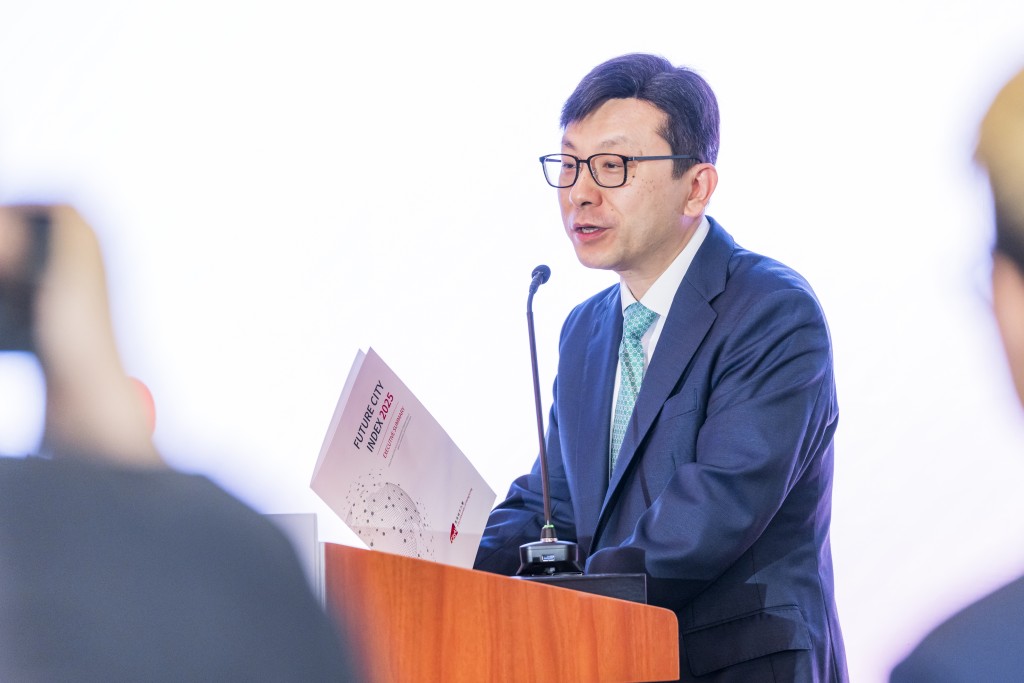
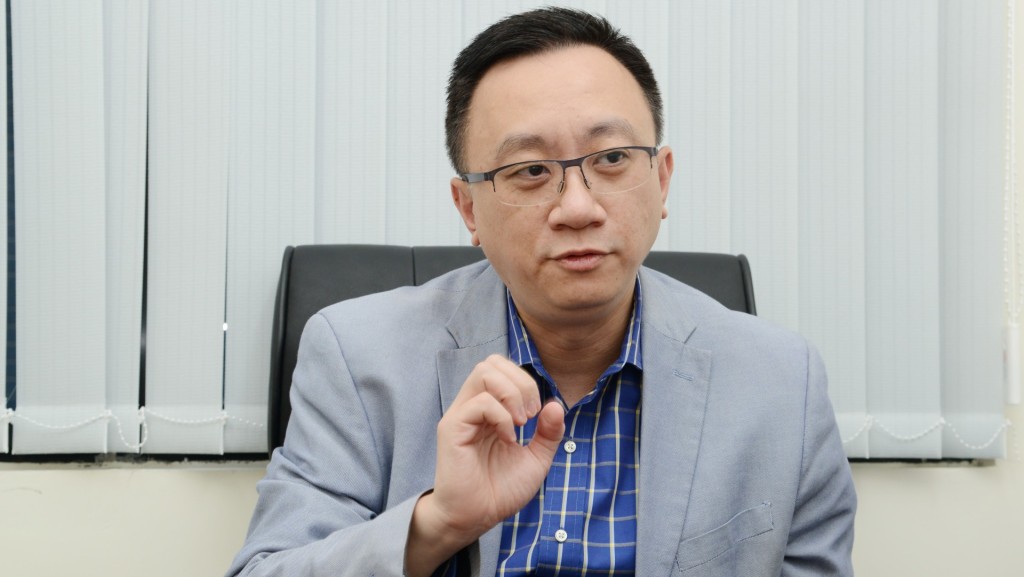
The Future City Index will help global cities, including Hong Kong, understand their positioning and identify future development priorities; while indicators such as their responsiveness to emerging technologies like artificial intelligence will also be introduced in the index, said professor Vincent Wang Xiaohui, director of the Global Talent Flow Data Hub at City University.
In response to questions from The Standard on the newly launched Future City Index, Wang noted that the index addresses urgent policy needs, as many existing city rankings focus more on current economic levels, infrastructure and quality of life.
Wang posed a question: “With rapid technological development, accelerated talent mobility and the structural changes driven by emerging technologies, how can we systematically evaluate a city’s readiness for future development?”
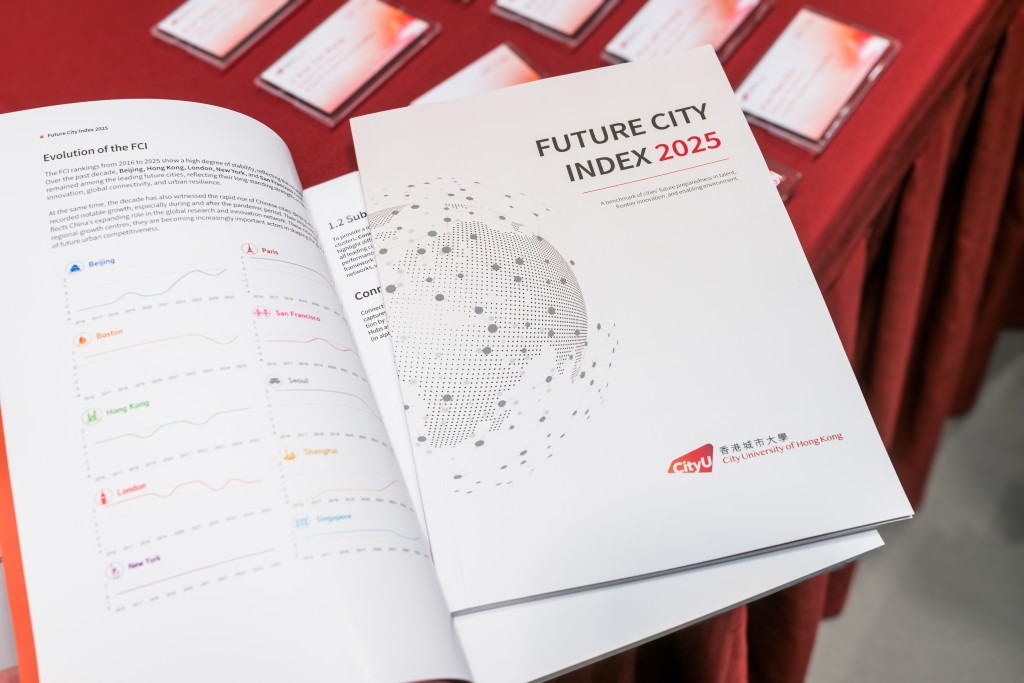
CityUHK launched the Future City Index 2025 yesterday, the world’s first city-level benchmarked report assessing the long-term development capabilities of 100 global cities across education, technology, talent and finance.
The index uses cities as the unit of analysis. It applies a three-pillar framework – Future Talent, Future Innovation and Future Environment – to assess whether a city can continuously attract and cultivate high-end talent, drive knowledge production and technological innovation, and maintain openness and resilience.
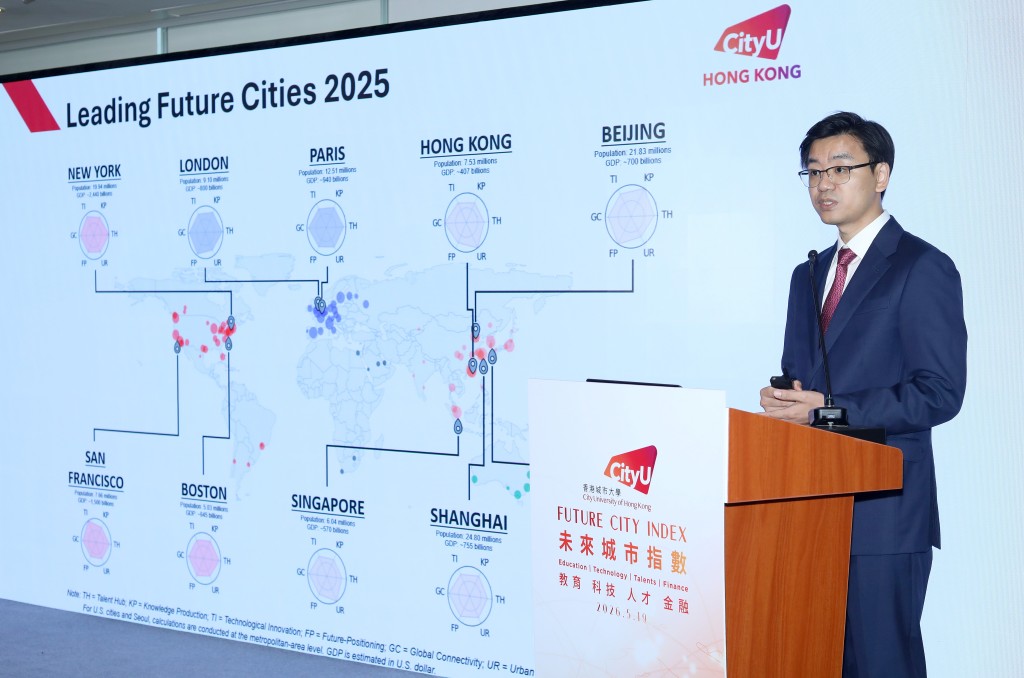
The 2025 index evaluates 100 cities with populations above one million across 39 indicators in six dimensions: Talent Hub, Knowledge Production, Technological Innovation, Future-Positioning, Global Connectivity and Urban Resilience.
Talent Hub measures a city’s ability to attract, cultivate and retain highly skilled professionals and researchers.
Global Connectivity reflects a city’s position within global economic, knowledge and mobility networks.
Resilience measures a city’s capacity to withstand and adapt to disruptions such as economic shocks, pandemics and geopolitical uncertainty.
Future-Positioning reflects strategic foresight in emerging technologies and long-term planning.
Wang explained that the index is built on the Global Talent Flow Data Hub’s database, which contains information on hundreds of millions of professionals worldwide, including their knowledge output, and publications, with additional support from international institutions.
“We do not want this index to rely on subjective evaluations or fragmented data. It should be trackable and allow both horizontal and longitudinal comparisons,” he said.
Wang acknowledged challenges such as building a comprehensive dataset, ensuring transparency and timeliness, and defining future readiness authoritatively.
To address these, the research team established an international advisory committee and collaborated with global institutions, including analytics company Clarivate and the International Organization for Migration at the United Nations.
CityUHK Launches World’s First Big-Data-Driven Index to Benchmark Cities’ Future Competitiveness
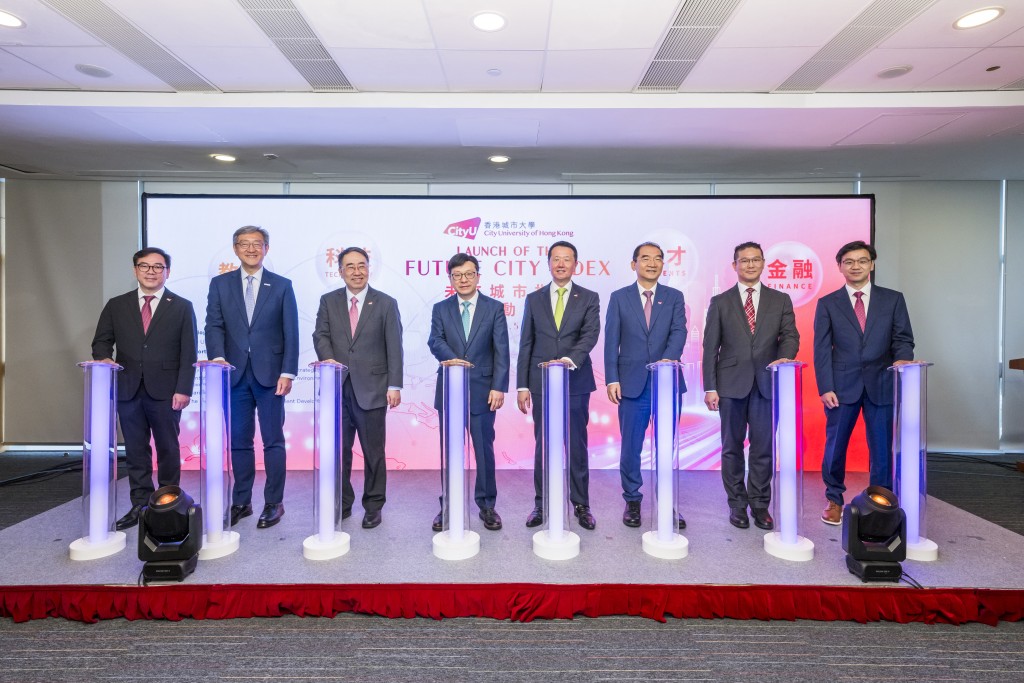
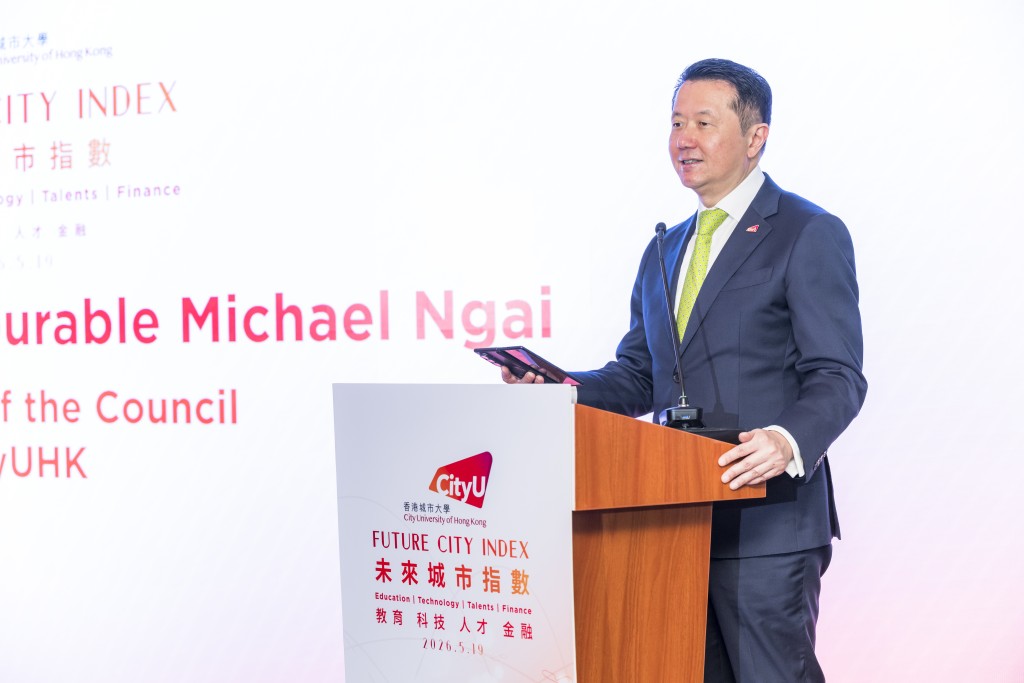
The launch ceremony yesterday was officiated by Secretary for Labour and Welfare Chris Sun Yuk-han; CityUHK Council chairman, professor Michael Ngai; CityUHK acting president, professor Lee Chun-sing; and director-general of the Office for Attracting Strategic Enterprises, Peter Yan King-shun.
CityUHK launched the inaugural ‘Future City Index 2025’ yesterday.
Sun said Hong Kong enjoys strong support from mainland China while remaining closely connected to the world.
“As the country embarks on its 15th Five-Year Plan, Hong Kong will further its role as the ‘Super Connector’ and ‘Super value-adder,’” he said, adding that the index offers global insights and a visionary outlook for the city’s growth.
Ngai remarked that CityUHK fully supports the government’s efforts to promote integrated development of education, technology, talent and finance.
“The index offers a forward-looking benchmark for policymakers, researchers, industry leaders and public institutions,” he said.
Chris Sun
Michael Ngai
Lee noted that the university has already achieved results through initiatives such as HK Tech 300 and the CityUHK Academy of Innovation. He said the new index reaffirms CityUHK’s commitment to nurturing deep-tech talent and start-ups by providing a data-driven tool to assess long-term development capabilities.
The index, published by the Global Talent Flow Data Hub at the CityUHK Academy of Innovation, evaluates 100 cities across 39 indicators.
The inaugural report reveals the world’s top 10 “Leading Future Cities” are Beijing, Boston, Hong Kong, London, New York, Paris, San Francisco, Seoul, Shanghai and Singapore. Notably, only five cities – Beijing, Hong Kong, London, New York and Paris – rank within the top 10 across all four categories of Talent Hub, Connection Hub, Resilience, and Future-Positioning.
Hong Kong stands out in attracting, nurturing and retaining innovative talent, and records the highest score in international collaboration among major bay areas.
Hong Kong has demonstrated strong resilience and adaptability amid the global challenges posed by the pandemic.
Over the past decade, the city has achieved significant growth in top researchers, research outputs, R&D investment and high-tech enterprises.
In the past five years, talent inflow exceeded 25,000, and the number of top researchers in emerging areas such as artificial intelligence, biotechnology, fintech and semiconductors increased 3.7-fold, from 536 to 1978, in the past 10 years.
This growth underscores Hong Kong’s role as an international talent hub, connecting global resources and capital and serving as a vital link between the mainland and wider ecosystems.
Professor Vincent Wang Xiaohui, director of the Global Talent Flow Data Hub, said local universities are dedicated to nurturing tech talent. He noted that by leveraging the mainland’s extensive high-end talent pool together with Hong Kong’s strengths in global connectivity and adaptability, the city will advance the policy of “Bringing in and Going Global,” positioning itself as a strategic gateway for talent and enterprises to expand overseas.
HK ranked among top 10 ‘Leading Future Cities’
According to the index, Beijing, Boston, Hong Kong, London, New York, Paris, San Francisco, Seoul, Shanghai and Singapore were evaluated as leading future cities in 2025, with Hong Kong demonstrating top performance in Talent Hub, Connection Hub, Resilience and Future-Positioning.
The report also noted that these 10 cities have consistently ranked among the leaders over the past decade, while Chinese cities, particularly Beijing and Shanghai, have shown remarkable growth, especially during the pandemic, and are playing an increasingly influential role in shaping global research, technological development and industrial transformation.
“I hope the index is not a simple city ranking but a tool to help cities understand themselves and confirm their positioning in future development through multidimensional analysis,” Wang said.
Wang highlighted the positive impact on Hong Kong, saying the index can help the city more precisely identify future priorities, such as attracting frontier technology talent, promoting research translation at universities, and strengthening integration with the Greater Bay Area.
“We hope the index can show the world that Hong Kong is not only a financial center but also an international hub for innovation and talent with high readiness for the future,” he said.
Looking ahead, Wang said the team will focus on improving the database’s coverage and accuracy and releasing related indices for medium and small cities to enable comparisons across different scales.
He added that the team will also study the impact of AI on urban development, including how cities can remain competitive under the pressure of emerging technologies and how AI will reshape talent structures and research landscapes.