Greta Ng
From ancient Greek theater to Shakespeare's great tragedies to top-grossing Broadway shows, theater has withstood the test of time, the lure of the spotlights never dimming. Drama schools are one pathway for aspiring actors and theatrical technicians alike to break into the industry and, with luck, make a name for themselves.
Nestled in the heart of Los Angeles, The University of Southern California's School of Dramatic Arts, with a vast range of programs and state-of-the-art facilities, is one of the top performing arts institutions that students and young professionals vie for.
The school trains Trojans, the name for USC members, for both stage and screen, including television, film, digital media and other entertainment industries.
It may come as a surprise that the school also offers a variety of distinct theater courses to students from quite a few other disciplines.
For Emily Roxworthy, dean of the school and a staunch believer in the importance of theater, the art form does enhance education.
"Aspiring business leaders take our creative entrepreneurship classes and learn about content creation," she says. "We also have a lot of pre-med students taking our medical clowning classes, where you actually learn to use physical comedy in a medical setting. And then we have engineering students who take our improvisational comedy classes to acquire adaptability."
Initially pursuing a career as an actress, Roxworthy turned to academia and undertook extensive research on performance in the Japanese-American concentration camps in World War II.
After a decade as a scholar, she returned to directing and writing for the stage, and held positions at the University of California, San Diego, before becoming dean of the school at USC in 2021.
Her academic and creative interests are roleplay training, intercultural theater, digital media and performance in higher education.
Roxworthy is currently teaching a class called theater scene for non-theater majors that studies plays and musicals staged by the school on campus.
"It's a small freshman seminar. We'll read the play or the musical that we're producing. There'll be guest artistes from productions and field trips to see the shows. Students will then write reviews of the performances," she remarks. "It's been a lot of fun to teach again, because I hadn't been teaching for the past three years."
In her fourth year as dean, Roxworthy is committed to forging global partnerships and fostering intercultural exchange.
"One of the ways we are evolving as a school is by embracing and educating the idea of multi-hyphenate artists," she says. "We believe that this is the direction that the entertainment industry is going in the US and potentially globally as well."
Pointing out that Hollywood and Broadway are just two of several entertainment capitals around the world, Roxworthy says those sort of centers of gravity are always changing.
"So it's extremely important for our students to have global competence and connections. We're looking for like-minded academic partners who want to do the same for their students, and Hong Kong is at the top of the list."
For years, the school has had close ties with The Hong Kong Academy of Performing Arts - several faculty members and alumni have gone on to work or teach as visiting professors or artists there.
Jorge Luis Cacheiro, former dean of the School of Drama at HKAPA, is one of them. Playwright and professor Oliver Mayer from the School of Dramatic Arts visited HKAPA last January to talk about its dramatic writing program. The two institutions have also been discussing plans to formalize exchange programs.
Those close ties made last week's visit by Roxworthy a special occasion as she explored collaboration opportunities with local institutions.
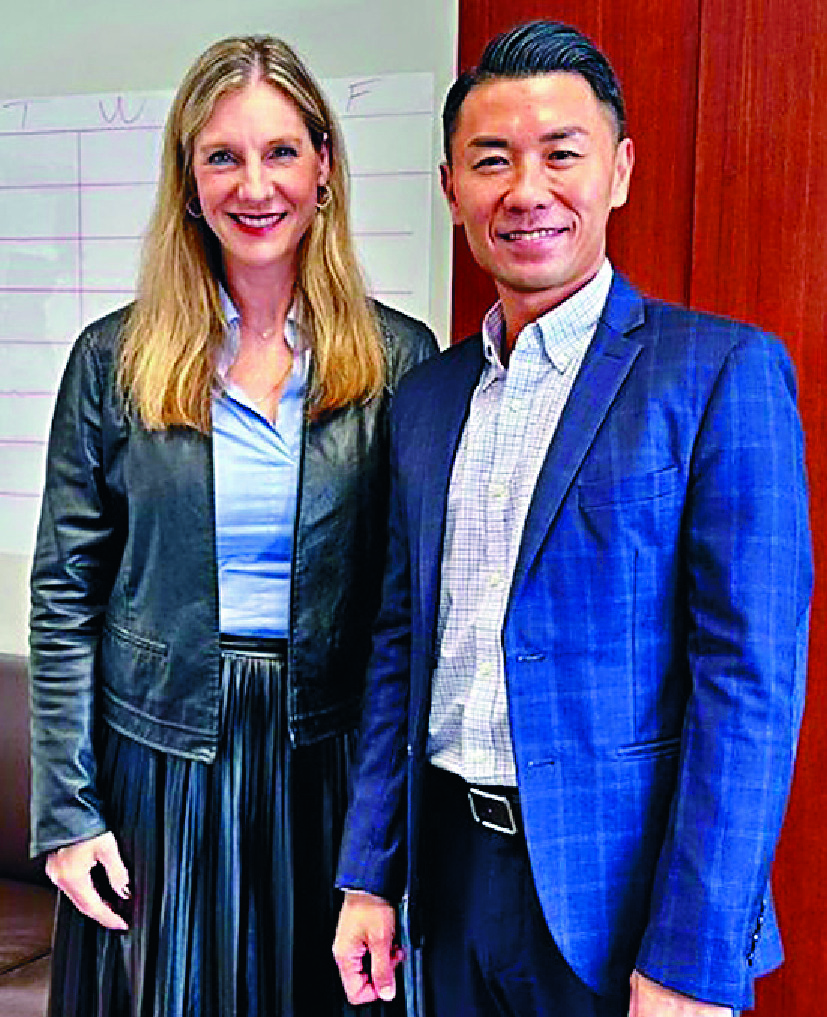
One avenue was with Tony Wong, acting dean of HKAPA's School of Drama. "He's such a renowned actor himself and has done such incredible things with training the acting students there. I'm really interested to hear how we might collaborate."
She also went and watched a performance of the play Diebe at HKAPA, which is a contemporary take on the tragicomedy Waiting for Godot.
"I'm very curious to see the many layers of that translation. Their school is focused on physical acting, which is particularly hard if you think about it. You have a whole stage to perform on, and that's very different from when you have to stay within a frame for the camera," she notes.
"I'm curious to see if we can be of assistance with HKAPA in being media agile - showing students from a very early point in their training how to transfer what they're learning to different mediums. That could be helpful in a setting of workshops and other types of academic exchange."
As for upcoming collaborations, Zachary Steel, the director of the School of Dramatic Arts' comedy program, will be teaching two-hour workshops to around 25 students at HKAPA in January.
Roxworthy also hints at a creative collaboration around a new art piece by a global artist "who has great meaning in this part of the world, as well as in the US," she says. "I hope we'll be able to share more about that soon."
In addition to HKAPA, Roxworthy paid a visit to Baptist University and met with several faculty members from its Academy of Film, which also has ties with USC's film school.
Beyond tertiary education, the school is exploring summer programs for Hong Kong secondary school students.
"There are many international schools in Hong Kong. We currently offer summer programs to high school students in comedy, musical theater and acting, and we could develop more. Those are great, immersive experiences on campus."
Prospective USC students will be delighted to know that the school has made a landmark decision in June: offering free tuition for incoming and current students studying masters in fine arts in the acting and dramatic writing programs in the 2024-25 academic year.
Aside from competing with top drama schools in the US that also have fully-funded MFA programs, Roxworthy points to the two labor strikes that gripped Hollywood last year as the main catalyst.
"The way that most of us around the world got through the pandemic was by watching television, right? And none of that's possible without writers and actors," she says.
"And yet, what very few people realized is that those actors and writers were not being compensated at all, commensurate with the distribution of those stories. These artistes are incredibly important to train and to produce for the world, and we can't saddle them with massive debts.
"There was a huge increase in applications, including from international students that we are very keen to consider their applications. Financial aid for American higher education is very difficult for international students to access, and so this levels the playing field for them," she says.
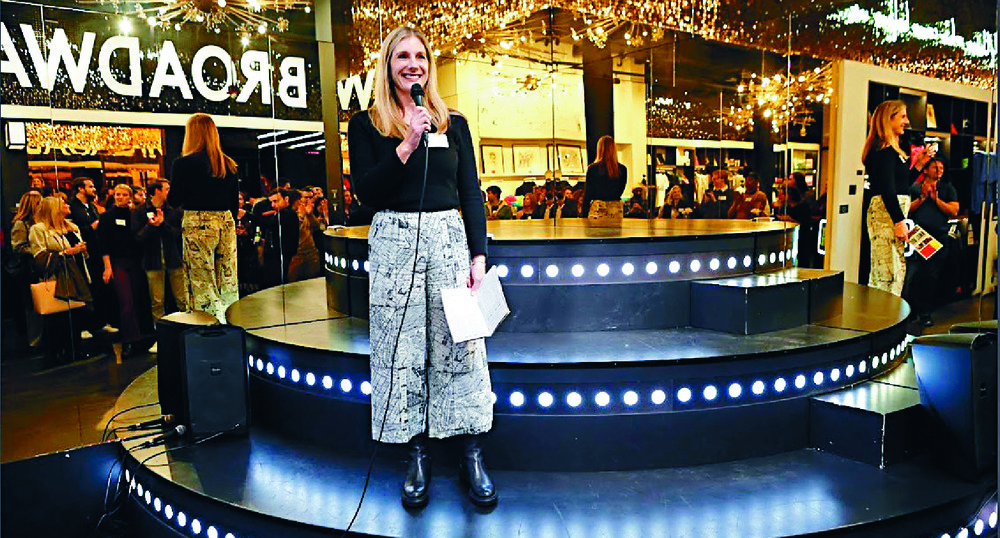
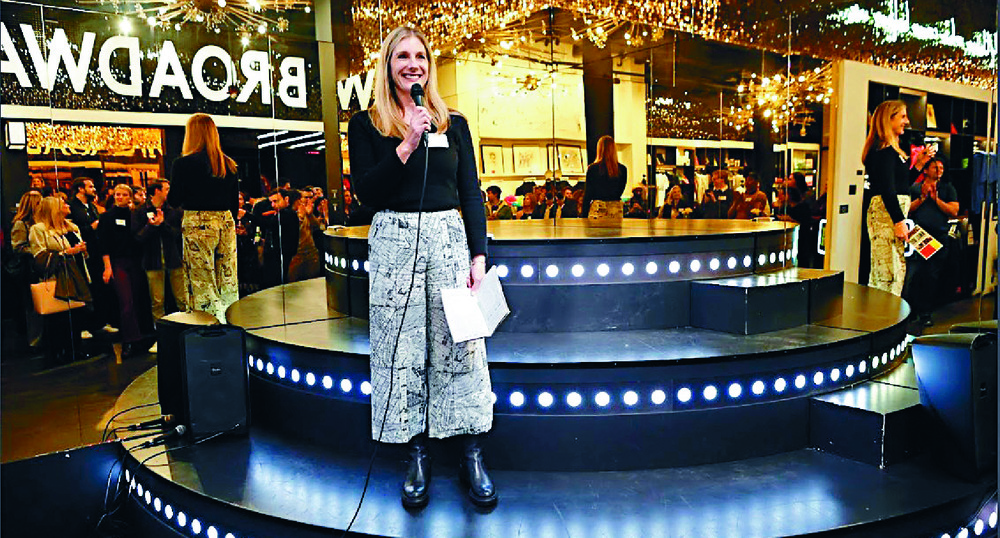
Emily Roxworthy, dean of USC School of Dramatic Arts, is seen with Tony Wong, acting dean of HKAPA School of Drama, and attends an alumni event at the Museum of Broadway. Michael Rueter/Capture Imaging