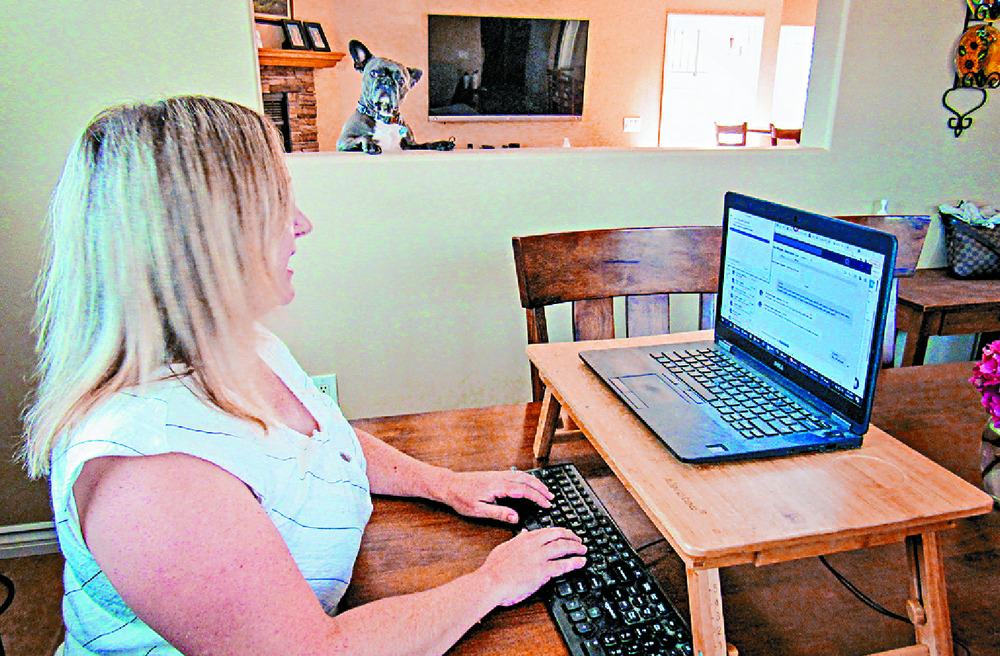
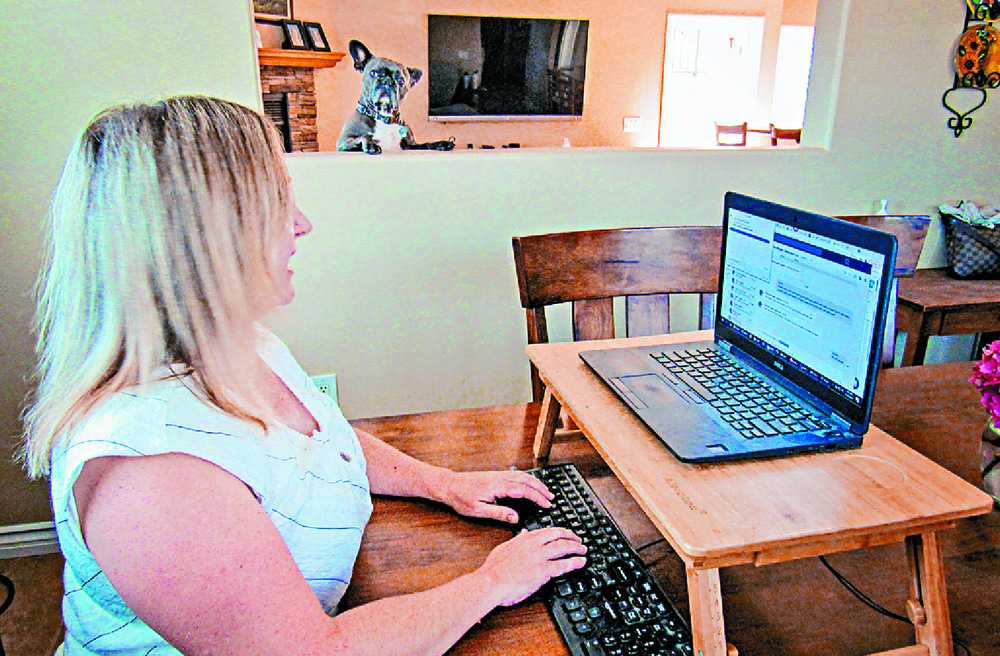
It came as a revelation to Sheldon Lewenfus that workers at his health-care management company performed their jobs well at home after the pandemic forced them out of their offices last year.
"I am sort of old school, but I was quite surprised that the situation worked out," said the vice president of business development at MedPoint.
"Productivity was the same; no loss of clients. Everybody seemed pretty content."
The success prompted the company to shed half of its office space in an upcoming move to new quarters while keeping its staff of about 800 workers intact. Half of them will work mostly at home and the rest will toil at home some days and in the office on others.
Such hybrid work schedules promise to become the norm for many companies. It's a revolutionary change that is celebrated by a significant chunk of employees, workforce surveys show.
Building owners are watching nervously as office tenants weigh whether to reduce how much space they lease. Also on edge are restaurants and stores that depend on a daily stream of office workers to stay afloat. Those landlords and businesses have workers of their own who wish to stay employed.
Many companies are still undecided about whether they will require their employees to return full time after the pandemic is subdued and what their offices should look like when they do come back. Some managers might even want additional office space to give their employees more literal breathing room.
"I think quite candidly that Covid has advanced us 10 years into the future because I wouldn't have ever seen downsizing space and having employees work from home, but that's where it's going," said Lewenfus. Other health-care companies are considering similar moves "because it seems to be working."
How widespread such space reductions will be remains to be seen. Office developers hope the rental market has hit bottom but many are waiting to see what types of offices future tenants are going to want before buildings new ones, according to the summer Allen Matkins/UCLA Anderson Forecast.
Aquent, which provides temporary workers to marketing firms and other creative businesses, is opting out of offices almost altogether and will keep nearly everyone working at home from now on.
Aquent will go from having about 200,000 square feet of offices to 24,000, maintaining its computer hardware in a Seattle building for security and a small office in Boston where the company is based and records are kept. "We were not sure what was going to happen and very quickly we realized: 'Wait, this is fantastic,'" said Erin Bloom, Aquent's head of culture and community. "Our people finally have the flexibility they were looking for."
Aquent didn't disclose its savings from shedding leased offices but real estate costs are typically a company's largest expense after payroll.
Some of the savings will be used to boost employee benefits. The rest will be used to bring the staff together remotely, such as online speakers series and book clubs, and for in-person events, such as happy hours, conferences and team-building gatherings.
Certain events may involve traveling long distances to bring staffers together, she said, because some have chosen to move nomadically after being unburdened of the need to clock into an office.
"It's really forcing us to get very creative about what our staff are looking for and on what terms they want to get together in person," she said.
Most companies won't be letting employees set the terms for joining each other, though, with many bosses such as Reed Hastings of Netflix already commanding that their workers return to the office.
There are many reasons white-collar businesses like to have their employees together including the belief that people toiling in isolation can lose their personal connection with their company.
"Having an office space reinforces company culture, so you don't have people constantly leaving," said Michael Soto, a director of research for real estate brokerage Savills.
Companies that place a high value on collaboration to achieve goals in fields such as technology, media and entertainment have been expanding their rented space recently and "want everyone back in the office to create a good corporate culture," he said.
Most companies are keying on a September office return when kids are back in school, Soto said, though Microsoft and Apple recently announced that they are pushing back office reopenings by at least a month to October in response to a surge in Covid-19 variants.
Amazon.com just said it would not expect employees to return until next year.
For industries forced to compete for desirable employees, how many end up coming in every day will be decided by the workers themselves, said Michael White, an architect who focuses on the needs of media and technology businesses at Gensler, where he is a managing director.
"Talent, at the end of the day, is going to be making the decision on this. Companies won't."
A survey by human resources trade group SHRM shows a wide range of preferences among workers, with 31 percent of workers saying they would prefer to work fully remote matched by another 31 percent saying they want to work fully in person.
Among people preferring a home and office split, 22 percent want to work remotely most of the time and 16 percent want to work mostly in person.
Managers generally desire face time. A recent report by SHRM showed 72 percent would prefer to have all their subordinates working in the office.
A majority of bosses also acknowledged they consider remote workers more easily replaceable than on-site workers and think remote work is detrimental to employees' career objectives.
White cautioned against drawing conclusions from employee surveys because respondents are still under duress from the pandemic. "We simply don't know that when the fear of virus goes away, whether people's feelings around coming back into the office will change but there is still a fairly significant need that most employees, and certainly most companies, see for the office in a very profound way."
Tension over returning to the office is a chicken-and-egg dilemma for many who are vaccinated and might come back voluntarily if others did too, he said. "You've got to have a groundswell of people to be here for more people to come."
Offices meant to appeal to them should have more "we" space than "me" space, he said, places where people can team up and work side by side or unwind together eating lunch or watching a sporting event.
"There is a realization now that the office space needs to compete with your home office," he said, because it's been proven people can easily perform many tasks remotely. "What they can't do is get the social engagement, cultural engagement, training and coaching" that happens at work.
The size and configuration of future offices will vary widely as firms reassess how they want to use their space, said Jeff Ingham of real estate services firm JLL, who tracks global office patterns.
Well-heeled, profitable firms in some cases have been keeping their offices the same size but reconfiguring them to keep the people who do come to the office more comfortably distanced from one another.
"Typically, lower-margin companies" are the ones focusing on reducing space, he said.
Some companies with higher profit margins also see this work-from-home era as an opportunity to shed space, but are holding off on making decisions as the pandemic plays out, figuring that employees' feelings will come into better focus when the world is more safe, Ingham said.
Los Angeles Times (TNS)