Read More

Blue Origin to renew Mars satellite launch bid as geomagnetic storm fades
13-11-2025 13:01 HKT



Peace talks with an unpredictable president | High-flier | Jeffrey Lam
14-04-2026 04:51 HKT









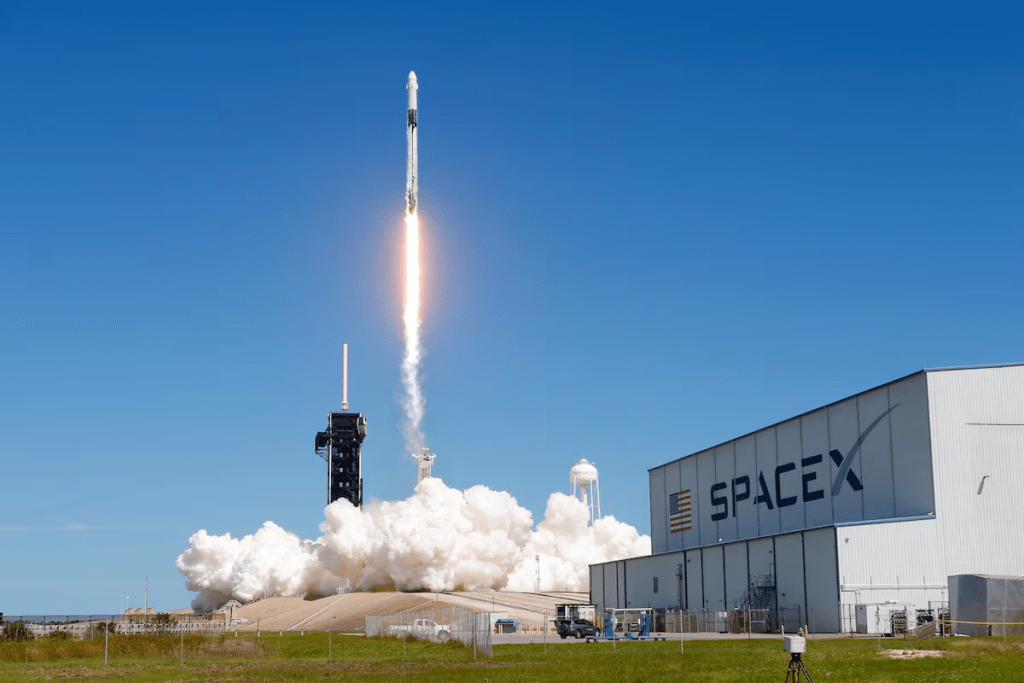
SpaceX has long captured the public imagination with its bold vision of making humanity multi planetary. The company first detailed its Mars colonization plans in 2016, when Musk outlined an ambitious roadmap: an uncrewed cargo mission potentially launching as early as 2018, followed by crewed missions beginning around 2024.
Now, in 2026, those timelines have not materialized. No uncrewed Starship has reached Mars, and crewed flights remain distant. Now, SpaceX is shifting priorities toward lunar development, including plans for a "self growing city" on the Moon as a nearer term step to secure civilization’s future. Musk has indicated Mars efforts might ramp up in 5 to 7 years, with uncrewed cargo flights possibly beginning around 2030, implying that the 2026 Mars launch window is likely to be missed.
Mars is 100x farther from Earth than the Moon, requiring much greater propulsion, life support, radiation protection, and in situ resource utilization. Current technology, even with a reusable Starship, faces extreme difficulties in orbital refueling and reliable landings. The Apollo program illustrates how difficult sustained operations can be: despite 6 successful landings between 1969 and 1972, 54 years have passed without a revisit! This highlights the tremendous technical, economic, and logistical barriers to just returning to our own Moon. If the Moon remains out of reach after half a century, one has to ask: Mars?
Despite setbacks on the Martian plan, SpaceX’s valuation “must” keep inflating due to investor expectations and the capital required. Pre IPO estimates range from $800 billion to $1.5 trillion. Starlink is the primary revenue driver, with projected revenue of roughly $15-16 billion in 2025 and about $8 billion in profit. NASA contracts remain significant but are small relative to SpaceX’s trillion dollar valuation. To bridge the gap, Musk pursues mergers and emphasizes more achievable goals: Moon missions (rather than Mars), acquisition of xAI to create AI-space synergies, and space based GPUs that leverage solar power and vacuum cooling. All of these lower the Mars bar while sustaining investor excitement.
Ultimately, does this support a $1,000+ billion valuation? Though SpaceX has revolutionized launch costs and satellite connectivity, the grand Martian promise remains unfulfilled, raising questions about hype versus reality in space exploration.
Allen Au is a tech startup founder, AI architect, and YouTuber