(Part two of three)
Last month this column looked at the origins of the National Security Law. Today it takes a further look at certain aspects of Hong Kong’s likely legal future.
Whether common law will continue to be used in criminal courts after 2047 remains, like much else, undecided. There is clearly a possibility that criminal law will be coordinated with the mainland’s laws, leaving common law confined to civil law.
An indication of this new reality is that the NSL has already made inroads into some of the more cherished principles of common law such as trial by jury, which is unknown in the mainland and not permitted in some NSL cases.
Indeed, it is unlikely that trial by jury will survive, at least in its present form. Jury trials have been in decline for years, not just here but in other countries as well. In Hong Kong juries have as good as disappeared in civil trials, being only permitted in defamation cases. What’s more, there is no conclusive evidence jury trials are more “just” than systems based on judges.
Juries have been losing their attraction for a variety of reasons: they cannot give reasons for their verdicts, which seems unfair; it is difficult finding juries because only a small percentage of the population qualify for jury service; jurors often cannot stay away from work for long periods; and evidence is becoming steadily more complex and scientific and often beyond the understanding of most jurors.
It is likely, therefore, that Hong Kong will follow Singapore’s example and do away with juries. Singapore’s founding father, Lee Kuan Yew, who was himself a criminal trial lawyer, said that “I had no faith in a system that allowed the superstition, ignorance, biases and prejudices of seven jurymen to determine guilt or innocence.”
It is probable that there will be further discussion about the merits of having foreign judges on our Court of Final Appeal. Six foreign judges have resigned from the CFA in the last year, with the last resignee, Australian Robert French, saying with refreshing frankness that his role had been “largely cosmetic.”
The difficulty is that these foreign non-permanent judges become easy political prey. Whenever a judge resigns certain governments seize the chance to castigate Hong Kong. Back in the 1980s there was even talk whether Hong Kong would need a CFA at all. Some believed that the National Peoples Congress could fulfill that role, just as for 150 years the Privy Council in the House of Lords acted as our final Court of Appeal.
Article 82 of the Basic Law was the result of compromises. The mainland had to be convinced that foreign judges were a good idea. A compromise was reached with the words : Hong Kong “may as required invite judges from other common law jurisdictions” to sit on the CFA. The word “may” obviously implies that there exists no mandatory requirement to invite any foreign judges, who are merely an option, not a necessity.
The idea was that their presence would add weight, prestige and learnedness to the court. The problem is whenever a foreign judge resigns it attracts adverse foreign publicity about our judicial system.
On balance I suppose we should welcome them but not if their presence creates hostages to fortune while bearing in mind that our judiciary and legal system are sufficiently robust that they can do their jobs perfectly well with or without foreign judges.
As for civil law, the NSL, by bringing peace to our streets and stability to the economy, has created an environment where civil litigation can again flourish.
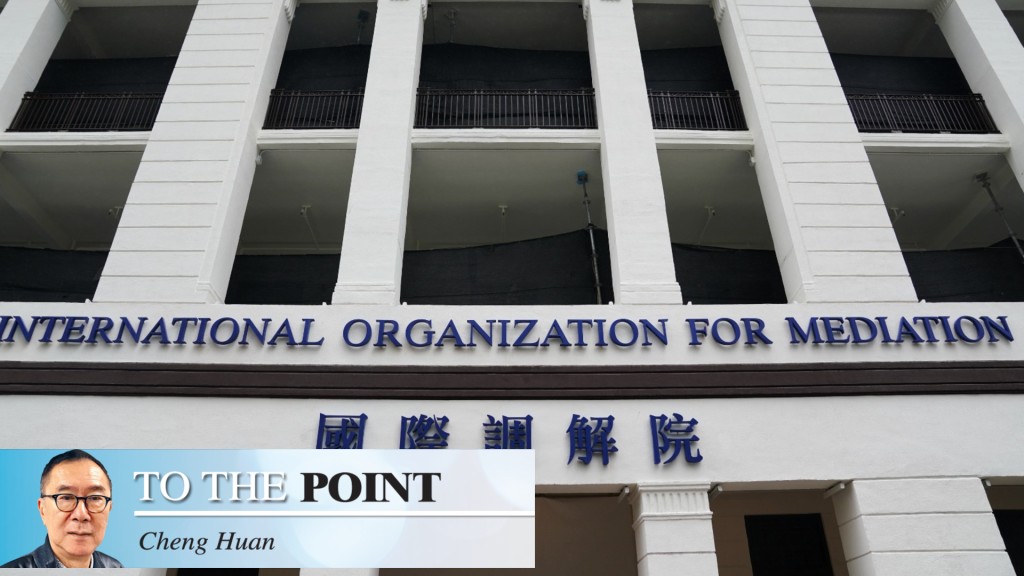
Hong Kong’s role as a center for arbitration and mediation is likely to grow greatly. The newly established International Organisation for Mediation will obviously strengthen Hong Kong’s position as a legal and dispute resolution center.
In the concluding column for this series next month, I will look at other isues such judicial reviews, the role of common law as a common legal language linking nations, the mainland’s perception of judges as “administrators,” judicial reform, long-term legal planning for Hong Kong, and the matter of 2047 and the pivotal role of Article 5 of the Basic Law.
Cheng Huan is an author and a senior counsel who practices in Hong Kong