The low-altitude economy is set to see explosive growth soon, given its resolute promotion by our central government.
Pioneering this growth is Shenzhen, where its many high-tech start-ups and young, tech-savvy population are eager to try out new ideas.
I had a unique opportunity to sample some of these new applications in the city.
The visit covered organizations that use drones, including one offering taxi services, a leading food delivery company and one using them for applications such as surveillance, firefighting and agriculture.
These drones operate at low altitudes of between 300 and 1,000 meters, which are much lower than those for helicopters and aircrafts but higher than skyscrapers and other fixed structures, so they can get to their destinations as the crows fly.
For drone taxis, the hardware is already proven for reliable service, with large drones, called electric vertical takeoff and landing aircraft, capable of carrying two to five passengers, depending on the make.
But civil aviation regulations need updating to enable commercial services.
At this time, drones are allowed on point-to-point journeys on set routes, but an operator is required by law to be in a drone.
This requirement is expected to be lifted soon for more efficient operations, as it adds a lot to a journey's costs.
After being updated, a passenger can expect to pay about 300 yuan (HK$324) for a journey across town.
Just imagine how convenient and affordable it will be for jet-setting businessmen to get to the airport or high-speed railway stations from their offices.
Shown a take-off point in a park, marked "V" instead of "H" for helipad, and an eVTOL in action, we left convinced it is very close to commercial operation.
The delivery company has an established network in Shenzhen that normally uses runners by motorbikes and bicycles.
The ability to deliver food and drinks to a park with no road access via environmentally friendly drones, or delivering orders in minutes from a town to kiosks for easy collection, is a revelation to behold.
We were told that charges for deliveries by drones are set at similar levels to traditional modes of delivery, so at this time it is an unprofitable line of business, as the drones were specially designed and made for such purposes, necessitating high costs.
But the company is committed to long-term investment, as it believes deliveries by drones are more convenient and reliable, not being affected by remote locations, traffic jams and fear of human error.
The initial investments, though expensive, may prove to be a workable proposition if they propel it to a leading position in a large market in the medium term.
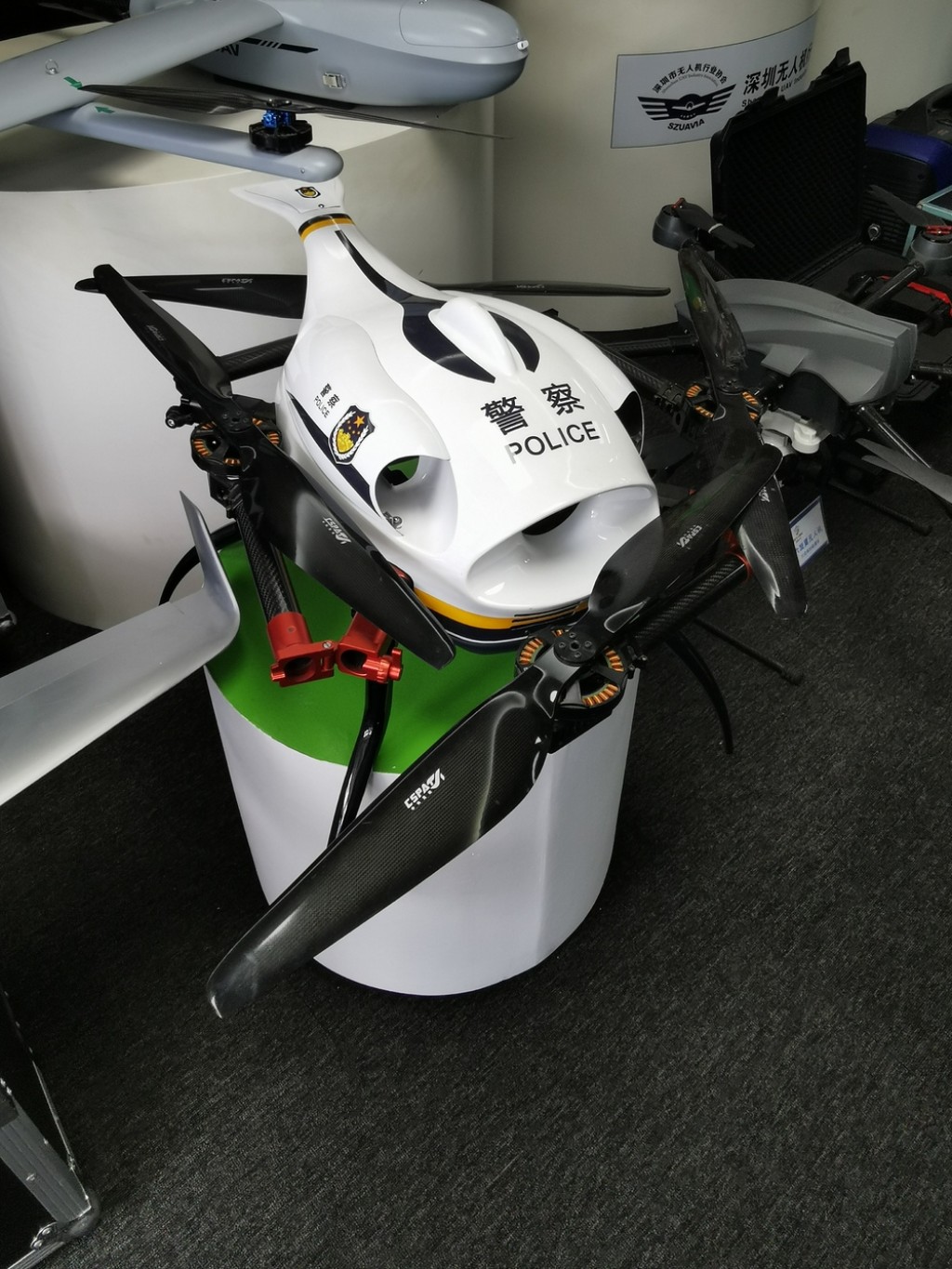
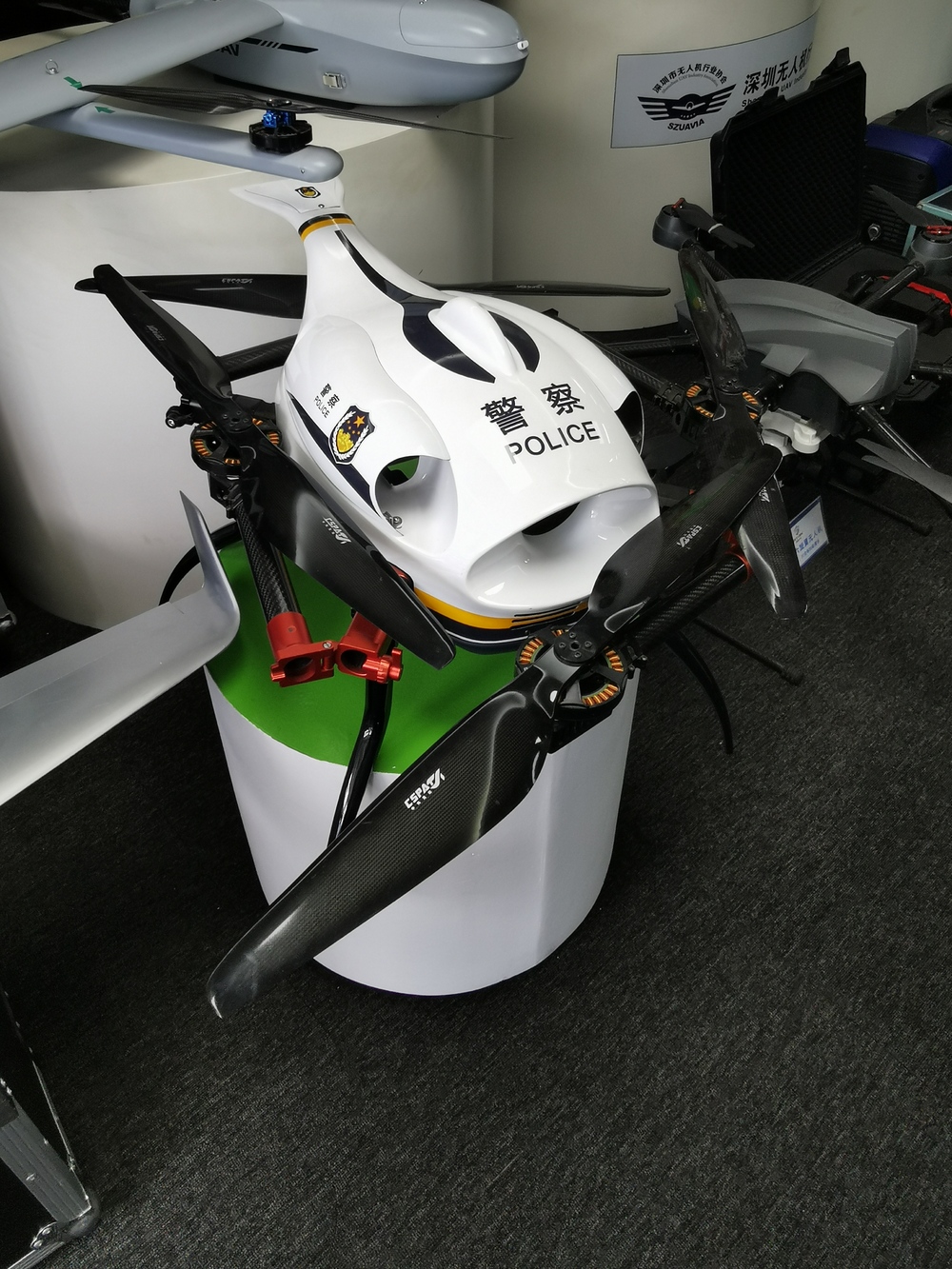
At the third organization that we visited, we were shown a list of new applications that supports public security, public health, firefighting, agriculture and many others.
By building holding points on platforms hung from lampposts, the "nests" not only provide parking for drones to be called up for service readily at locations requiring surveillance but also act as charging points as electricity supply is readily available without any need to dig up road pavements.
A fleet can cover a radius of up to seven kilometers. The only limit: battery capacity.
Controlled by a control center, the drones are equipped with cameras and loudspeakers that are suitable to surveil such things as traffic jams, pedestrian overcrowding, conflicts and unlawful activities.
This allows police in control centers to remotely see an incident, issue advice and warnings and record offenses for court use.
This can be done much more quickly than by despatching police vehicles, avoiding traffic jams and providing 360-degree views of incident areas.
Drones can also be used for fires, providing a quick means to survey a blaze and locate people who might need help.
They can also spray fire-fighting materials directly on fires, but obviously, professional firefighters will be required to control such operations as such sprays could injure or suffocate people.
Drones can also be used to collect water samples in rivers, streams and ponds for quick analyses, again minimizing the need for inspectors to visit various sites.
In terms of health care, drones can not only deliver blood samples and essential medicines to remote locations quickly, they can also spray disinfectants on areas of infections evenly and quickly.
With drones supporting existing activities, such applications are limitless and, as the low-altitude economy grows, more tasks can be done efficiently without human labor.
They can also provide a full view and a comprehensive record.
The low -altitude economy will develop quickly, aided by innovative technology that allows much more flexibility as it does not rely on experienced operators on site.
All we need is updated ordinances.
The sci-fi scenarios that we see in movies may fast become an everyday reality!
Veteran engineer Edmund Leung Kwong-ho casts an expert eye over features of modern life
A drone taxi lands and takes off.