Of all the basic essentials for modern living, water comes before electricity as first priority in daily life.
Since 1965, we have had the benefit of water supply from the Dongjiang, eliminating the risk of shortages from only relying on rainwater collected in our catchment areas and then stored in reservoirs.
The river now contributes more than 70 percent of our freshwater supply. Our huge reservoirs in Plover Cove and High Island help ensure supply is adequate, even in the event of drought and other interruptions.
But the open system of reservoirs along the long supply route may allow earth, vegetation and other unwanted substances to get into the water.
Endorsed by the Drinking Water Safety Advisory Committee, our supply is of the highest quality, and I am glad to see the Water Supplies Department is adopting this standard.
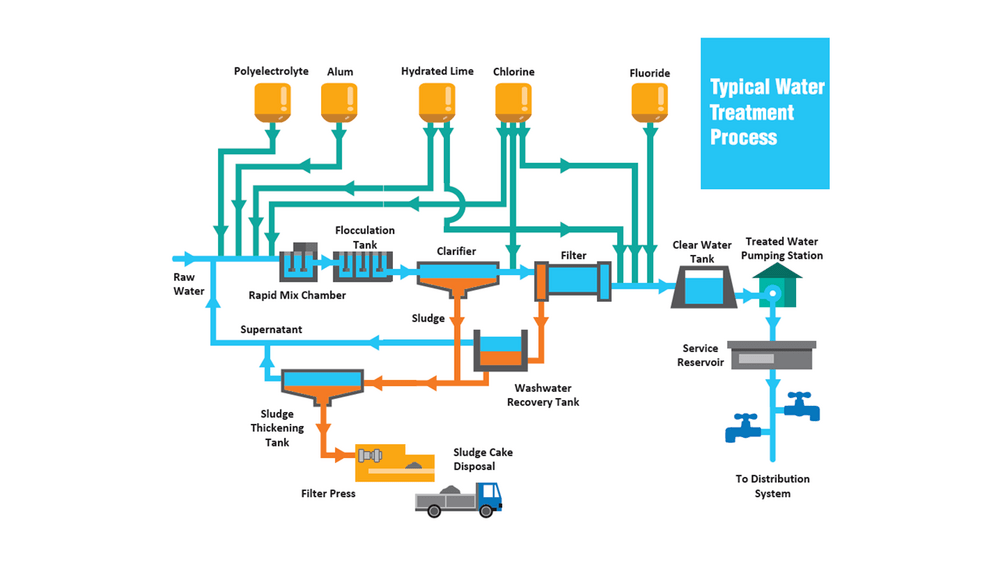
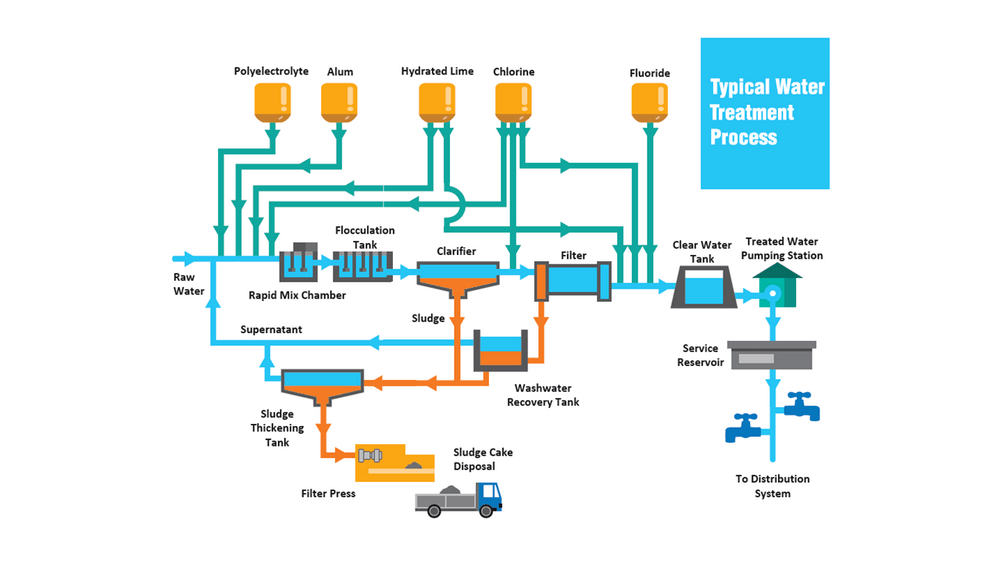
The comprehensive process combines physical and chemical treatment, proven from its many years of operation.
Essentially, water goes through three forms of treatment: clarification to reduce turbidity; filtration to remove fine particles; and disinfection to remove bacteria.
To reduce turbidity, or suspended particles, in raw water, alum is used. If needed, polyelectrolytes are added.
The treated water is then sent down either by gravity or pumps, for rapid flow and thorough mixing, to a flocculation tank to allow solid particles to settle at the bottom, enabling separation.
It is then put through a filtration system comprising layers of gravel, coarse sand, fine sand and anthracite to effectively remove all suspended particles.
Biological filtration is sometimes used to remove finely divided suspensions, ammonia and organic matter.
To ensure clean water for residential and commercial users, a disinfection process is used to kill off all bacterial growth that may have resulted from the open exposure in reservoirs to laden winds, bird droppings, animal waste and others.
A small dose of chlorine is an excellent disinfectant. But given its limited half-life, it must be added at the last moment before water is pumped from eservoirs to users in the next day or so.
Dosing traditionally involved liquid chlorine from chemical factories.
Nowadays, on-site generation is a better solution than importing liquid chlorine, as it involves less storage space and poses fewer safety risks to plant peronnel and people in neighboring areas.
But whatever the method of dosing, the purpose is to ensure a sufficient level of residual chlorine throughout the distribution network for effective disinfection.
Finally, fluoride is added in tiny amounts to help people keep their teeth healthy when rinsing or brushing.
Fluoride levels have been raised since the 60s and the Department of Health has conducted oral health checks for children since. Hongkongers now enjoy healthy oral hygiene thanks to this provision.
This comprehensive process ensures only water of the highest quality reaches our taps for safe and healthy use.
The quality and reliability of our fresh water supply is now at the highest level in the world, thanks to the efforts of our Water Supplies Department. Our good hygiene and healthy living would not be possible without its hard work.
Veteran engineer Edmund Leung Kwong-ho casts an expert eye over features of modern life