Read More
Eunice LamIntroduced in 2004, the TSA assesses primary three and six and secondary three students. After a three-year hiatus due to the pandemic, the assessment resumed in 2023. 
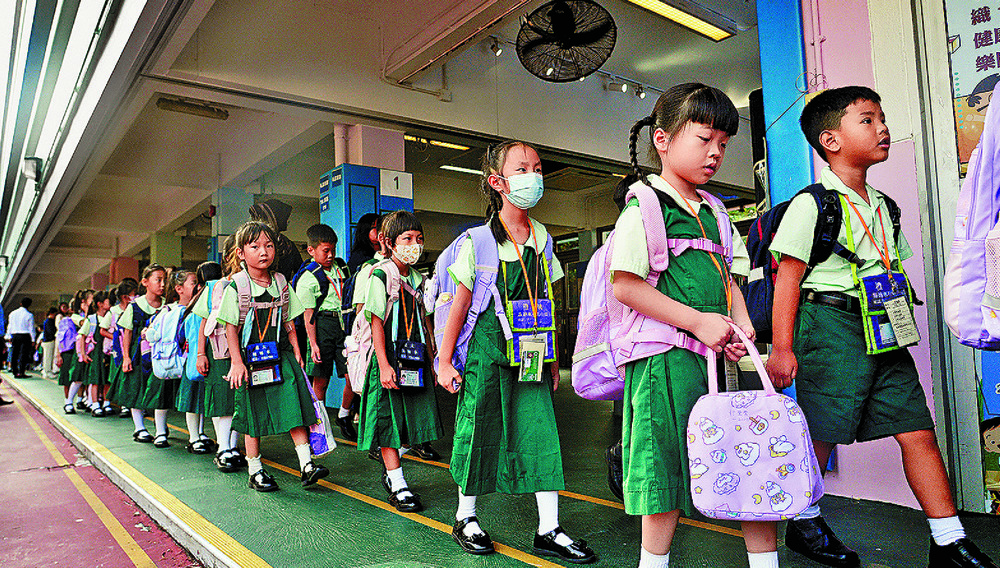
The performance of students in the Territory-wide System Assessment has declined compared to last year, with the drop seen in the percentage of students achieving basic competencies across all subjects - Chinese and English languages and mathematics - according to the Education Bureau.
ADVERTISEMENT
SCROLL TO CONTINUE WITH CONTENT
Since 2015, TSA for primary six pupils has been conducted in odd-numbered years, with school participation being voluntary in even-numbered years.
Although the bureau said performance levels remained "generally steady" across all subjects this year, the basic competency achievement rates for primary three Chinese and secondary three English hit historic lows.
The passing rates for primary three pupils in English and mathematics were the lowest since 2005.
In the Examinations and Assessment Authority's report, it was said that primary three pupils experienced a decline in basic competency rates in all subjects, especially in Chinese.Only 80.9 percent of them passed, down from 82.4 percent last year.
For secondary three students, 67 percent passed the English test, a slight decrease of 0.8 percentage points, while the passing rate for secondary three mathematics increased to 79 percent, up from 76.6 percent.A bureau spokesman expressed gratitude to schools for adopting diverse teaching strategies to meet students' needs and foster their interests and learning abilities.
"Since the enhancement measures rolled out in 2018, the TSA has been implemented as a low-stakes assessment focused on feedback, without increasing the burden on students," he said.Chu Kwok-keung, a primary school principal who represents the education sector in the Legislative Council, said the decline in competency rates reflects the ongoing negative impact of Covid-19 on learning.
Many of these primary three pupils, he pointed out, had spent considerable time during their kindergarten and junior primary years during the pandemic primarily engaged in online learning, limiting their classroom interactions and hindering their language and mathematical skills.Chu argued against using competency rates as a sole measure for schools and parents. "Schools should focus on enhancing students' overall abilities, interests in learning and confidence," he said.
For secondary three students, many TSA participants were cross-border students who could only attend online classes during Covid, he said, suggesting schools provide additional support to strengthen their foundational knowledge.Leading the push are, from fifth left, Michael Wong, Elizabeth Quat and Lam Sai-hung. Right: Quat heads a Legco delegation to check out Shenzhen advances. SINg tao