Read More
A leading legal scholar predicted there would not be many prosecutions about making critical opinions, saying constructive criticisms would not violate the newly enacted domestic national security law.
ADVERTISEMENT
SCROLL TO CONTINUE WITH CONTENT
Albert Chen Hung-yee, the chair professor of constitutional law at the University of Hong Kong, said in an opinion piece carried by a Chinese newspaper that citizens should pay close attention to provisions concerning sedition after the implementation of Basic Law Article 23.
"The Safeguarding National Security Law maintains existing sedition laws while providing additional definitions in respect of the essential components of sedition," Chen said.
Saying Hong Kong courts have already heard about 30 sedition cases since 2020, Chen clarified that inciting others to use violence is not necessarily a requirement for sedition.
He reminded citizens to pay attention to the court's standards when making remarks so as to avoid violating the law.
He acknowledged that there is limitation to the sedition charge whether it was the previous version included in the Crimes Ordinance or is the current version after the enactment of Article 23.
"Sedition primarily focuses on inciting hatred towards the country, the government, the legislature or court, or inciting hatred between different communities," he said.
Making suggestions for improvement or constructive criticisms to the government or about its policies generally do not constitute sedition, he added.
Commenting on treason, Chen believes such prosecution would be extremely rare and urged citizens need not be overly worried about it.
In respect of theft of state secrets, Chen said it would be difficult for an ordinary person to violate the law unless they intentionally solicit or bribe officials to obtain classified information.
He advised citizens to refrain from interacting with organizations that are banned by the government.
According to him, taking such caution is necessary to avoid any potential legal consequences.
In a related development, Secretary for Security Chris Tang Ping-keung wrote a letter to the New York Times to express his "resolute opposition and condemnation" of an opinion piece titled, "Hong Kongers are purging the evidence of their lost freedom" written by Maya Wang, acting China director for Human Rights Watch.
Tang criticized the article for claiming Hongkongers could only speak about their lost freedom in hushed tones, and demanded the newspaper to be unbiased in reporting and refrain from being alarmist on the national security law.
The government also condemned the BBC for what it described as an extremely misleading report about activist Ma Chun-man being denied early release following the Article 23 enactment.
A government spokesman said that stricter control over the early release of national security prisoners is needed to safeguard national security, refuting claims that this would extend prisoners' sentences.
michael.shum@singtaonewscorp.com

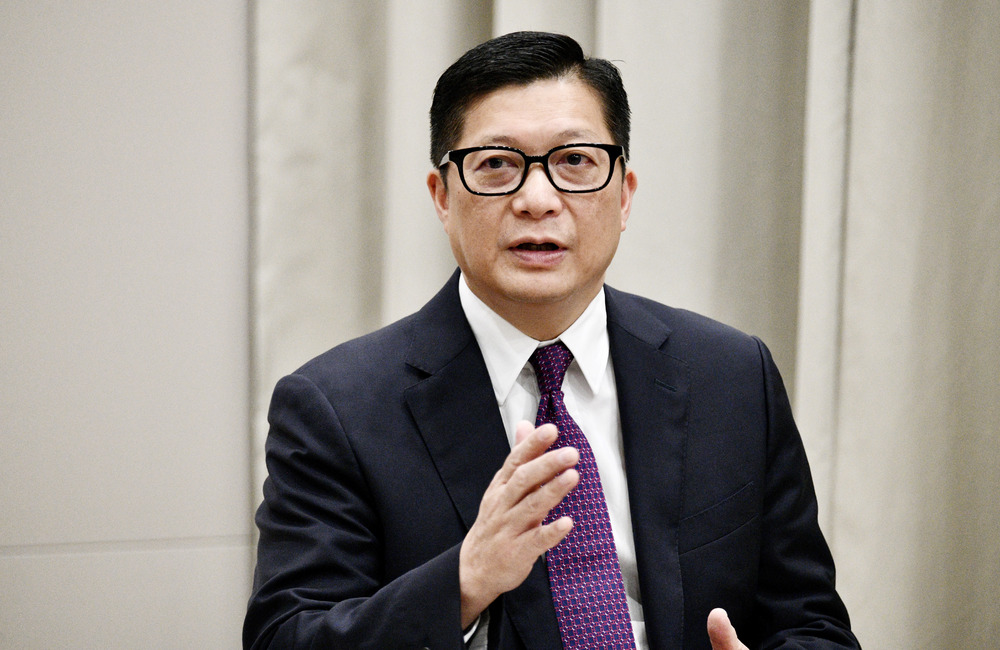
Chris Tang