Read More
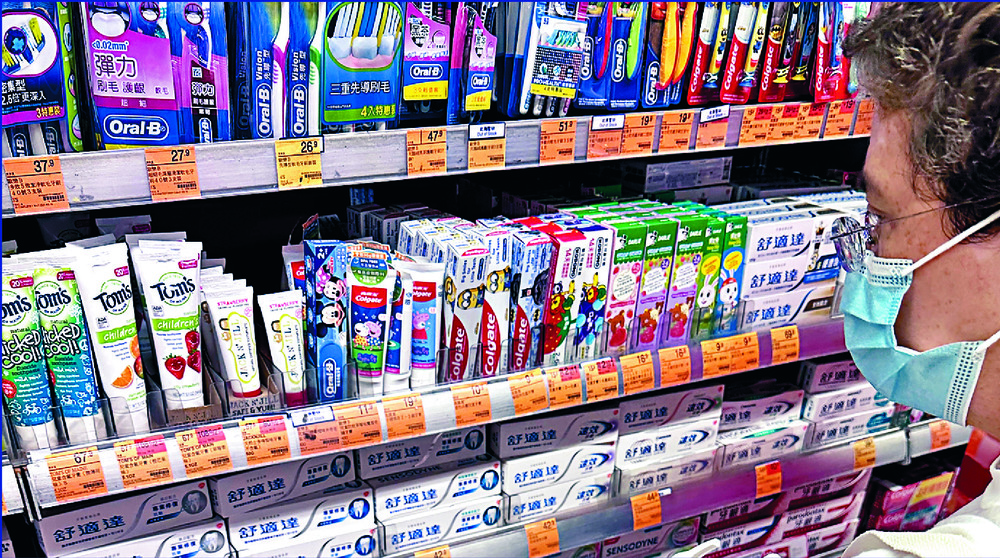
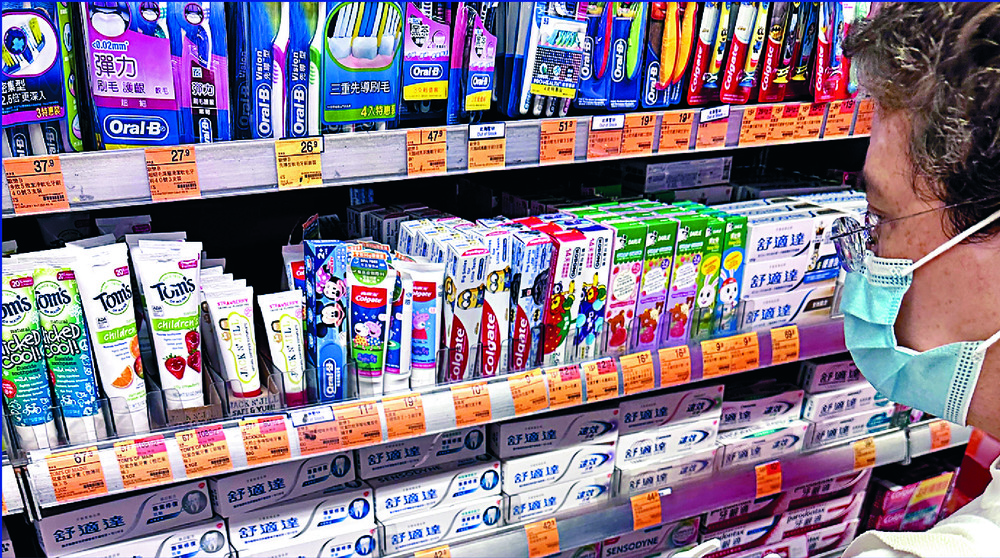
Parents are urged to be careful when picking toothpaste for their children after the Consumer Council said it found three products for children that were too acidic.
ADVERTISEMENT
SCROLL TO CONTINUE WITH CONTENT
The watchdog tested 13 children's toothpaste and found that three of them - Elmex, Dr Brown's and Tom's - had a pH level lower than 5.5. It means these failed to meet the mainland's standard that requires the pH value to not go below 5.5 or above 10.5.
The council said toothpaste with acidic levels that are so high could dissolve tooth enamel and weaken the surface of the teeth, which could lead to abrasion.
"It is essential for the children to nurture a good habit of cleaning their teeth and oral cavity from a young age in order to ensure the healthy growth during the developmental stage," said Nora Tam Fung-yee, chairwoman of the council's research and testing committee.
However, if the toothpaste's ingredients do not comply with the standards, it would affect dental and oral health despite good oral care habits, Tam said.
Among six children's toothpaste claiming to contain fluoride that helps strengthen tooth enamel, two were not in compliance with mainland's standard of 0.05 to 0.11 percent.
Another four children's toothpastes were detected with eugenol and limonene - allergenic fragrances regulated by the European Union - with concentration levels of higher than 0.01 percent that must be declared in the list of ingredients.
One product with 0.013 percent of eugenol was not declared and two other children's toothpastes were found with limonene concentration that exceeded the limit for mandatory labeling.
The council also tested 27 ready-to-eat seaweed samples and 70 percent of them - 18 samples - were considered to have high sodium levels, while 40 percent were "high-fat" foods.
Tao Kae Noi Grilled Seaweed Roll Tom Yum Goong Flavor has 2,960 milligrams of sodium in every 100 grams, which exceeded its claim on the label by 45.6 percent.
Two samples had sodium concentrations that were twice the level claimed on the labels, including Ddoddomam Organic Kids Seaweed and Kwangcheonkim Baby Shark Kids Crispy Seaweed Mini.
All samples complied with "rich in iodine" levels under the Food and Drugs (Composition and Labeling) Regulations.
But the council warned people about a possible health impact on the thyroid from consuming too much iodine.
Four seaweed products claimed to be suitable for babies and toddlers under 36 months. But one of them, Baby Basic's Organic Baby Seaweed, had 90 percent of iodine that a child aged one to three needs in a day if they ate just one portion of the product.
The council's chief executive Gilly Wong Fung-han urged people not to rely on seaweed as a major source of fiber.
"Please don't use seaweed to replace vegetables. People have a very busy lifestyle and may think seaweed can replace regular vegetables, which is also very high in fiber," Wong said. "It might not be the best way to absorb [fiber]."
eunice.lam@singtaonewscorp.com