Read More



HK braces for natural gas shortage
7 hours ago

Morning Recap - April 2, 2026
8 hours ago
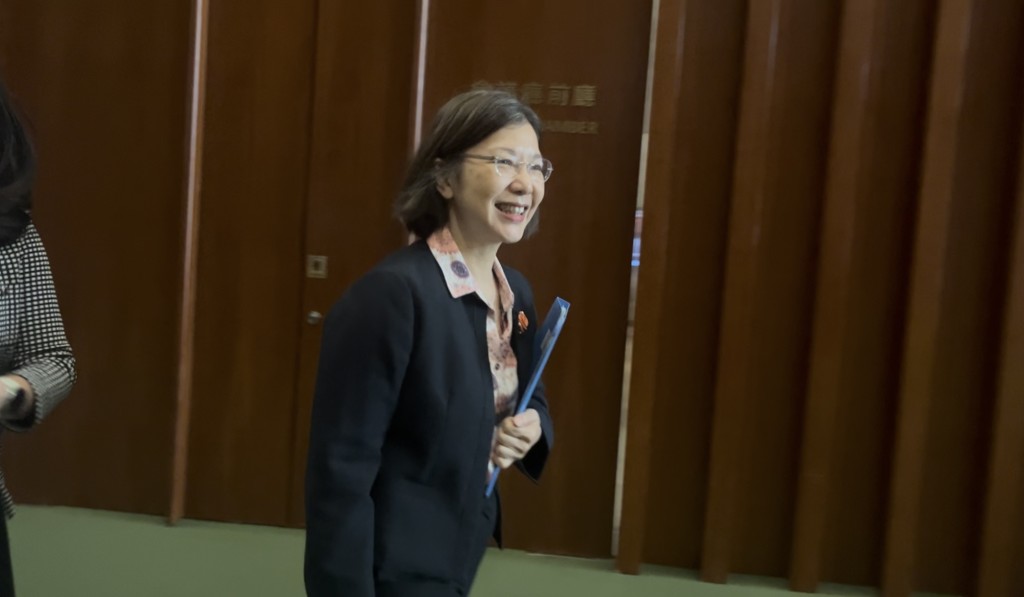

Six senior counsel appointed
31-03-2026 13:54 HKT
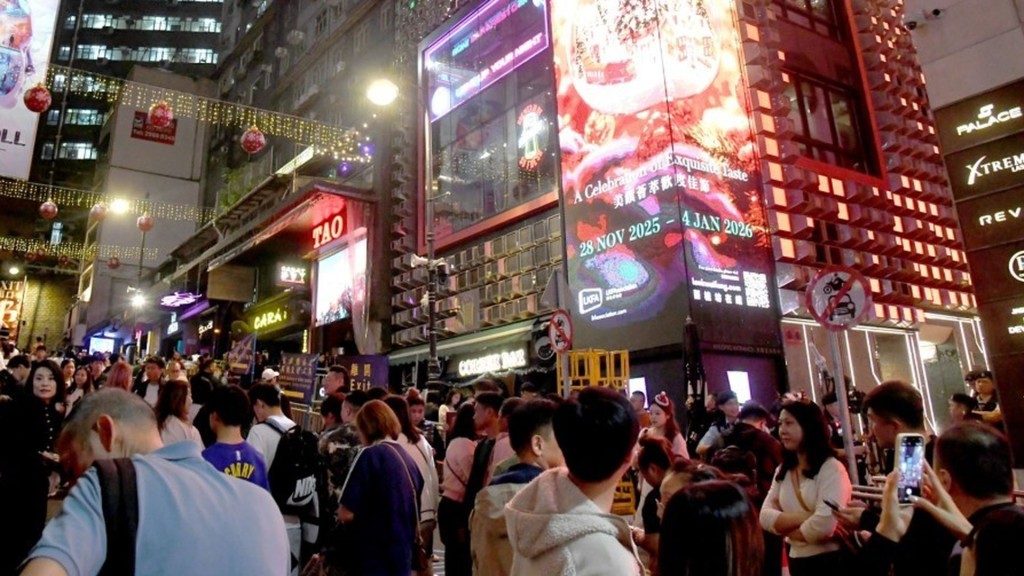
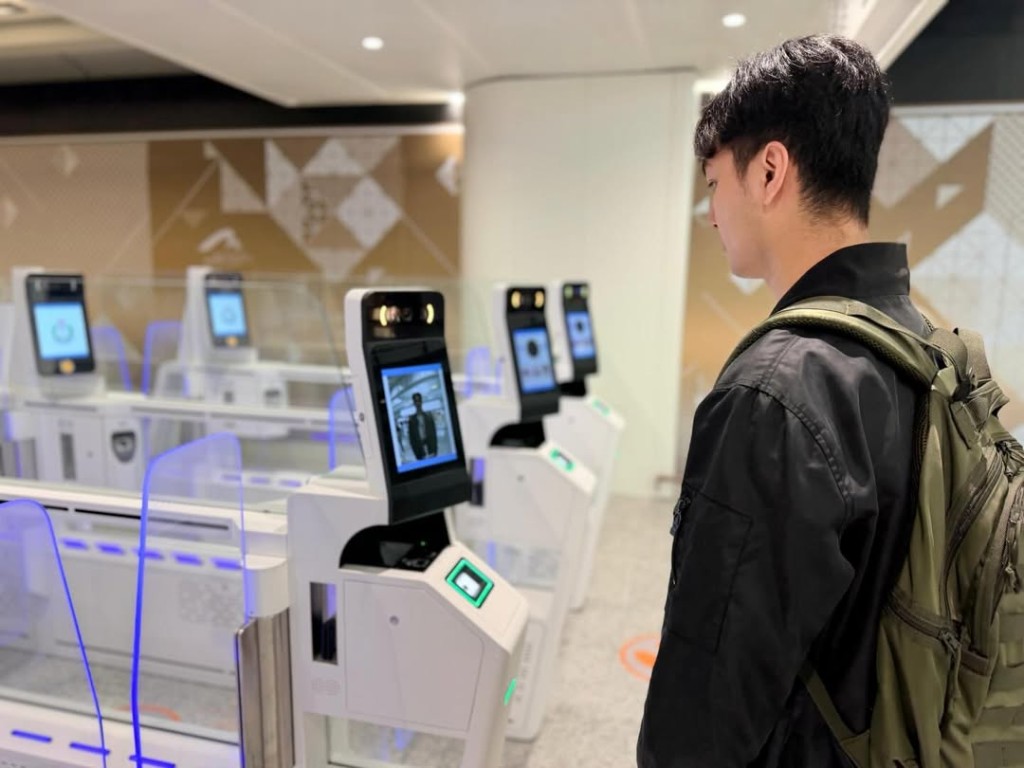
12 new biometric e-Channels launched in HK airport for document-free entry
01-04-2026 12:48 HKT
Recipients of the Sinovac vaccine should only be considered fully jabbed after three shots, says government adviser David Hui Shu-cheong.
Referring to results of a Chinese University study he led, Hui said the German-made BioNTech/Fosun shot was found to stimulate generation of much more antibodies than the mainland-made Sinovac jab.
Hui said the study of more than 700 people showed the antibody level produced by BioNTech recipients was three times higher than those receiving Sinovac a month after they received two doses.
Around 80 percent of BioNTech recipients still had 50 percent protection against Covid six months after receiving the second jab while only 16 percent of Sinovac recipients had such protection.
Hui said those who got Sinovac should be regarded as fully vaccinated after they get three shots - and the third jab should be administered six months after the second.
"Many countries have renewed the definition of complete vaccination for Sinovac jabs to three shots, including Singapore," Hui said.
He said BioNTech recipients do not have to receive a booster shot to be considered fully vaccinated because the vaccine leads to a much higher antibody level.
Hui's comments were echoed by infectious disease expert Ho Pak-leung from the University of Hong Kong, who said the city is still far away from achieving a large coverage of people having taken three shots.
"Hongkongers should understand that achieving zero local infection is not the city's ultimate goal. We cannot reopen borders with the world if we only aim to maintain zero infection," Ho said.
He added that Hong Kong can only reopen its borders after achieving an extremely high vaccination rate.
Many overseas countries, including Greece and Austria, have made vaccinations mandatory for people, Ho said. He believes it is acceptable if the Hong Kong government decides to launch a "vaccine passport" that only allows vaccinated people to visit public premises.
Hui also said Omicron seems to have lower lethality compared to Delta, but it is the more contagious variant.
"Omicron cases in South Africa did not lead to a high death rate compared to Delta. But it's still too early to conclude because some patients are still being treated at hospitals," Hui said.
"However, Omicron is definitely more contagious as it has spread to around 40 countries in a few weeks."
Meanwhile, the Australian state of Queensland detected a new lineage of Omicron in a traveler from South Africa.
Australian health officials said the new lineage has fewer mutations than the original Omicron variant, making it more difficult to be distinguished from other variants.
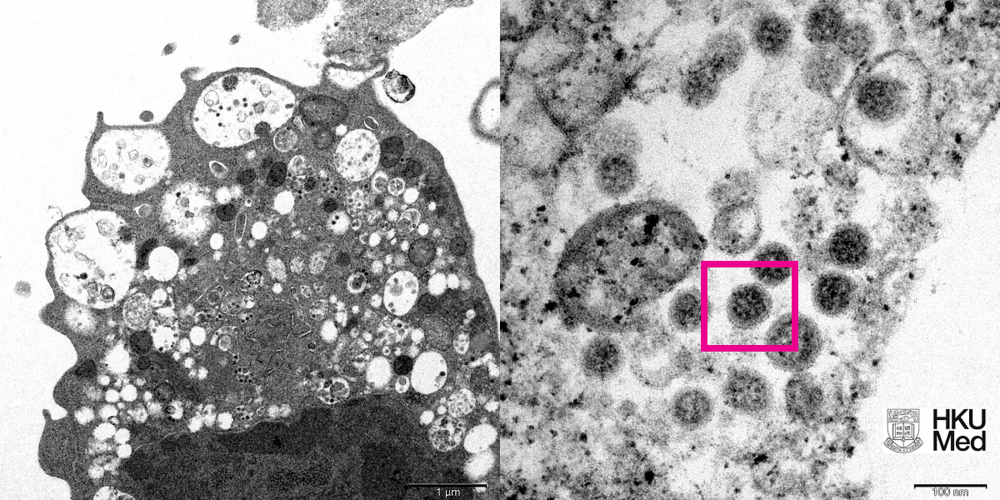
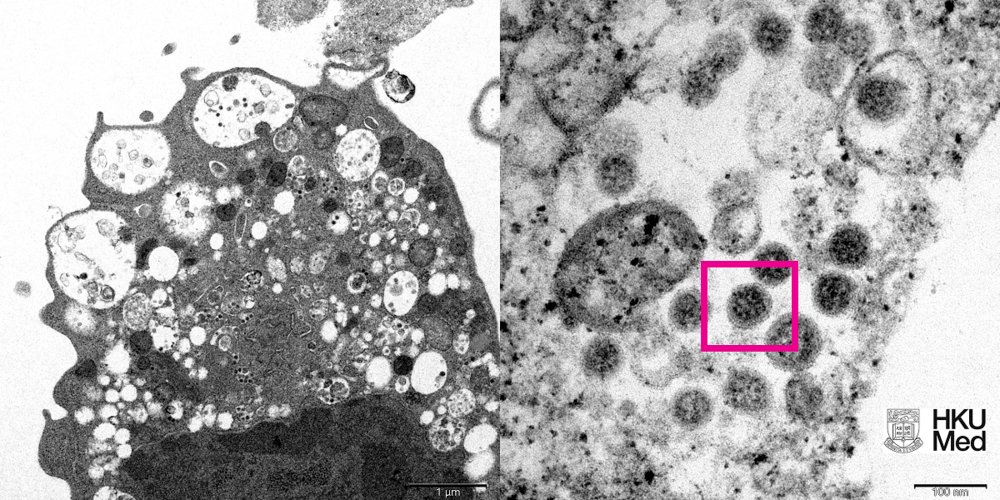
HKU's Li Ka Shing Faculty of Medicine also revealed an electron microscope image of Omicron.
The micrograph of a monkey kidney cell infected with the variant showed the damaged cell containing small black viral particles as well as the corona-shaped spikes on the virus surface.
Hong Kong recorded zero new cases yesterday - the first time since November 8. The city's tally stays at 12,472 with 213 deaths.
But health authorities are investigating a suspected re-positive overseas case that involves a 61-year-old male patient. He arrived in Hong Kong on November 16 from Ghana and tested negative for Covid at the airport.
The man tested negative four times during quarantine at Silka Far East Hotel and completed quarantine on November 30. He then stayed at Kimberley Hotel on Kimberley Road in Tsim Sha Tsui.
The man tested positive on Monday and was found carrying a low viral load of the L452R mutant strain. Health officials suspect he is a re-positive case as he was infected in Ghana in September.
The man, who remains asymptomatic, received two doses of the mainland-made Sinopharm vaccine on May 18 and June 17 in China.
wallis.wang@singtaonewscorp.com