“Insta-worthy” cakes decorated with fresh flowers may carry hidden food safety risks, with consumers potentially exposed to non-edible ornamental flowers, according to a recent investigation.
The investigation by Sing Tao Daily, The Standard’s sister publication, comes amid the growing popularity of floral cakes on social media, with some online sellers promoting their products as safe to eat.
One Instagram shop, which claims to hold a valid food license and operate a large production facility in Hong Kong, offers cakes decorated with roses, violets and hydrangea petals, priced from HK$540 to nearly HK$800 for cakes measuring four to eight inches.
Posing as a customer, a reporter was told by the owner that blue flowers used on the cakes were typically platycodon or evolvulus, with blue chrysanthemums or pale blue gypsophila used as substitutes.
The owner said the flowers were soaked for one to two days and their stems wrapped to prevent direct contact with the cake. Customers could also request that petals touching the surface be removed.
Another shop offers cakes decorated with hydrangeas, lisianthus, roses and gypsophila, priced between HK$480 and HK$880 for four- to eight-inch cakes. Specified hydrangeas or special-colored roses cost an additional HK$70.
The owner said the flower stems were wrapped in plastic and underwent what was described as “edible” sanitization before being inserted into the cake. Customers concerned about contact with the flowers were advised to scrape off the affected cream.
A third shop sells a one-pound hydrangea cake for HK$650, with the owner saying the flowers are wrapped in aluminum foil and can be “removed before eating.”
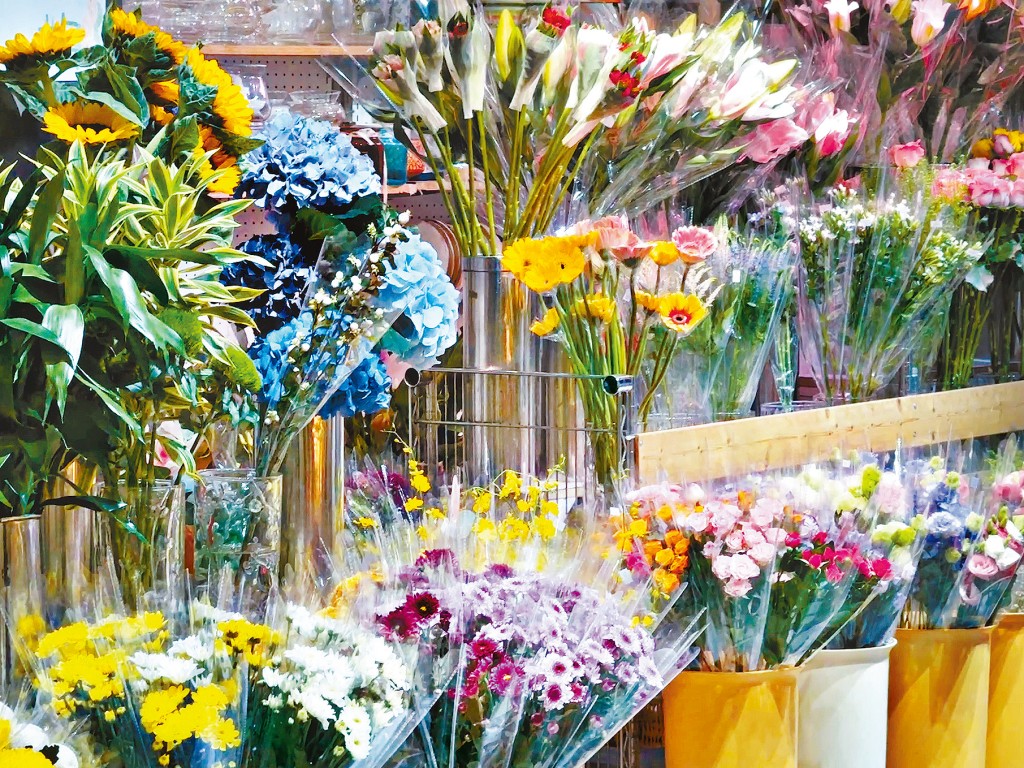
After reviewing photographs of the cakes, several florists said some appeared to contain what they believed to be knight’s-spur, a plant that can be highly toxic if ingested and may cause symptoms including a rapid heartbeat and breathing difficulties.
“Not every flower bought from the market is safe for food decoration,” one florist said, adding that hydrangea stems can be toxic while sap from blue evolvulus may cause skin irritation.
She questioned the use of ornamental flowers on cakes and warned consumers against tasting them out of curiosity.
Family doctor Lam Wing-wo said flowers may carry bacteria, parasites, pesticide residues and microorganisms from soil, making them unsuitable for direct contact with food.
He added that cream and sugar can promote bacterial growth, while pesticide residues may cause gastrointestinal discomfort.
Esther Li Pui-ying, a lecturer at the Health and Life Sciences Department of the Hong Kong Institute of Vocational Education, said ornamental flowers were generally not recommended for cake decoration.
She advised consumers to choose products clearly labeled as containing “edible flowers” and to ensure they came from traceable supply chains.
“Even edible flowers may become contaminated during cultivation, transportation and handling…wrapping or washing flower stems did not eliminate all risks, as petals, stamens and pollen could still come into contact with the cake and transfer pesticides, microorganisms or other contaminants,” she said.
Chan Shun-hung, head of the Department of Food and Health Sciences at the Technological and Higher Education Institute of Hong Kong, said simply scraping away parts of a cake that had touched flowers was not necessarily enough.
“Microbial contamination can spread during placement or removal,” he said, adding that contamination could extend beyond the surface if stems were inserted using floral foam, wire, tape or wooden sticks.
Chan also warned about the use of decorative ribbons, saying most are not designed for food contact and could introduce contaminants through dyes, coatings or chemical additives.
While Hong Kong has no regulations specifically governing non-edible cake decorations, Chan said existing legislation provided a basic framework for food safety.
He suggested introducing more detailed industry guidelines, including risk-based classifications for decorations and clearer rules on which materials may come into direct contact with food.
He also called for non-edible decorations to be clearly labeled as “inedible,” accompanied by instructions on how they should be removed.
A “food-safe decoration first” approach could also be adopted, encouraging businesses to replace non-edible decorations with edible flowers, chocolate ornaments, sugar art or wafer paper.
Lam likewise called for tighter regulation of food packaging and decorative materials, including paper boxes and plastic figurines, to reduce contamination risks.
Meanwhile, concerns extend beyond cakes. Florists said flowers used in fruit gift baskets may also carry pesticide residues.
Although fruit with thick skins may appear protected, they recommended separating flowers and fruit completely with cellophane or other suitable barriers.
Ornamental flowers not for consumption: CFS
Responding to media inquiries, a spokesman for the Centre for Food Safety said ornamental flowers are not intended for consumption and may carry pesticide residues or microbial contamination from cultivation and handling.
The center also stressed that wrapping stems in aluminum foil or plastic does not make ornamental flowers safe to eat.
Consumers were advised to buy food from reliable suppliers and choose edible flowers when floral decorations are required.