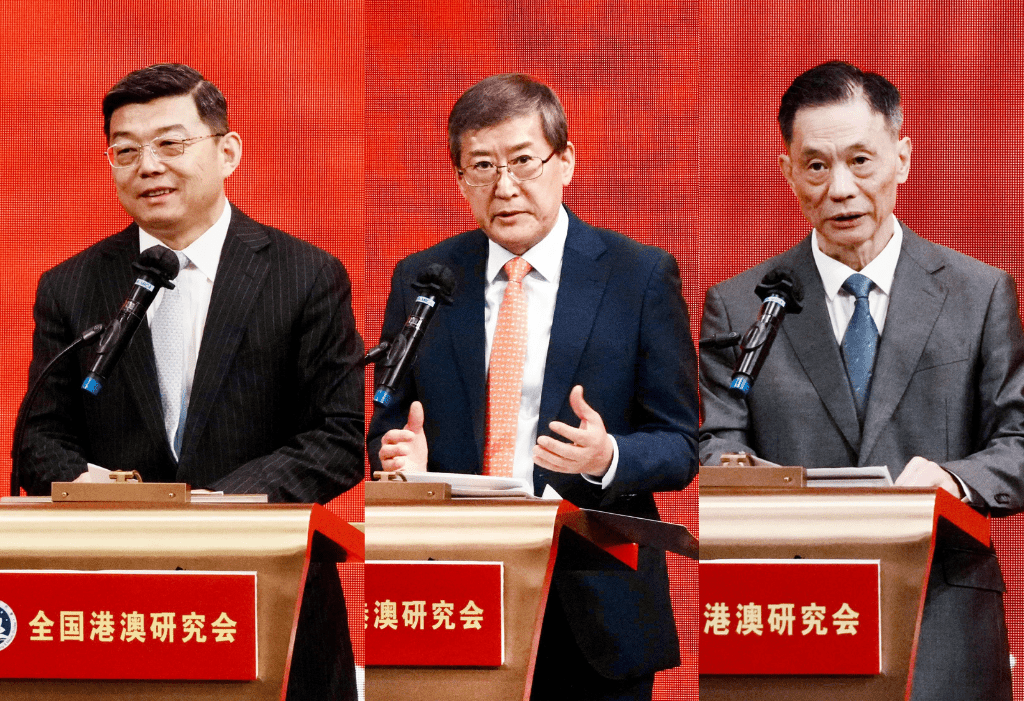
Hong Kong’s National Security Law is among the mildest in the world, with only about 180 arrests since its enactment, said Wang Zhenmin, vice president of the Chinese Association of Hong Kong & Macao Studies, at a seminar yesterday.
The event, themed “high-level security safeguarding high-quality development,” drew more than 400 attendees, including lawmakers, district councilors and members of the judiciary.
Wang, also a professor at Tsinghua University’s Law School, said Hong Kong’s legislation represents the lowest degree of national security lawmaking, avoiding over-securitization while protecting rights and freedoms.
“If we divide national security laws worldwide by their intensity, the United States and the United Kingdom are certainly the spiciest, the European Union countries are medium spicy, and our law is mild,” Wang said.
Vice president Han Dayuan, also a professor at Renmin University of China’s Law School, cited the 156-day trial of media tycoon Jimmy Lai Chee-ying as an example of transparency and fairness, stressing that defendants’ rights were safeguarded.
He said six years of practice have shown freedom and security are not contradictory but form a dynamic balance.
Han added that the Chief Executive’s power to issue certificates under Article 47 of the National Security Law helps balance national security and human rights by providing legal certainty and clear judicial boundaries.
Association president Deng Zhonghua said Hong Kong’s national security work has achieved historic success since the law’s implementation, underscoring its role in stabilizing the city and reinforcing governance.