An inquiry into the death of a firefighter at a Tai Po blaze heard that the fallen officer’s breathing apparatus was found with "highly unusual" damage and that his personal alert safety system was not properly activated and its data was lost due to prolonged water exposure.
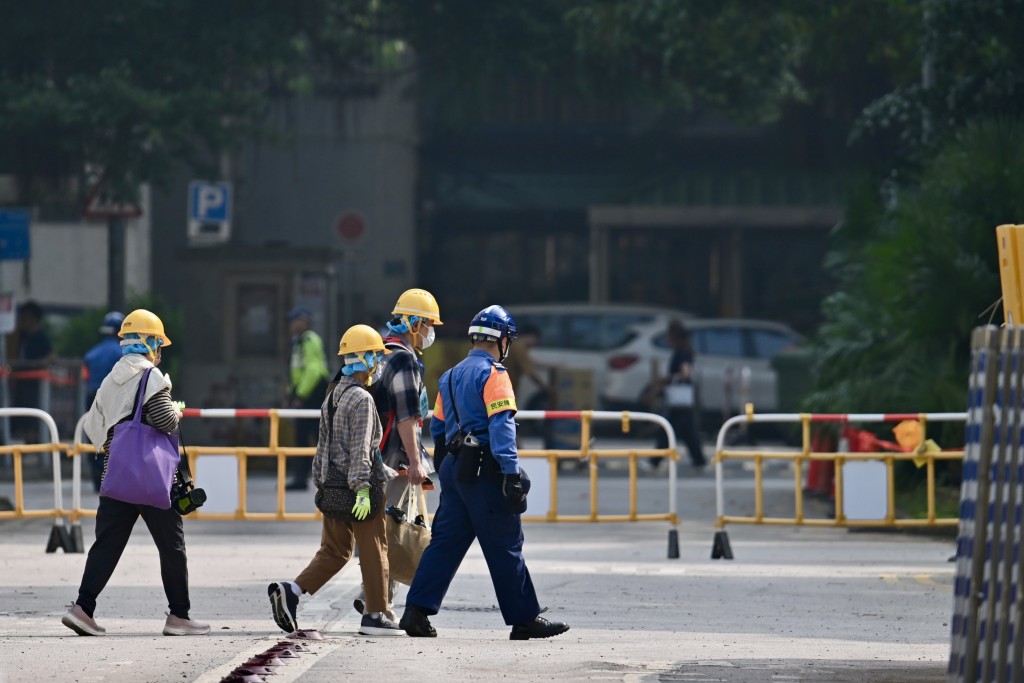
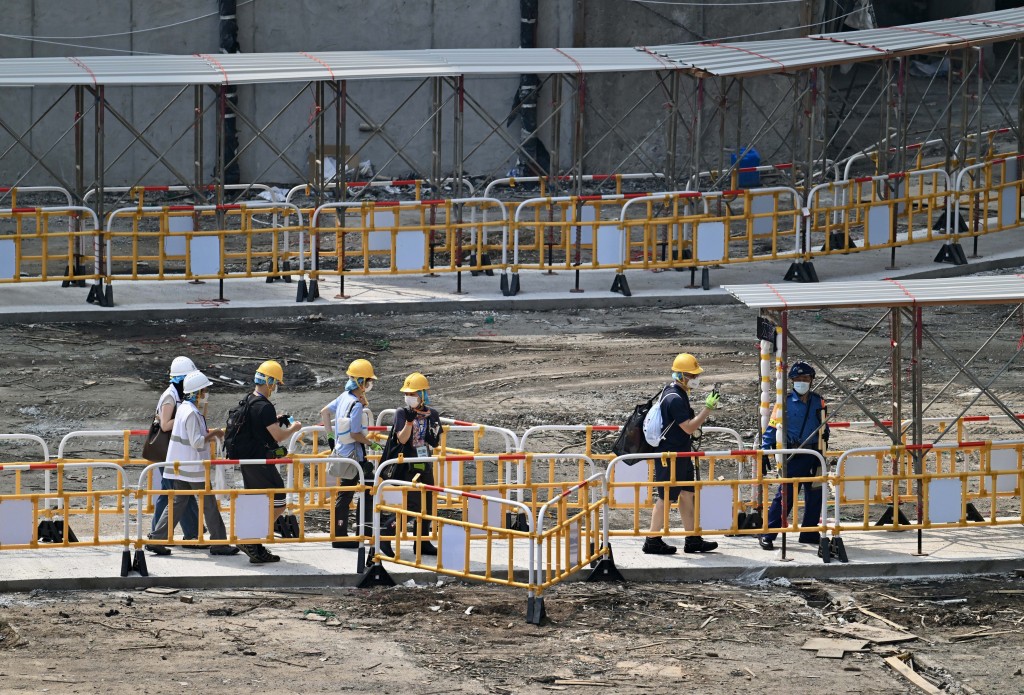
The Independent Committee in relation to the fire at Wang Fuk Court in Tai Po held its 18th hearing today, focusing on the equipment of firefighter Ho Wai-ho, who was posthumously promoted to senior fireman after tragically falling to his death. The committee heard that Ho’s breathing cylinder, mask, helmet, and gloves were found abandoned near a lift lobby in the fire-stricken corridor.
Air cylinder found with 'extremely rare' damage
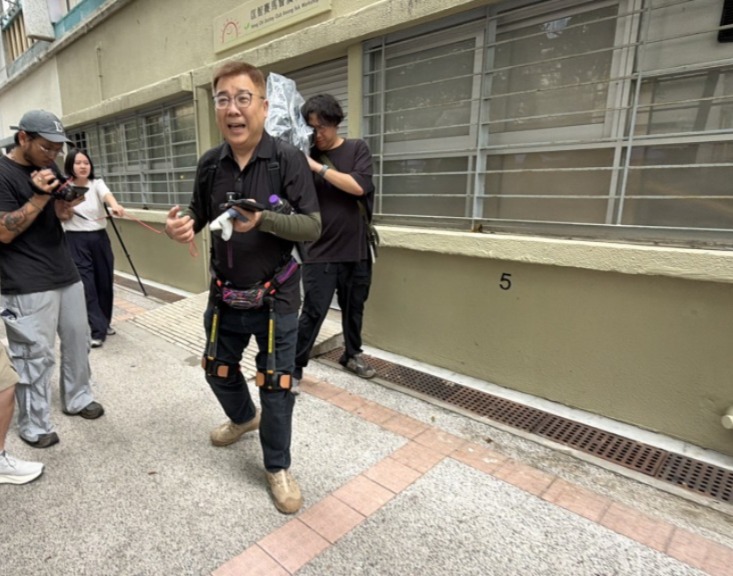
Tung Wing-kei, a Fire Services Department Divisional Officer (Breathing Apparatus), testified that an inspection of the recovered air cylinder revealed rare and significant damage.
Senior Counsel Victor Dawes, representing the committee, noted that according to testimony from another team member, Ho's breathing apparatus had initially seemed to be supplying air normally.
However, a subsequent check by another firefighter revealed the cylinder was damaged and its gauge read "zero bar," indicating it was empty.
Tung explained that the cylinder's valve hand wheel was found detached and damaged. He described this type of damage as "extremely rare," noting that the metal components are typically very robust.
He speculated it was likely caused by a major impact, such as the equipment being dropped during an emergency removal, colliding with a wall in a narrow space, or a fall where the gear struck the ground.
However, he added that the cylinder has protective padding, making damage from a simple fall less likely. Due to the valve damage, the internal data logger, which records air usage, could not be read, and the supplier was unable to recover the lost information.
Safety protocol potentially missed
The inquiry also learned that a white tag, which should have been removed and handed to the entry control officer to confirm activation of his location device, was found still attached to Ho's belt. This suggests he may not have completed the full standard procedure before entering the fire scene.
Furthermore, Dawes pointed out that Ho’s electronic monitoring device had not been properly activated. This system is designed to sound an alarm if a firefighter remains motionless for 20 seconds, allowing colleagues to locate them.
Alert system signal blocked and data lost
Tung added that even if activated, the system’s radio signal would likely not have reached the ground command post. Ho was on a floor above the 30th level, and the multiple layers of concrete would have absorbed and reflected the signal.
He noted that while the device has a line-of-sight range of 800 meters, its effectiveness is severely limited by physical obstructions. The Fire Services Department has since been testing a new dual-band tracking system with superior penetration capabilities.
Critically, the device itself was found to have water damage to its internal circuit board after being submerged for over 17 hours, erasing any data that could have explained when and how the breathing apparatus was damaged.
Escape attempt required removing gear
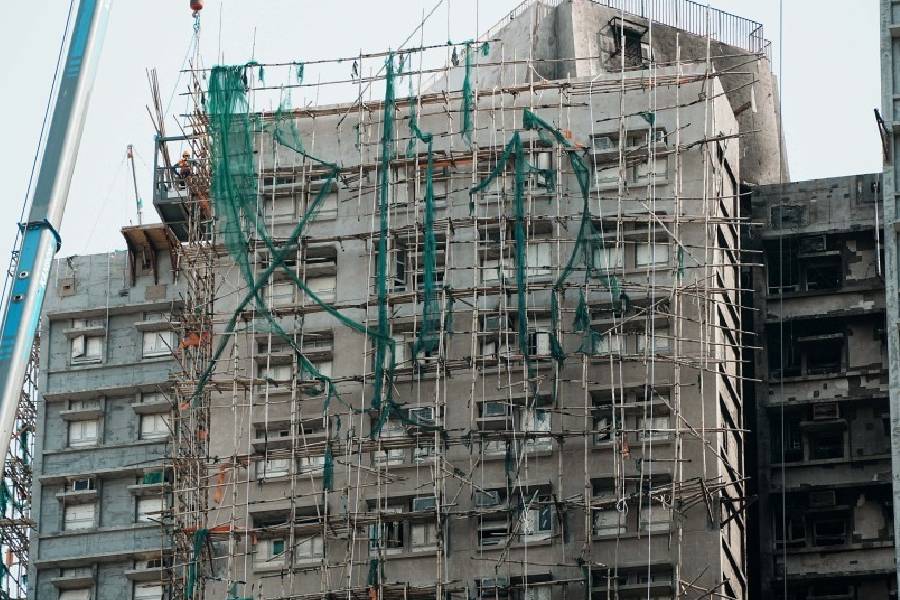
Ho was trapped on a high floor of Wang Tai House and fell to his death while attempting to escape by climbing out of a broken window onto bamboo scaffolding.
While Tung could not confirm a direct link between the equipment damage and the escape attempt, he acknowledged that Ho, being a man of large build, would have been unable to fit through the small window without first removing his bulky breathing apparatus.