Read More



Night Recap - September 4, 2026
1 hour ago






Louis Koo and production house sued for $149 million over unpaid loan
03-09-2026 17:07 HKT

Leslie Cheung 70th birthday exhibition brings the legend back to fans
03-09-2026 19:26 HKT


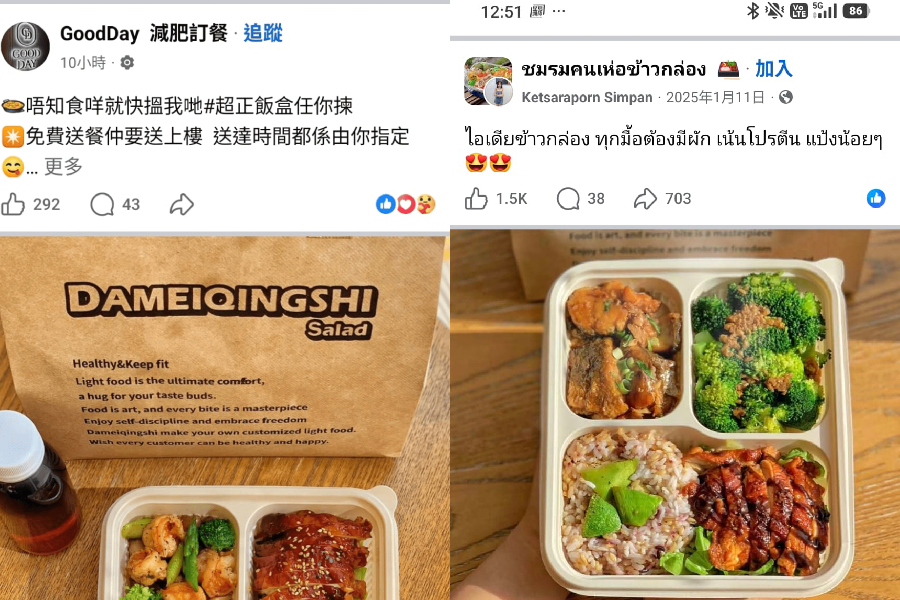
A sophisticated online shopping scam has emerged on social media platforms, luring victims with advertisements for weight-loss meal plans from seemingly legitimate restaurants, only to defraud them of significant sums, with one victim losing as much as HK$2.5 million in a single transaction.
Online shopping scams are becoming increasingly elaborate, with a recent investigation by Sing Tao Probe uncovering a wave of fraudulent Facebook pages impersonating restaurants to sell non-existent weight-loss meal plans.
An undercover reporter, posing as a customer, confirmed that scammers were falsely claiming their meals were prepared by a Western restaurant in Langham Place, Mong Kok.
Staff at the actual restaurant clarified they had no such service and had already reported the impersonation to the police.
Police have also issued a public warning through their "CyberDefender" platform, highlighting a particularly devastating refund trick. In this scheme, after a victim pays for an order, the scammer claims the item is out of stock and offers a refund.
They then guide the victim through a fake refund process, tricking them into entering a large number into their payment app, disguised as a "refund code," which in reality authorizes a massive bank transfer.
One victim shared her experience on social media, expressing her shock at falling for a scam she thought she was too savvy to be caught by.
She explained that she saw a normal-looking ad for a healthy meal box on Facebook and, after a WhatsApp inquiry, placed an order with a friend, transferring HK$2,230 via the Faster Payment System (FPS).
After confirming receipt of the payment, the scammer directed her to another WhatsApp account to follow up.
Late that night, she was abruptly informed that the order had to be canceled due to a "staff shortage" and that a refund would be processed the next day.
When she went to check the original Facebook page, it had completely vanished. She immediately filed an online police report, lamenting the situation and urging other victims to report their cases as soon as possible to increase the chances of tracing the funds.
Following the victim's leads, the reporter found similar fraudulent pages still active online, using contact numbers almost identical to the one the victim used.
These pages featured photos implying their food was made at the Langham Place restaurant. When the reporter contacted the real restaurant, a staff member immediately confirmed they were being impersonated and that the company had already reported the fake pages to both the police and Facebook, noting that new scam pages appear faster than they can be taken down.
A reverse image search of the meal box photos on the fake page revealed they were stolen from a food-sharing group in Thailand.
The scammers had used AI to add a paper bag with a fake restaurant name to make the images look more authentic.
Posing as a customer, the reporter contacted the scammer, who claimed to be from a "GoodDay Diet Meal" company.
After the reporter filled out an order form, the scammer immediately tried to upsell them with a HK$550 fresh juice package to increase the potential fraudulent amount.
When the reporter questioned their legitimacy and asked for a store location, the scammer brazenly provided the real address of the Langham Place restaurant.
After feigning to make an online payment, the reporter was sent an FPS payment code and pressured to transfer the money quickly. When the reporter revealed their identity, the scammer read the message and never replied.
A check of the scammer's mobile number on the "Scameter" app flagged it as "High Risk." The police's CyberDefender page detailed the refund trap that led to one victim losing HK$2.5 million.
The scammer instructs the victim to enter what they call a "refund code" or "FPS ID" into their online banking.
In reality, these numbers correspond to a transfer amount in the thousands or hundreds of thousands of Hong Kong dollars, which the victim then unknowingly authorizes.
In the past week alone, police have received over 250 reports of online shopping fraud, with total losses exceeding HK$13 million.