Read More


Morning Recap - September 23, 2026
7 hours ago
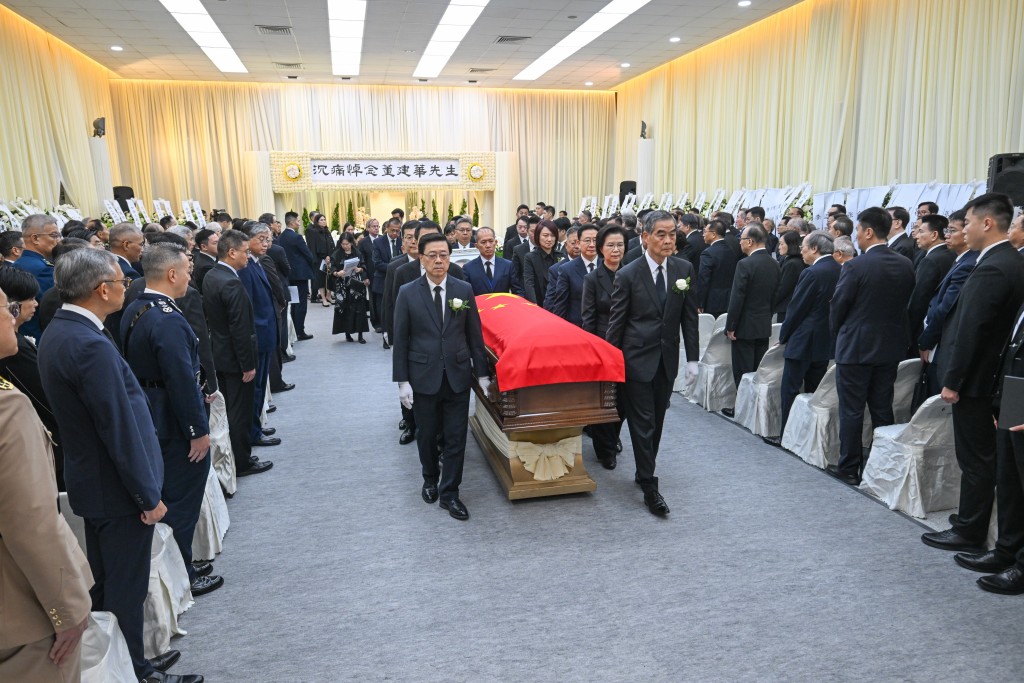
John Lee and CY Leung lead pallbearers for Tung Chee-hwa
20-09-2026 15:54 HKT


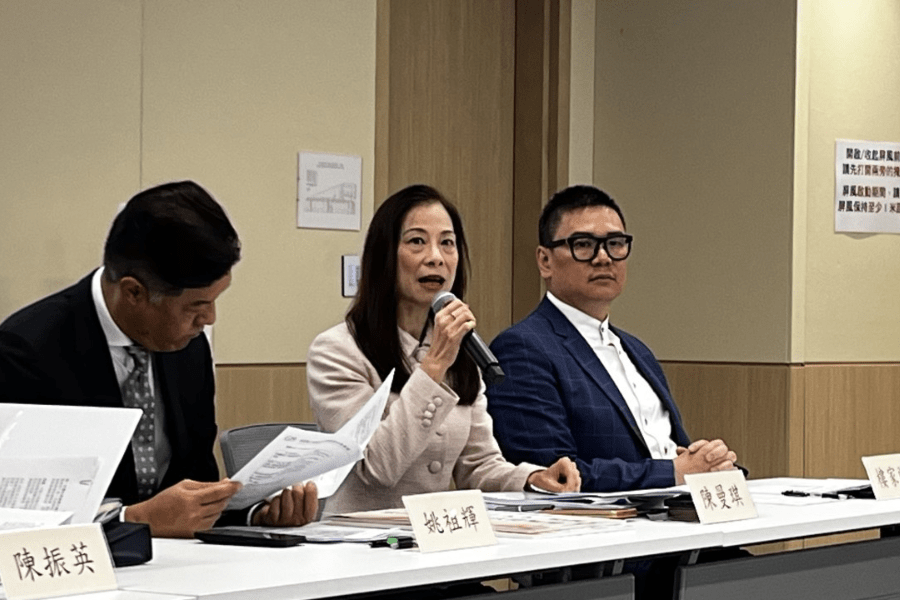
As the Fourth Session of the 14th National People's Congress nears, the G19 coalition of politically unaffiliated Hong Kong deputies unveiled 31 recommendations on Thursday to enhance the city’s strengths in line with the national five-year plan, focusing on finance, border travel, legal services, shipping, and aviation.
The five G19 representatives presented their proposals covering cross-border financial services, extended holiday operating hours at border crossings, and other measures to boost Hong Kong’s integration and competitiveness.
In finance, lawmaker Ronick Chan Chun-ying proposed a risk assessment mechanism for mainland residents applying for Hong Kong bank accounts.
Under his proposal, mainland authorities would provide a risk assessment without sharing sensitive criminal records—simply flagging "red" for denial and "green" for approval.
The aim, Chan said, is to balance financial security with convenience for eligible applicants.
For holiday travel, Chan suggested opening the West Kowloon high-speed rail station earlier during peak periods, noting the current half-hour window before the first train is too tight for joggers, let alone the elderly and children.
Lawmaker George Lau Ka-keung proposed a pilot scheme allowing cross-border private cars to use multiple checkpoints with one permit and mutual recognition of commercial driving licenses.
He also called for extended holiday operating hours at major border crossings, dynamic increases in Hong Kong-Zhuhai-Macau Bridge reservation quotas, and wider use of the “collaborative inspection and joint clearance” model.
Lau further recommended raising national defense spending as a share of GDP, advancing AI-driven defense technologies, and strengthening national defense education, particularly among Hong Kong youth, to build patriotic awareness.
To reinforce Hong Kong’s position as an international legal and dispute resolution hub, lawmaker Maggie Chan Man-ki proposed developing an international arbitration center in the Hetao Shenzhen-Hong Kong Science and Technology Innovation Co-operation Zone.
She also suggested measures enabling Hong Kong-invested enterprises to apply Hong Kong law and select Hong Kong as the arbitration seat, with the goal of attracting more foreign-invested companies.
On shipping, lawmaker Andrew Yao Cho-fai urged better coordination among Greater Bay Area ports to support Hong Kong’s role as an international shipping hub.
Noting that Shenzhen and Guangzhou Nansha ports handle about 35 million and 25 million TEUs respectively—compared with Hong Kong’s 12 million—he proposed a diversion mechanism to direct some international transit and high-value cargo to Hong Kong to increase its throughput.
The G19 group also pushed for stronger alignment with mainland cities to enhance Hong Kong’s aviation hub status, including integration into the national “1+3+7+N” aviation layout.
They called for clearer differentiation of roles among Hong Kong, Beijing, Shanghai, and Guangzhou to establish a synergistic national aviation mechanism.