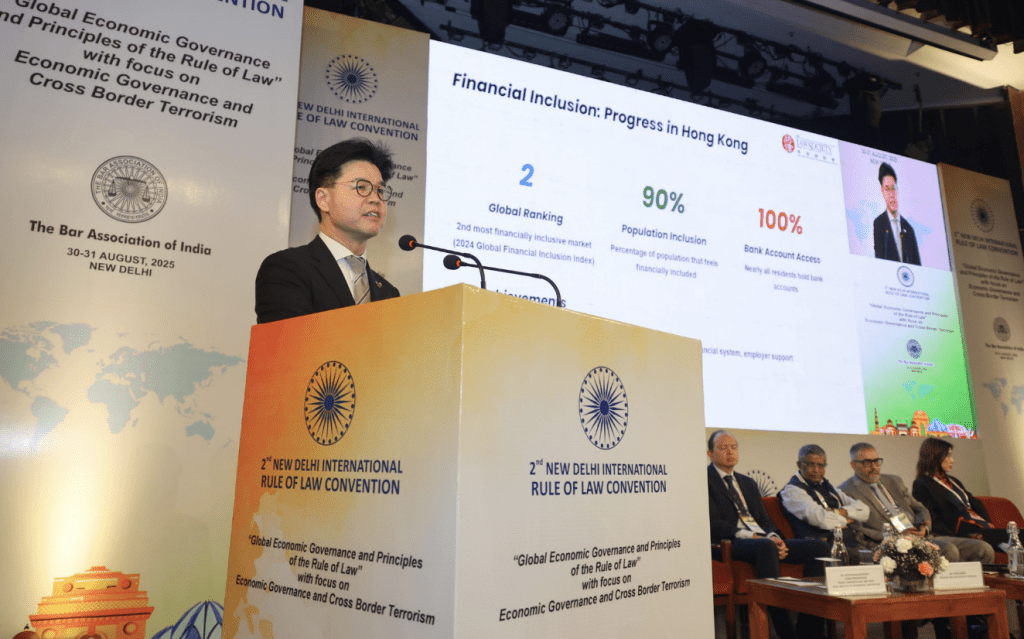
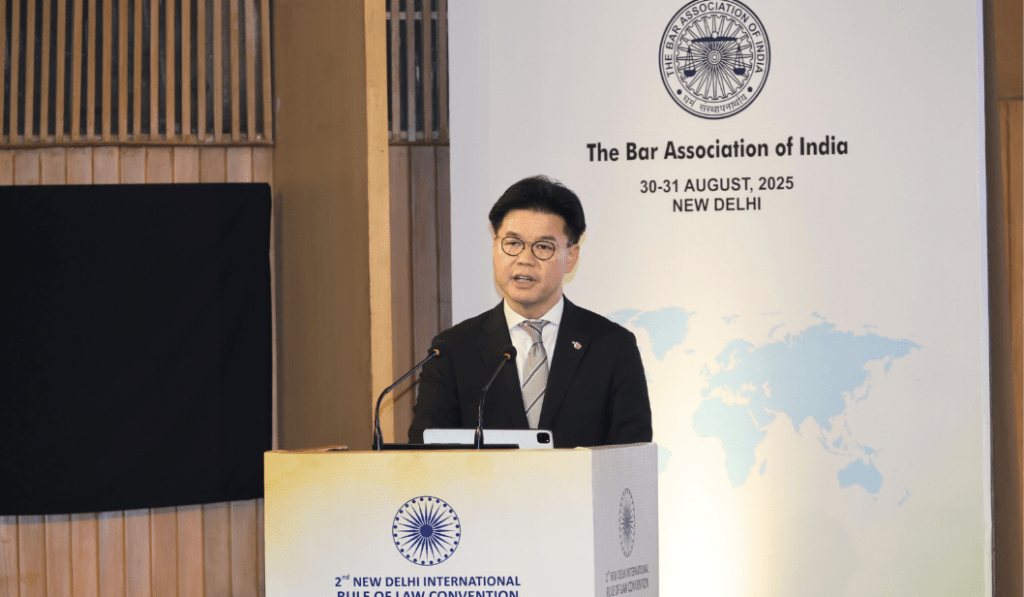
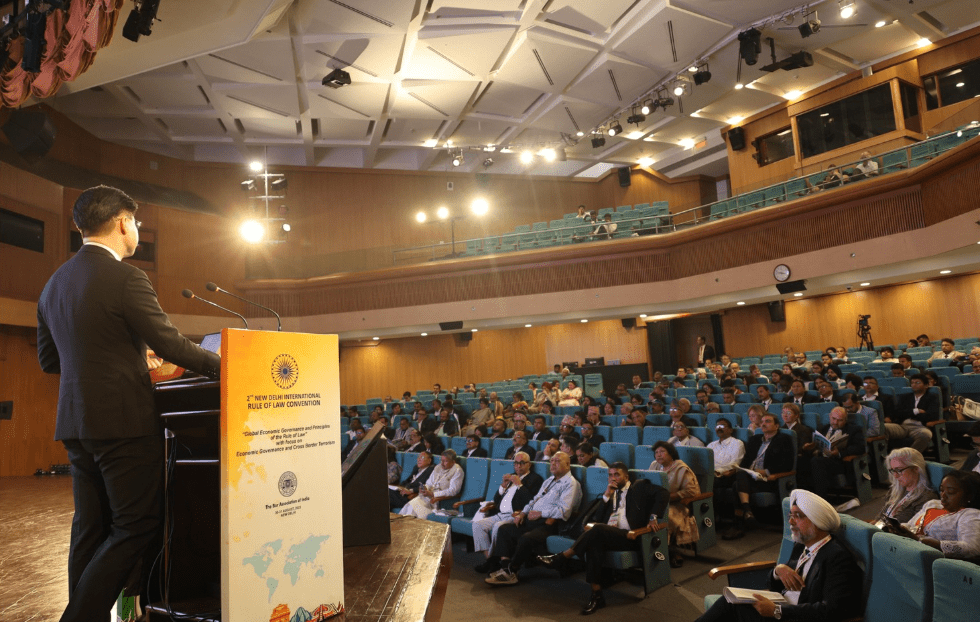
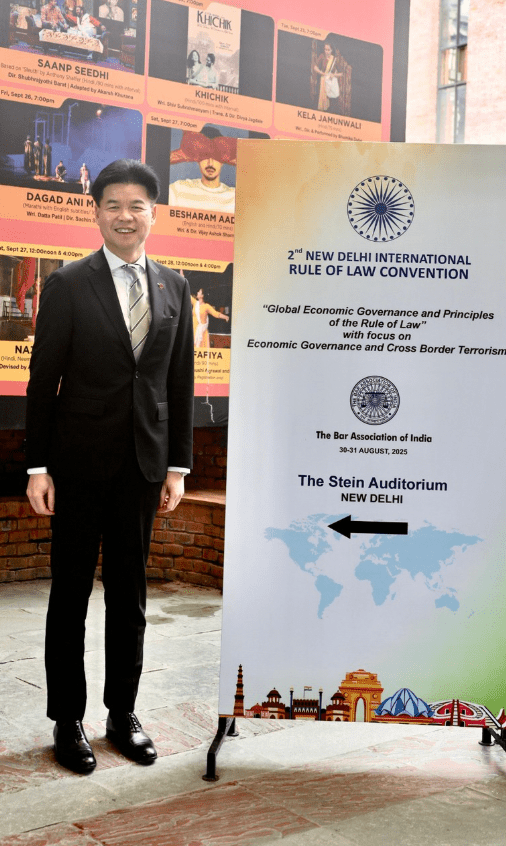
The president of The Law Society of Hong Kong, Roden Tong Man-lung, has attended the 2nd New Delhi International Rule of Law Convention on Saturday (August 30), marking the last stop of his three-day duty visit to India.
Indian Prime Minister Narendra Modi emphasized the Convention as a crucial global forum for high-level dialogue on important issues during his welcoming speech, and noting that the event aims to enhance international cooperation and promote a more inclusive global economic order.
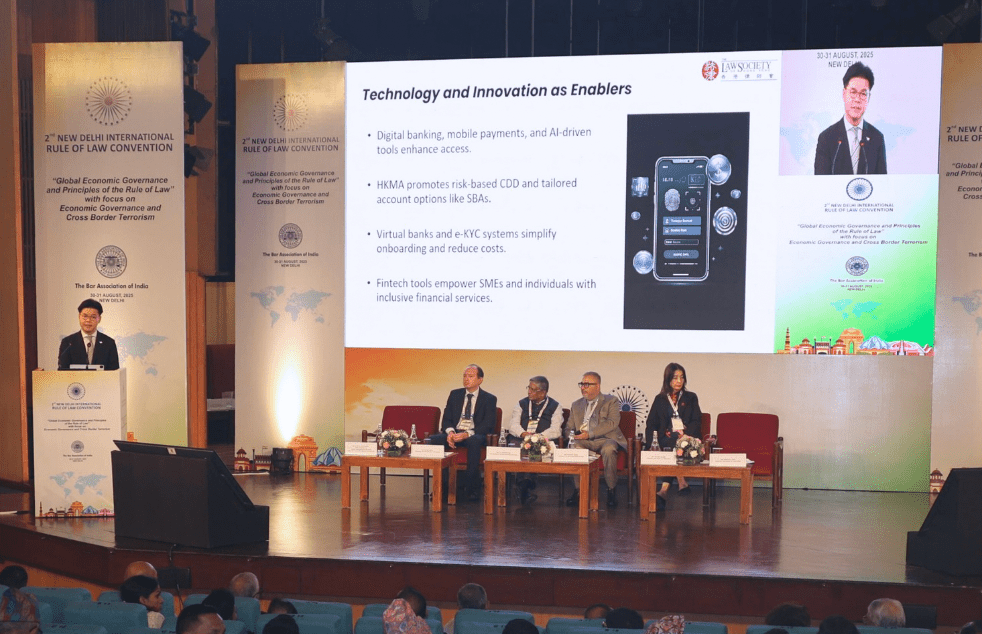
Themed “Global Economic Governance and Principles of the Rule of Law”, Tong participated the first working session titled “Anti Money Laundering (AML) Regulations and Financial Action Task Force (FATF) Framework: Issues of Over-compliance and Financial Exclusion in Global South” alongside distinguished speakers from India, Singapore, Switzerland and Seychelles to examine jurisdiction-specific challenges and solutions to enhance access to justice in Global South.
The Law Society president highlighted the critical link between financial access and legal representation, stating that clients without banking access often struggle to afford legal services, impeding their ability to seek justice.
Drawing on Hong Kong’s experience, Tong stated that AML compliance is no longer seen as a major barrier to accessing financial services by individuals or businesses. He noted that the rapid advancement of technology has largely driven the shift.
Tong said that Hong Kong now ranks second globally in financial inclusion, and attributed the success to strategic digital investments, balanced regulation, and a risk-based approach in the financial sector — an approach that the legal profession must also embrace to ensure compliance while maintaining access to justice.
However, he noted that the high cost of adopting new technologies for AML compliance remains a challenge for the legal sector, particularly for smaller law firms.
He added that it is a complex and sensitive task for the Law Society’s role as a self-regulatory body to balance when addressing the FATF’s requirement for a formal AML supervisory framework.
Tong reaffirmed the legal sector’s vital role in promoting a balanced, risk-based approach to AML compliance that safeguards both financial integrity and access to justice.