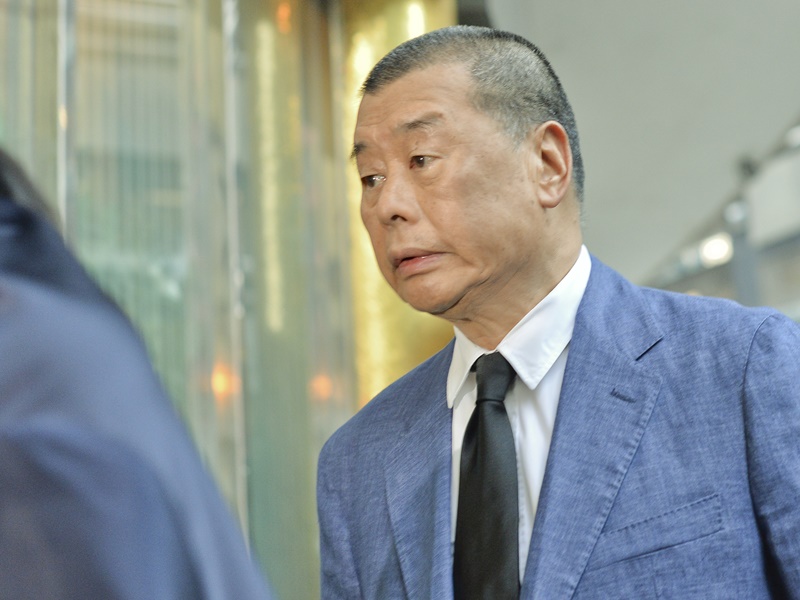
Jimmy Lai Chee-ying’s testimony in his national security trial was "misleading, unreliable, and not credible," prosecutors told national security judges at a Hong Kong court on Wednesday, also accusing the media tycoon of betraying national security and interests.
The comments came as the prosecution in the trial of media tycoon Jimmy Lai and three Apple Daily-related companies, accused of conspiring to collude with foreign forces, continued delivering its closing arguments today at the West Kowloon Court.
Deputy Director of Public Prosecutions, Anthony Chau Tin-hang, revealed that the prosecution's written submissions listed over 20 examples to demonstrate the unreliability of Lai's court testimony.
Chau presented several instances in court, noting that Lai initially claimed he was not concerned about the primary elections. However, after evidence showed Lai discussing voting procedures with his "disciple" Simon Lee and pan-democrats, he changed his account to say he was aware of them.
Chau also addressed Lai's description of Apple Daily's values as aligning with those of Hong Kong people, which Lai used to explain why he did not need to issue editorial directives.
Yet, Lai simultaneously admitted that both he and Apple Daily were anti-communist and that the publication reflected the overall perspective of the "pro-democracy camp."
Chau argued that Apple Daily's values were "not related to the Hong Kong people," contending that Lai's statement was misleading. He further accused Lai of using Apple Daily as a platform to seek punitive measures from external forces, thereby betraying national security and interests.
Another example cited involved Lai's claim that he became more cautious after the implementation of the National Security Law.
Chau said, despite this, he continued maintaining contact with foreign politicians and discussing sanctions, and did not take down his personal interview program, "Live Chat with Jimmy Lai."
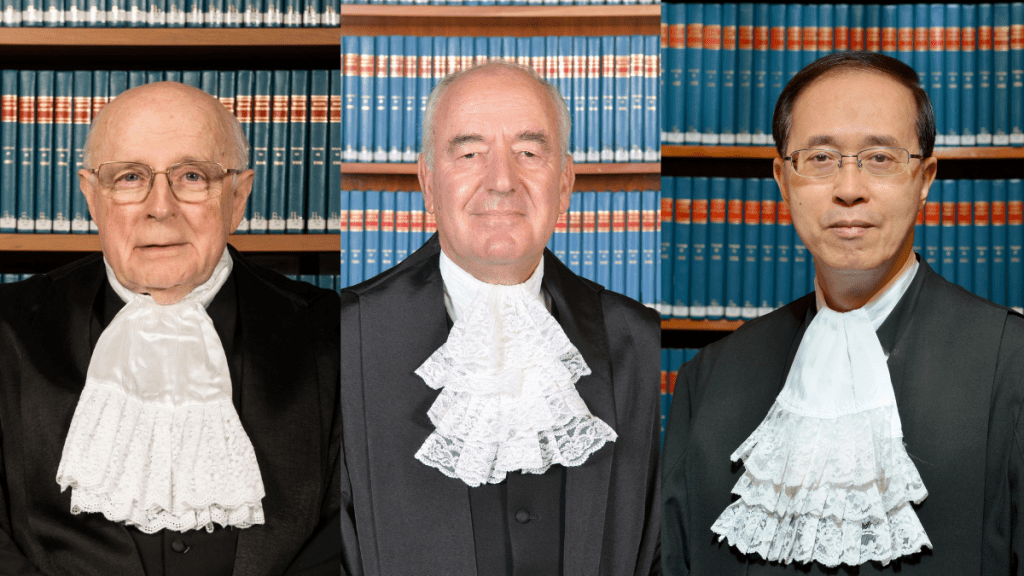
National security judge Esther Toh Lye-ping questioned whether keeping the program online indicated an intention to continue his activities. Chau agreed, stating this showed Lai's desire to persist and that the prosecution used this example to "attack" Lai's credibility.
Additionally, Chau referenced July 2020, when British Conservative Party member Luke de Pulford sent Lai a Twitter link about former UK Conservative leader Iain Duncan Smith urging sanctions against then Chief Executive Carrie Lam Cheng Yuet-ngor under the Magnitsky Act.
He said Lai responded to de Pulford with "not impossible now," suggesting sanctions against Lam were a possibility. Lai later claimed in court that this message was merely referring to a personal matter. The prosecution dismissed his claim, accusing Lai of lying under oath.